India's 2026 cross-border e-commerce reforms create a new export-only inventory model for eligible e-commerce entities. Here's how Indian manufacturers, MSMEs, artisans and emerging brands can use the framework to reach international customers, understand the rules, and prepare for global trade.
 Minaketan Mishra
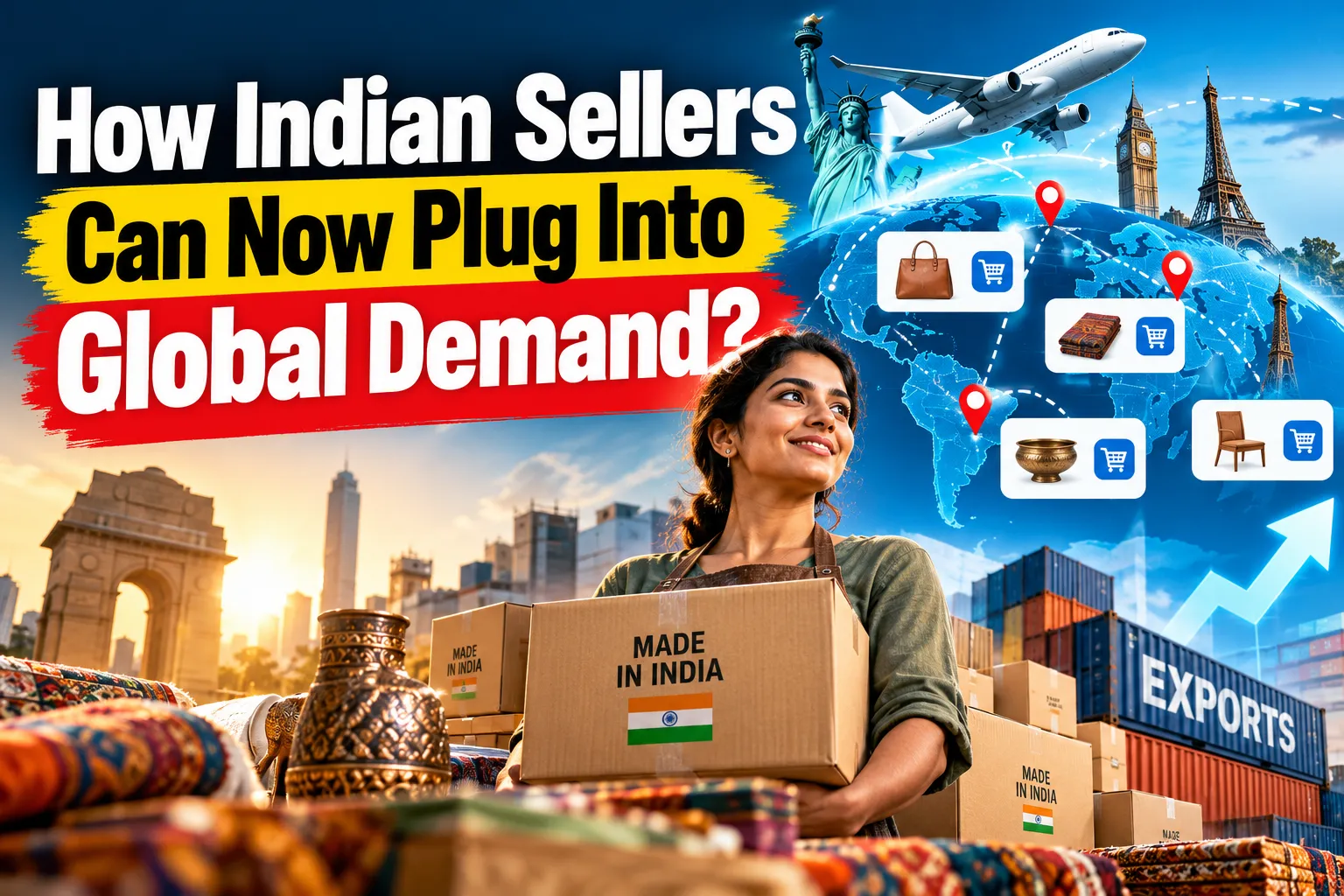
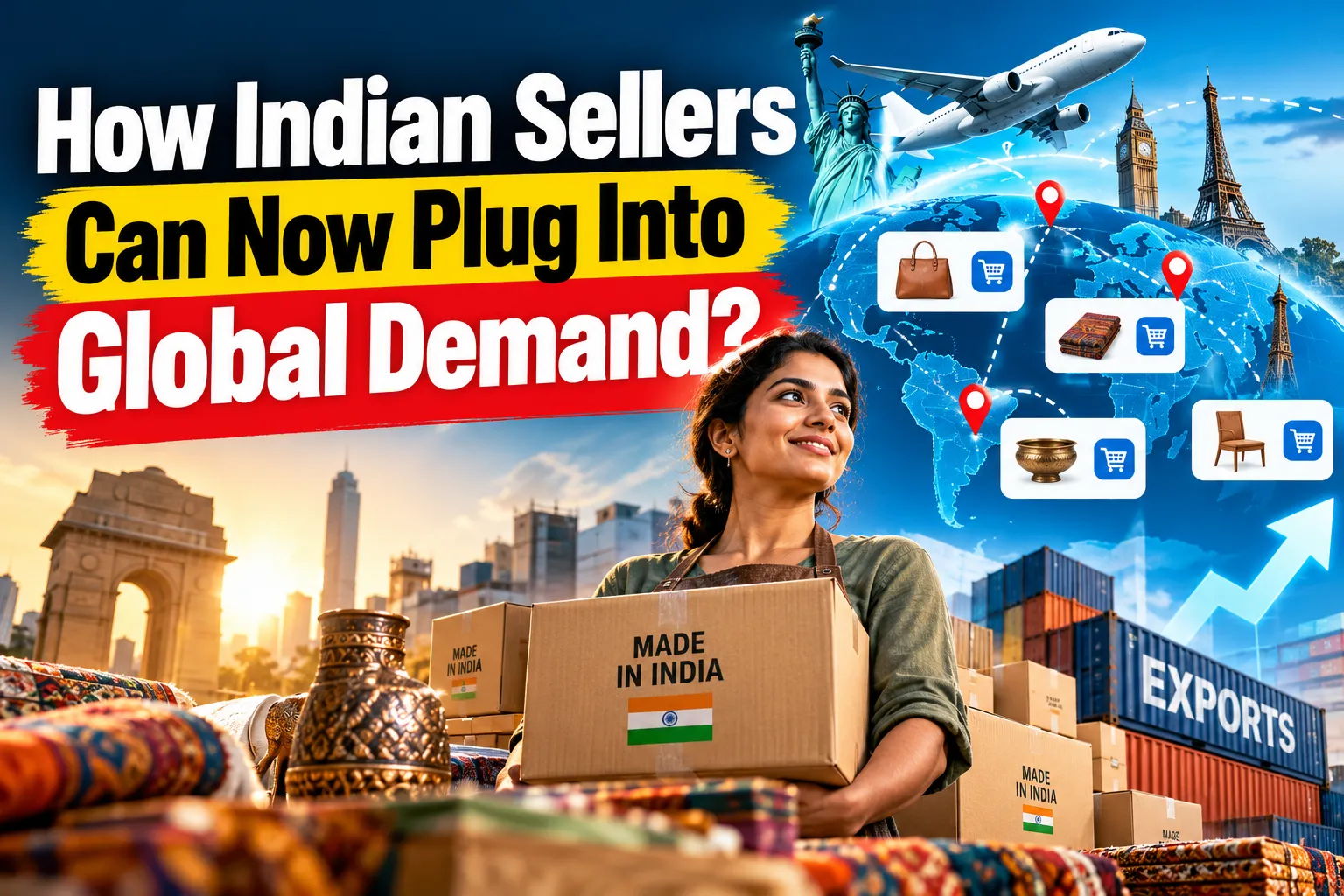
India's latest cross-border e-commerce reforms are creating a new route for Indian-made products to reach overseas customers. Understanding how the model works could help manufacturers, artisans and small businesses prepare for a larger role in global trade.
An Indian textile manufacturer can produce a product that appeals to buyers in Europe. A handicraft enterprise can make products that find customers in the United States. A small home-decor brand can build a catalogue that suits international tastes.
But producing a product and exporting it profitably are two different challenges.
For a small Indian business, international expansion can involve finding overseas buyers, managing export documentation, understanding customs procedures, arranging shipping, navigating foreign product regulations, collecting payments and handling returns. Each additional requirement can increase costs and make experimentation with new markets more difficult.
India's cross-border e-commerce policy reforms in 2026 introduce a new route that could help address some of these challenges: an inventory-based export model in which an eligible, registered Exporter-on-Record can procure goods from Indian sellers against confirmed overseas orders and take responsibility for key export operations.
The significance is not simply that foreign e-commerce businesses can participate in another commercial activity. It is that Indian producers may be able to access international demand through a specialised export intermediary rather than building every part of the export operation themselves.
The opportunity is real, but so are the conditions. Here is what changed, how the model works, who may benefit and what Indian businesses should do next.
India has introduced a formal framework for inventory-based cross-border e-commerce exports of goods manufactured or produced in India.
The Department for Promotion of Industry and Internal Trade (DPIIT) amended the FDI policy through Press Note No. 3 of 2026, dated July 23, 2026. The Directorate General of Foreign Trade (DGFT) subsequently operationalised the framework through Notification No. 27/2026-27 and Public Notice No. 25/2026-27, both dated August 5, 2026.
Under the framework, eligible e-commerce entities can undertake export-only inventory operations through a registered Exporter-on-Record (EOR). The EOR procures products from Indian Sellers-on-Record (SORs) against confirmed overseas orders and undertakes exports in its own name.
The framework also defines rules for inventory traceability, seller payments, export benefits, destination-country compliance and returned goods.
Separately, courier export reforms effective April 1, 2026, removed the previous ₹10 lakh per-consignment value cap for commercial courier exports.
Together, these measures address different parts of the export process: one establishes a new operating model for eligible e-commerce exports, while the other removes a shipment-value restriction on courier-based commercial exports.
India has a diverse manufacturing and production base, spanning textiles, handicrafts, home furnishings, jewellery, leather goods, engineering products and other categories.
Yet an overseas customer does not buy a product solely because it is well made. The seller must also offer a reliable purchasing and delivery experience.
For an MSME, several barriers can stand between a finished product and a successful international sale.
Finding customers: Reaching overseas consumers requires visibility, product listings, marketing, customer support and access to relevant sales channels.
Export documentation: Commercial shipments require appropriate documentation and compliance with applicable export procedures.
Shipping and fulfilment: International delivery involves packaging, logistics partners, customs clearance, tracking and coordination across borders.
Product compliance: Different markets may impose product-specific requirements covering safety, labelling, testing, certification or registration.
Payments and working capital: Sellers need predictable payment terms and sufficient cash flow to purchase materials, manufacture products and fulfil orders.
Returns and rejected shipments: International returns can be expensive and operationally complicated, particularly for low-margin products.
A business may be capable of manufacturing internationally competitive goods without having the resources to manage every one of these activities independently.
That is the gap the new export framework seeks to address. Rather than asking each producer to build a complete export operation, it creates a regulated structure through which an eligible intermediary can manage important parts of the process.
It does not remove the need for competitive products, reliable production, suitable pricing or overseas demand. Instead, it offers a different way to organise the journey from Indian production to an international buyer.
To understand the change, it is important to distinguish domestic retail from exports.
Under India's FDI policy, foreign-invested e-commerce entities operating under the marketplace model have generally been permitted to facilitate transactions between buyers and independent sellers, subject to the applicable conditions. The inventory-based model, in which the e-commerce entity owns and sells inventory directly, has faced restrictions on domestic B2C retail.
The 2026 amendment introduces a limited exception: eligible inventory-based e-commerce operations for exports of goods manufactured or produced in India.
This is not unrestricted permission for foreign-owned e-commerce platforms to stock and sell goods directly to Indian consumers. The new framework is specifically designed for export operations and comes with defined eligibility, registration and compliance requirements.
March 27, 2026: Courier export value restrictions removed through a notified amendment
The DGFT issued Notification No. 67/2025-26 to remove the ₹10 lakh per-consignment value limit for exports through courier services. The amendment took effect on April 1, 2026.
April 1, 2026: Courier export reforms take effect
The Central Board of Indirect Taxes and Customs (CBIC) operationalised reforms intended to simplify courier-based trade, including the removal of the commercial courier export value cap and changes to the handling of returned or rejected shipments.
July 23, 2026: FDI policy amendment
DPIIT issued Press Note No. 3 of 2026, permitting inventory-based e-commerce operations exclusively for exports, subject to the prescribed conditions.
August 5, 2026: Export framework operationalised
The government notified the inventory-based cross-border e-commerce export framework under the Foreign Trade Policy 2023. The accompanying procedures established the registration and operating requirements for Exporters-on-Record.
These are connected developments, but they are not the same reform. Courier changes affect how eligible commercial shipments can move. The FDI amendment and DGFT framework establish who can undertake inventory-based export operations and how that model must function.
The framework establishes two important roles: the Exporter-on-Record and the Seller-on-Record.
An EOR is an eligible Indian entity registered with the DGFT to undertake exports under this framework. It must meet the applicable requirements, including holding the relevant Importer-Exporter Code (IEC) and GST registration.
Where an e-commerce entity uses the inventory-based export exception under the FDI policy, the export operations must be conducted through a separate legal entity incorporated for that purpose, subject to the framework's requirements.
The EOR procures goods against confirmed overseas orders, exports them in its own name and assumes responsibility for prescribed export operations and destination-country compliance.
An SOR is an Indian seller registered under the applicable GST framework that supplies Indian-origin goods to the EOR against confirmed export orders.
The seller's role is to provide the goods and meet the relevant commercial and product requirements. The EOR manages the export transaction under the framework.
The framework does not permit speculative inventory accumulation under this model. Goods must be procured against confirmed export orders, distinctly identified and maintained with digital traceability.
Export inventory cannot be diverted into the domestic market.
For Indian sellers, the important distinction is that they may be able to participate in a larger export operation without independently assuming every responsibility associated with exporting directly.
The potential benefit extends beyond access to an online storefront.
The EOR can manage export documentation and customs formalities associated with the transaction. This may reduce the amount of export administration a participating seller must organise independently.
The seller must still provide accurate product information, invoices and other information required under the arrangement.
An export intermediary may coordinate packaging, shipping, fulfilment and reverse logistics. Where an EOR has established infrastructure and negotiated service arrangements, a small producer could gain access to capabilities that would otherwise be expensive to build independently.
However, lower costs and faster delivery are not automatic. They depend on the EOR's network, product characteristics, destination market and commercial terms.
The framework places responsibility for applicable destination-country regulatory requirements on the EOR. These can include testing, certification, packaging and labelling requirements.
This can be particularly relevant to small businesses unfamiliar with the regulatory requirements of individual overseas markets.
Nevertheless, the seller should confirm that its products are eligible and that the proposed export arrangement can meet the relevant rules before accepting orders.
The framework includes provisions for timely payments to SORs, visibility into overseas sales and shipment information, and the pass-through of eligible export rebates and refunds.
Under the prescribed procedures, the EOR must make payment to the SOR within seven days of acceptance or deemed acceptance of the goods. Export rebates and refunds received by the EOR must be distributed according to the prescribed rules, including the seller-attributable share, within the applicable timeline.
These safeguards matter because sellers need to understand when they will be paid, how their products are performing and what export benefits are attributable to their goods.
International returns can erode margins. The framework makes the EOR responsible for handling returned or rejected consignments in accordance with the prescribed procedures.
Depending on the circumstances, goods may need to be re-exported, returned to the seller or otherwise disposed of as permitted. They cannot simply be diverted into the domestic market.
For sellers, this creates a defined operating structure, but they should still clarify return-related costs, product-condition rules and contractual liabilities before entering an arrangement.
The inventory-based export framework is not the only relevant policy change.
From April 1, 2026, the previous ₹10 lakh per-consignment value limit on commercial courier exports was removed. The change gives eligible exporters greater flexibility to send higher-value commercial shipments through courier channels without being forced to switch to conventional air or sea cargo solely because of that value ceiling.
This can matter for businesses selling jewellery, premium handicrafts, specialised products and other goods that may have a high value relative to their size.
The reform does not mean that every shipment can be exported without documentation, customs clearance or product-specific permissions. Applicable export policy, customs rules and other regulatory requirements continue to apply.
The practical takeaway is that Indian sellers now have two distinct developments to understand:
A seller exporting directly may find the courier change relevant even without using an EOR. A seller working with an EOR may benefit from the new operating model if the product and commercial arrangement meet the framework's conditions.
The opportunity is not restricted to one type of business. The value of the model will depend on each seller's product, production capacity, margins and ability to meet international demand.
Artisans and craft enterprises may gain access to export channels without having to assemble a complete international logistics operation independently.
For example, a producer of Indian home décor may be able to supply products against confirmed overseas orders while an EOR coordinates the export process.
The challenge will remain product consistency, packaging, quality control and maintaining sufficient production capacity.
Indian textile producers may find opportunities in products suited to international online demand, including home textiles, furnishings and selected apparel categories.
They will need to assess size and quality specifications, labelling requirements, return rates and price competitiveness in the target market.
A brand that has already established domestic product-market fit may use an eligible export partner to explore overseas demand without immediately building a full export department.
This can help test whether international sales are commercially viable, provided the brand understands margins, customer expectations and the terms of the arrangement.
Manufacturing clusters may be able to supply larger volumes through intermediaries with established overseas distribution or fulfilment networks.
The benefits could extend to suppliers, packaging businesses, logistics providers and other enterprises supporting export production.
The framework also creates a defined operating route for eligible businesses that want to provide export-focused services. Potential areas include procurement, order management, digital traceability, fulfilment, compliance and reverse logistics.
The extent to which these capabilities develop will depend on market participation, infrastructure investment and commercial viability.
The first step is not to register for every export-related service available. It is to determine which export route best fits the business.
Start with products that can be manufactured consistently, packaged securely and priced competitively after accounting for production, shipping, platform, compliance and return-related costs.
Assess whether the goods qualify under the framework's Indian-origin requirement and whether any restrictions or special permissions apply.
Businesses with an established export team may prefer to continue exporting directly, using the courier reforms where relevant.
Businesses that want an intermediary to manage key export operations can investigate whether a registered EOR accepts their product category and business model.
These routes are not interchangeable in every situation. The choice should reflect the seller's capabilities, control requirements and expected economics.
Prepare accurate product descriptions, specifications, invoices, manufacturing or sourcing details and packaging information.
Confirm the applicable GST, IEC and other registration requirements for the chosen route. SORs and EORs have distinct responsibilities under the inventory-based framework.
Before signing an agreement, confirm that the EOR is registered for the relevant framework and understands the requirements of the intended destination markets.
Ask for a clear breakdown of service charges, payment timelines, order acceptance, returns, rejected shipments, liability for damaged goods and dispute resolution.
Do not assess profitability using the domestic selling price alone.
Account for manufacturing costs, packaging, logistics, platform charges, compliance, discounts, returns and any other contractual deductions. Confirm how eligible export rebates and refunds will be handled.
Where commercially practical, begin with a limited product range and a defined target market.
Track delivery performance, customer feedback, returns, payment reliability and actual contribution margins before expanding production or committing substantial resources.
Maintain accurate business records and fulfil the documentation requirements applicable to the chosen export route.
Review product eligibility, destination-market rules and the terms of the EOR arrangement as the business expands.
Important: This checklist is general guidance, not a substitute for transaction-specific legal, tax or export-compliance advice.
China's experience demonstrates how manufacturing capacity, cross-border platforms, logistics infrastructure and customs facilitation can reinforce one another.
One part of that experience is the use of specialised customs-supervised zones and bonded logistics arrangements for eligible trade models. Such infrastructure can support consolidated fulfilment, inventory management and efficient processing of international orders.
India's opportunity is not to copy every feature of China's system. It is to develop a framework suited to Indian manufacturers, export rules and logistics networks.
The inventory-based EOR model could help connect Indian production with organised overseas demand. The courier reforms can also make certain commercial shipments more flexible.
But the larger transformation requires more than policy permission. It depends on reliable fulfilment networks, affordable international shipping, predictable customs processes, access to working capital, product quality, destination-market compliance and the ability to manage returns.
The role of e-commerce export hubs and other logistics infrastructure will therefore be important to watch. Their practical value will depend on accessibility, operating costs, connectivity and the range of services they offer.
India's long-term advantage will come from making international trade easier to execute for businesses that were previously unable to justify the cost and complexity of exporting independently.
India's Economic Survey 2024–25 cited estimates that placed Indian e-commerce exports at approximately $4–5 billion in FY2022–23, with the potential to reach $200–300 billion by 2030.
That projection illustrates the scale of the opportunity, but it should not be interpreted as a guaranteed outcome or as a result already achieved by the 2026 policy reforms.
Moving from a relatively small export base to that scale would require a substantial expansion in the number of participating businesses, the range of export-ready products, overseas customer acquisition, logistics capacity and supporting infrastructure.
For MSMEs, the immediate question is more practical: can a business identify a suitable product, reach a credible export partner, meet destination-market requirements and retain a healthy margin after all costs?
If the new framework helps more businesses answer those questions successfully, it could contribute to the broader ambition of scaling India's e-commerce exports.
The policy provides a structure. The results will depend on how businesses, export intermediaries and infrastructure providers use it.
India's 2026 cross-border e-commerce reforms create a new, regulated route for eligible inventory-based exports of Indian-origin goods. By allowing registered Exporters-on-Record to procure products against confirmed overseas orders and manage key export responsibilities, the framework may help more Indian producers participate in international e-commerce.
The separate removal of the courier export value cap also provides greater flexibility for eligible commercial shipments.
Neither reform guarantees sales or removes every barrier to global trade. Sellers still need export-ready products, reliable production, competitive pricing, regulatory compliance and sound commercial arrangements.
For Indian manufacturers, artisans and MSMEs, the next step is to understand the available export routes, identify suitable partners and evaluate whether international demand can translate into sustainable business.
The larger opportunity is not simply to sell more products abroad. It is to make global markets more accessible to Indian businesses that have the capacity to produce for them.
 Exclusive Content



Sign up for the Daily newsletter to get your biggest stories, handpicked for you each day.


 Trending Now! in last 24hrs