Strip away the political grandstanding. Here is the definitive breakdown of Delhi’s winter pollution strategy, separating the fixed calendar from sudden GRAP triggers, exposing the AQI fallacy, and outlining the biological reality of surviving the smog.
 Brajesh Mishra
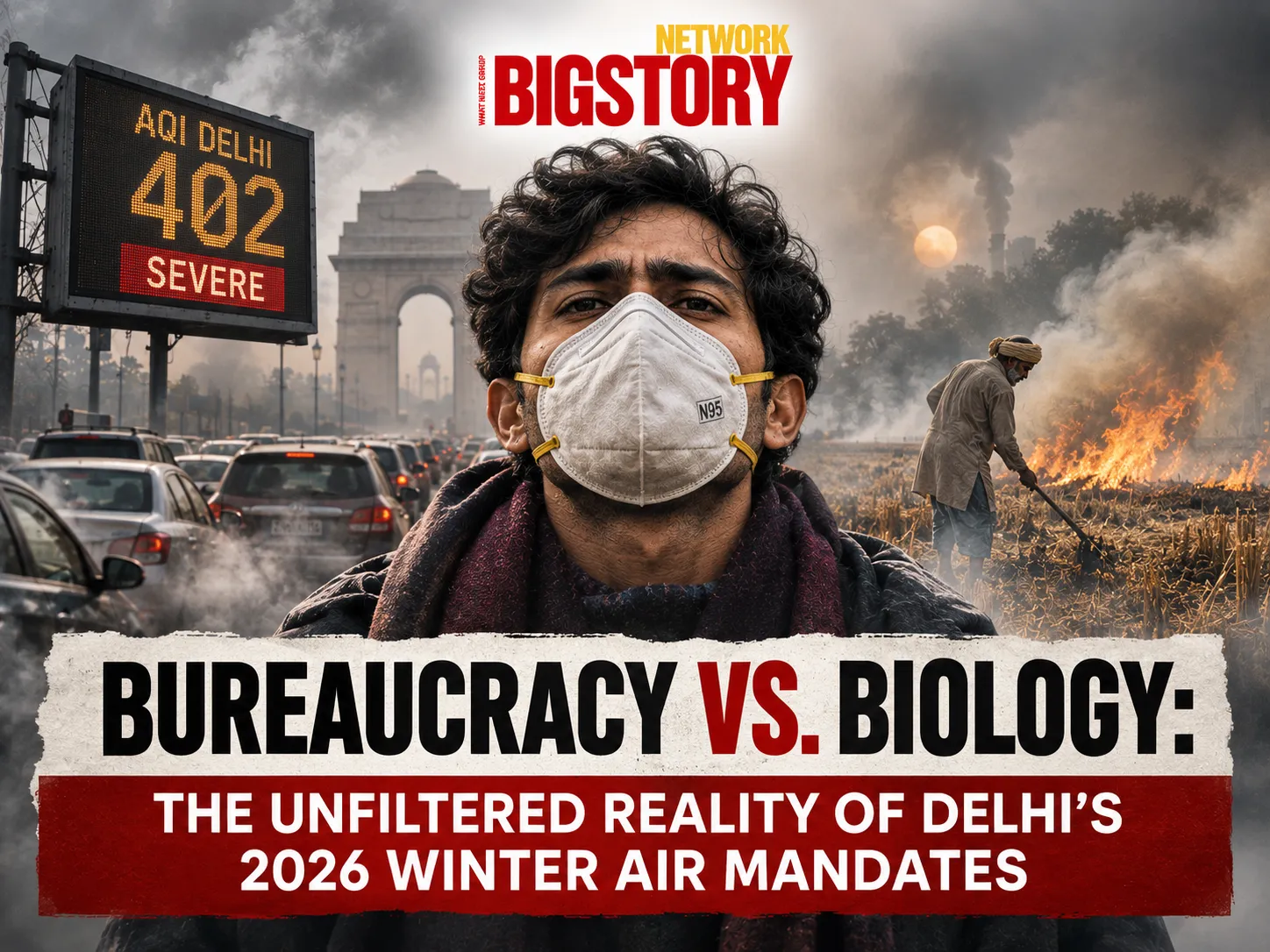
Winter's arrival in the National Capital Region brings the usual barrage of pollution controls. For Delhi residents, surviving the season means decoding a dizzying rulebook. You need to untangle rigid calendar deadlines from sudden emergency bans, and separate genuine enforcement from political grandstanding.
Here is a straightforward guide explaining the 2026-2027 winter air mandates. It breaks down who is actually impacted and outlines exactly what official data reveals, or obscures, about whether these interventions actually work.
This year, Delhi took a different approach by rolling out a proactive air quality playbook. Instead of waiting for the smog to choke the city before reacting, officials set hard dates for specific restrictions, which kick in regardless of what the Air Quality Index (AQI) says on any given morning.
1. The Vehicle Border Filter (Nov 1, 2026 to Jan 31, 2027) Under this mandate, any vehicle registered outside Delhi that falls short of BS-VI emission standards is blocked at the city limits. This hits daily commuters driving older petrol and diesel cars in from neighboring NCR hubs—think Noida, Gurugram, Faridabad, and Ghaziabad. It also stops commercial freight trucks that lack BS-VI compliance. However, electric vehicles, CNG models, and emergency responders like ambulances get a free pass. Importantly, if your car is registered within Delhi, this specific November 1 entry ban doesn't apply to you.
2. "No PUCC, No Fuel" (Nov 1, 2026 onwards) Gas stations citywide are under strict orders to turn away any driver who cannot show a valid Pollution Under Control Certificate (PUCC). This impacts every single vehicle owner in town. The government plans to police this heavily, combining physical spot checks with Automatic Number Plate Recognition (ANPR) cameras set up at 500 designated fuel pumps.
3. The Phased Construction Bans Construction and real estate projects face their own phased shutdown. Between November 1, 2026, and January 31, 2027, builders must halt all outdoor civil work and demolition that kicks up dust. Come December 10, the rules tighten into a blanket ban on all building activities until January 20, 2027. Essential public infrastructure projects might snag an exemption early on, but those loopholes shut fast once the total ban takes over.
4. Workplace and Civic Adjustments (Nov 1, 2026 to Jan 31, 2027) Offices aren't spared either. Both public and private sectors must slash in-person attendance to 50%, sending the rest of their teams to work remotely. To help thin out rush hour traffic, shift times are staggered: Municipal Corporation of Delhi (MCD) employees work 8:30 am to 5:00 pm, while Delhi government staff run from 10:00 am to 6:30 pm. On top of that, parking fees at approved lots (except Delhi Metro facilities) are doubled until February 28 to push people away from driving their private cars.
A lot of folks mistakenly assume all these vehicle bans drop at once. It helps to separate the proactive winter calendar from the Graded Response Action Plan, or GRAP.
Managed by the Commission for Air Quality Management (CAQM), GRAP operates like an emergency dial linked directly to the daily AQI: Stage I (Poor, 201–300), Stage II (Very Poor, 301–400), Stage III (Severe, 401–450), and Stage IV (Severe+, above 450).
While the fixed calendar blocks outside vehicles starting November 1, you can legally drive a Delhi-registered BS-IV diesel car right up until the air turns bad enough to trigger GRAP Stage III. When that happens, harsh bans immediately strike BS-IV diesel and BS-III petrol four-wheelers across Delhi and crowded NCR districts. If the two plans ever clash, the stricter rule wins out. Before you change your commute, always double-check whether a ban is tied to the calendar or a sudden GRAP alert.
If you want to know whether these rules carry any actual weight, don't look at press conferences. The truth lives at the border checkpoints, where Delhi Traffic Police are either actively turning away non-compliant cars or letting them roll through. You’ll find reality in the digital footprint of ANPR cameras at petrol pumps and the frantic queues at emission testing centers—even as everyone quietly admits how easily paper pollution certificates can be gamed. True enforcement leaves a trail. You can track it by monitoring the volume of construction debris logged on the Malba App, or by checking the exact percentage of civic dust complaints the government actually manages to resolve within its promised 72-hour window.
It's easy to look up at a patch of blue sky, notice the AQI dropping, and assume the winter rules did their job. But a lower AQI doesn't mean the restrictions actually caused the air to clear.
The Delhi-NCR airshed is a chaotic environment driven by massive external forces. Weather is the real boss here. Wind speed, rain, and temperature inversions—which trap cold, dirty air right at street level—are what actually swing the daily AQI. Add in cross-border crop burning and non-stop industrial output from neighboring states, and the picture gets incredibly complicated.
If a heavy windstorm tears through the capital, the pollution levels will plummet even if nobody is enforcing the construction ban. Emergency rules can successfully put a lid on local emissions to stop the baseline from exploding, but they simply cannot command the weather.
For the people actually living here, winter turns into a daily tightrope walk between dodging fines and protecting their lungs. The legal reality hits hard the second a driver pulls up to a fuel pump. Waving a crumpled paper PUC certificate doesn't cut it anymore. If your vehicle isn't digitally synced with the VAHAN database, the ANPR camera flags your plates and the pump stays dry. The stakes get even higher on mornings when the CAQM hits the GRAP Stage III or IV button. That’s when residents have to leave their Delhi-registered BS-IV diesel or BS-III petrol cars in the driveway or risk massive financial penalties.
But the biological fight is much harder. Walking into a Severe AQI morning with a basic cloth mask is a comforting illusion; microscopic PM2.5 particles bypass the fabric effortlessly. To actually filter the air, you need an N95 or N99 respirator. Inside, the deep-seated habit of throwing open a window for morning freshness turns into a toxic mistake. Because overnight temperature inversions pin smog right to the ground, residents have to unlearn their routines and wait for the sun's peak afternoon heat to ventilate their homes. Ultimately, carving out a genuinely safe indoor breathing zone usually means buying a True HEPA air purifier. It's a harsh truth that puts a spotlight on the city's economic divide: clean air is increasingly a commodity reserved for those who can buy it.
Delhi's winter pollution strategy is a mashup of scheduled lifestyle changes and sudden emergency stops. To stay compliant, residents need to keep their digital PUCC updated, know their vehicle's emission rating before crossing state lines, and watch out for abrupt GRAP orders from the CAQM.
But when it comes to judging if any of this actually works, you have to look past the AQI widget on your phone and dig into the hard enforcement stats. Real civic progress shows up through relentless, on-the-ground administration, not just a lucky shift in the wind.
 Exclusive Content





Sign up for the Daily newsletter to get your biggest stories, handpicked for you each day.


 Trending Now! in last 24hrs