Prithviraj Chavan sparked outrage by questioning the need for a 1.2 million-strong army, citing "defeat" in Operation Sindoor and the rise of missile warfare.
 Brajesh Mishra
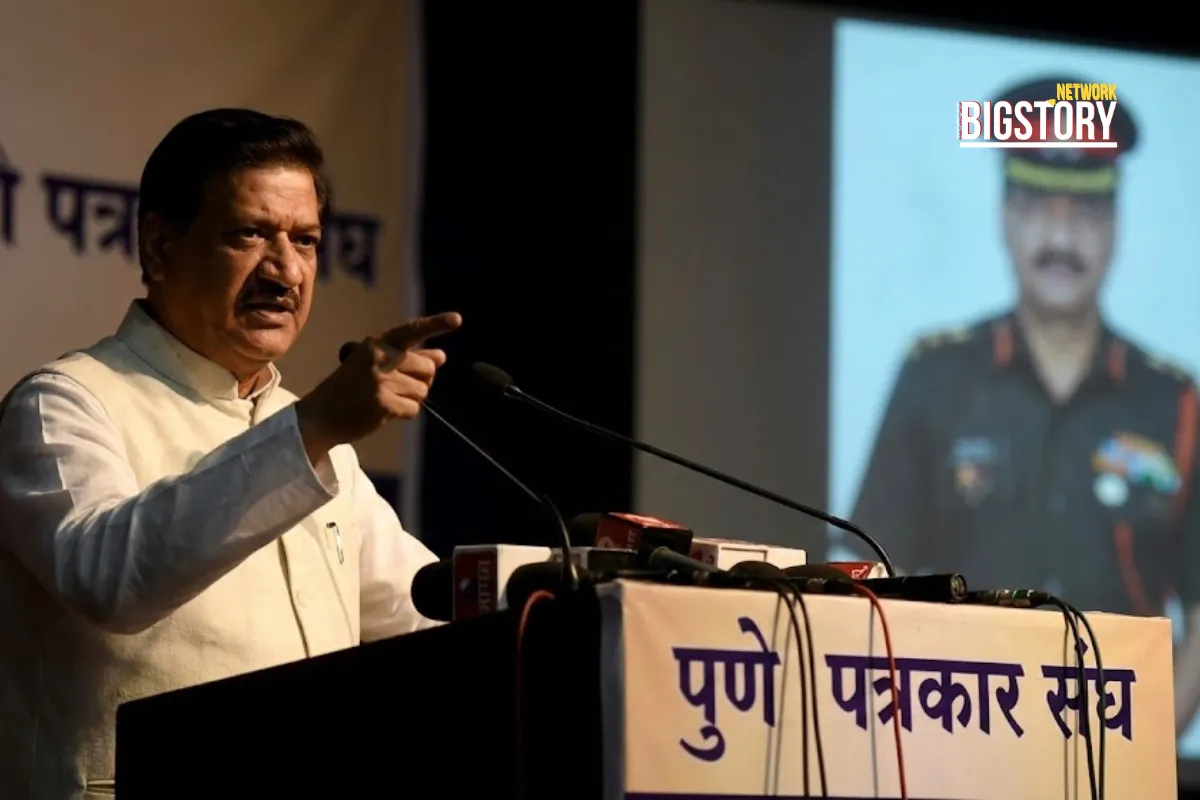
Senior Congress leader and former Maharashtra Chief Minister Prithviraj Chavan ignited a political firestorm on December 16, 2025, by publicly questioning the necessity of maintaining a 1.2 million-strong Indian Army. Speaking in Pune, Chavan argued that "large size has no meaning" because modern warfare has shifted to air power and missiles. He controversially cited the recent Operation Sindoor, claiming India was "fully defeated on Day 1" of the engagement because its aircraft were shot down, rendering the massive ground force irrelevant.
Chavan's comments land in the middle of a heated national debate over the 2025 Defense Budget, where ballooning pension bills for a massive standing army are severely restricting funds for technological modernization. He argued that despite having a numerical advantage over Pakistan (12-15 lakh vs 5-6 lakh troops), numbers failed to guarantee victory in the recent skirmish because the Indian Army reportedly moved only 1 km on the ground. The BJP has immediately seized on the remarks, labeling them an insult to the armed forces and demanding an apology—a demand Chavan has flatly refused.
While headlines scream "Insult," the deeper story is the "Manpower vs. Modernization Trap." Chavan’s phrasing was clumsy, but he touched upon a critical strategic reality often discussed behind closed doors: India is sacrificing future readiness for current payroll. The Shekatkar Committee had recommended "right-sizing" the army years ago to free up capital for AI, drones, and cyber warfare. Chavan’s comments, stripped of the political rhetoric, highlight the uncomfortable truth that a 19th-century mass mobilization strategy may be a liability in a 21st-century war fought with autonomous swarms and precision missiles.
Chavan's "missile-only" thesis, however, ignores the Himalayan Reality. Unlike the flat plains where tank battles are obsolete, India faces China in the high-altitude terrain of Ladakh, where "boots on the ground" are the only way to hold territory that missiles cannot occupy. His comments may force the Congress party into a defensive posture regarding national security, but they also inadvertently open a necessary public window into the automated warfare shift that the Indian military is struggling to fund.
If the next war is decided by algorithms and drone swarms, is a million-man army a shield, or just a massive target?
What did Prithviraj Chavan say about the Indian Army size? He questioned the necessity of maintaining a 12-lakh strong standing army, arguing that modern warfare has shifted towards air power, missiles, and cyber capabilities, rendering large infantry numbers less relevant for future conflicts.
What was Operation Sindoor mentioned by Prithviraj Chavan? "Operation Sindoor" refers to a recent military engagement cited by Chavan. He claimed India was "defeated on Day 1" of this operation due to the loss of aircraft, using it as an example to argue that ground troops (who reportedly moved only 1 km) were ineffective without air superiority.
Does India need a large army according to military experts? Opinions are divided. While the Shekatkar Committee and some experts advocate for "right-sizing" (reducing manpower) to fund technological modernization, others argue that India's specific geography—facing China and Pakistan across rugged Himalayan terrain—requires a large "boots on the ground" presence to hold territory.
News Coverage
Research & Analysis
 Exclusive Content






Sign up for the Daily newsletter to get your biggest stories, handpicked for you each day.



 Trending Now! in last 24hrs