Discover how CEO Dara Khosrowshahi transformed Uber from a toxic, cash-burning startup into a profitable, culture-first $140B global tech giant.
 Rashmeet Kaur Chawla
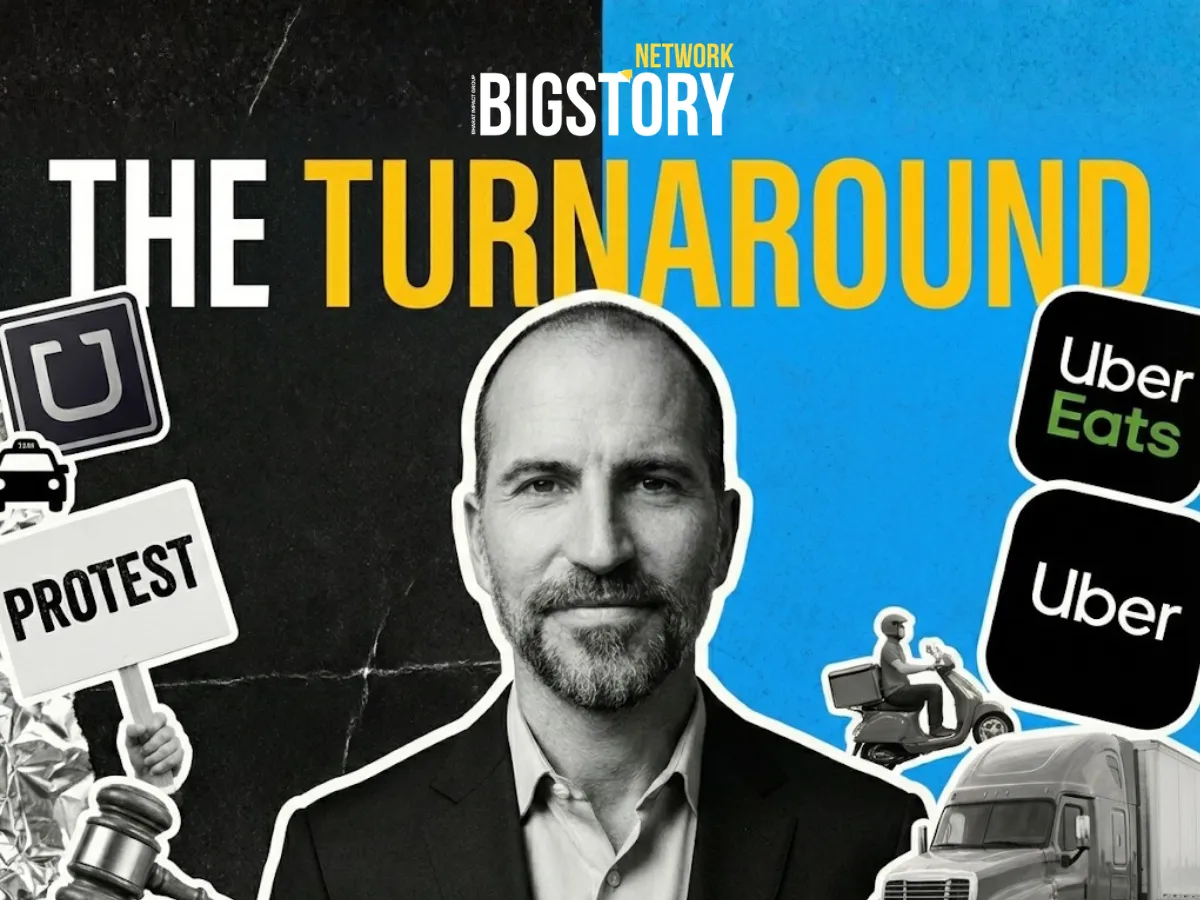
Dara Khosrowshahi Uber Turnaround: How One Leader Saved Silicon Valley's Most Toxic Company
Discover how Dara Khosrowshahi transformed Uber from a scandal-plagued company losing billions to a profitable $140B giant through culture-first leadership and strategic discipline.
The Conflict: When Success Becomes the Problem
February 2017. Susan Fowler's blog post detonated like a bomb across Silicon Valley. The former Uber engineer exposed a workplace culture so toxic it seemed beyond repair—sexual harassment ignored, HR protecting perpetrators, managers rating women's appearances openly. Within weeks, the damage multiplied: revelations of "Greyball" software to evade regulators, a video of the CEO berating a driver, and investigations into a culture that valued winning over basic human decency.
The numbers painted a brutal picture. Uber was bleeding $4.5 billion annually, had been expelled from multiple countries, and faced over 50 federal investigations. Investors panicked. Employees fled. Cities threatened outright bans. The $68 billion unicorn had become Silicon Valley's most spectacular disaster.
Could anyone possibly fix this mess? Enter Dara Khosrowshahi—the quiet executive who would prove that yes, but only by rejecting everything Silicon Valley held sacred.
The Unexpected Leader
When Uber's board searched for a new CEO in August 2017, conventional wisdom demanded another aggressive, founder-type warrior. Instead, they chose Dara Khosrowshahi—a leader whose entire career suggested something radically different.
Born in Iran in 1969, Dara's family fled the Islamic Revolution when he was nine. Arriving in America with little more than hope, this immigrant experience profoundly shaped his worldview. He understood rebuilding from nothing, earning trust slowly, and valuing stability over flash.
At Expedia, where he spent 12 years as CEO, Dara had grown the company into a $100 billion travel empire with stock increasing fivefold. More remarkably, employees actually enjoyed working there. In an industry notorious for burnout, he'd built something different: a place people wanted to stay.
Colleagues described him as thoughtful, measured, unusually empathetic. He answered emails personally. Remembered names. Listened more than spoke. These weren't qualities associated with Silicon Valley's most aggressive company.
Critics questioned: Was Dara too soft? Too slow? Too "old tech"? They didn't understand. Uber didn't need another warrior. It needed a healer.
Core Beliefs: The Philosophy Behind the Transformation
Dara brought four foundational beliefs that would reshape Uber entirely:
1. Culture Eats Strategy for Breakfast While others obsessed over growth metrics, Dara believed that without cultural foundation, nothing else mattered. "You can have the best business model," he told employees, “But if people don't trust each other, if they're afraid to speak up—you'll fail." His immigrant experience taught him that societies built on fear eventually collapse. Companies were no different.
2. Apology Is Strength, Not Weakness In his first public statement, Dara did something unprecedented: he genuinely apologized. Not lawyer-vetted corporate speak—a real apology. "Uber has been in the headlines for all the wrong reasons," he wrote. "The truth is that there is a high cost to a bad reputation." While other tech CEOs defended every decision, Dara acknowledged mistakes and committed to doing better.
3. Partnerships Beat Combat Travis Kalanick famously said, "We're in a political campaign, and the candidate is Uber." The company treated regulators, competitors, even customers as adversaries to conquer. Dara rejected this entirely. "We should be a good partner to cities, not a combatant," he insisted. This shift from warfare to collaboration would prove transformative.
4. Sustainable Growth Over Chaos Uber had been obsessed with velocity—launching cities weekly, burning billions on subsidies, fighting everyone. Dara believed this was unsustainable. "We need to move fast, but also move smart. Chaos isn't a strategy—it's a symptom of not having one."
Three Moments That Changed Everything
Moment 1: Cultural Revolution (First 100 Days) Dara completely rewrote Uber's values. Gone were aggressive mantras like "Always Be Hustlin'" and "Principled Confrontation." In their place: "We Do the Right Thing. Period." and "We Value Ideas Over Hierarchy."
But words meant nothing without action. He fired over 20 executives involved in cultural violations, implemented blind resume reviews, created anonymous reporting with real teeth, and established a cultural committee reporting directly to the board.
The defining moment? When Dara fired a high-performing executive for bullying—sending a clear message that results wouldn't protect bad actors anymore.
Moment 2: Financial Discipline (2018) Uber burned nearly $1 billion quarterly. Dara made hard choices: exiting unprofitable markets like China and Russia, shuttering failed experiments, divesting the cash-draining autonomous vehicle unit, and focusing ruthlessly on core businesses—rides and delivery.
Wall Street worried about the retreats. But Dara's philosophy was clear: "I'd rather be number one in 50 cities than number three in 500." Profitability mattered more than presence.
Moment 3: Crisis Management (2019-2020) The May 2019 IPO stumbled—shares dropped 7% day one. Critics declared disaster. Dara stayed focused on long-term value.
Then COVID-19 hit. Ride demand collapsed 80% overnight. This could have ended everything. Instead, Dara pivoted hard into food delivery, cut his salary to $1, maintained driver relationships despite the downturn, and communicated transparently with investors.
By 2023, the impossible happened: consistent profitability. Stock tripled from IPO price. The company destined to fail had thrived.
What If Leaders Asked More Than They Answered?
Dara's approach contradicted typical Silicon Valley leadership:
Listening Over Pronouncing: His first month involved minimal decision-making, maximum listening. He held over 100 one-on-ones with employees at all levels, rode with drivers, met with city officials Uber had antagonized, and personally read every feedback piece.
Questions Over Answers: Dara was known for asking "Why?" repeatedly—not to challenge, but to genuinely understand. "The person doing the work usually knows more than I do." This Socratic method empowered teams rather than waiting for top-down orders.
Patience Over Panic: When competitors attacked or results disappointed, Dara didn't overreact. His team learned "Dara time" meant thinking through decisions carefully, considering ripple effects, and acting deliberately.
Transparency Over Spin: Unlike leaders hiding bad news, Dara communicated challenges openly. Missed earnings? He explained why. Driver conflicts? He acknowledged complexity. This honesty rebuilt trust with cynical stakeholders.
The Challenger's Manifesto: Rewriting Tech's Playbook
The Dara Khosrowshahi Uber turnaround represents a challenger approach —rejecting "move fast and break things" for something sustainable:
Challenging Silicon Valley Orthodoxy: Instead of ruthless competition, Dara proved sustainable success comes from treating everyone well — employees, drivers, regulators, customers.
The Anti-Playbook:
The Bigger Picture: Why This Story Matters
The Dara Khosrowshahi Uber turnaround isn't just one company's story — it's a blueprint for tech's next generation. At a time when the industry faces scrutiny over culture, monopolies, and responsibility, Dara proved companies can change.
Key Lessons:
Leadership Redefined
Dara Khosrowshahi redefined successful tech leadership. In an industry celebrating aggression, he brought empathy. In a culture worshipping speed, he brought thoughtfulness. In a company built on combat, he built collaboration.
The numbers tell one story: from billions in losses to consistent profitability, from cultural disaster to employer of choice, from regulatory enemy to city partner. But the deeper story is about values.
Dara proved you can win without ruthlessness, that growth and goodness aren't mutually exclusive, that quiet leaders can be most transformative. His success test remains beautifully simple: "Would parents be proud of their kids working here?"
For Uber, the answer has finally become yes.
The Dara Khosrowshahi Uber turnaround will be studied for generations—not as disruption, but as proof that healing can be as powerful as innovation, that the hardest turnarounds require changing hearts before strategies, and that sometimes the greatest courage is choosing humanity over hype.
FAQ's
Q: What was Dara Khosrowshahi's biggest challenge at Uber?
The toxic workplace culture was Dara's greatest challenge. Beyond financial losses and regulatory battles, Uber's internal culture of harassment, discrimination, and fear had eroded all trust. Changing deeply embedded norms while maintaining operations required systematic value overhaul, leadership accountability, and HR transformation—more complex than any strategic pivot.
Q: How long did Uber take to become profitable under Dara?
Uber achieved full-year profitability in 2023, approximately six years after Dara became CEO in August 2017. The company showed positive EBITDA earlier in Q4 2020, demonstrating improving financial health. This timeline reflects Dara's focus on sustainable growth rather than rushed cost-cutting.
Q: What specific cultural changes did Dara implement?
Dara rewrote corporate values emphasizing ethics over aggression, established anonymous reporting with board oversight, fired executives violating standards regardless of performance, implemented blind resume reviews reducing bias, created a board-reporting cultural committee, and instituted empathy-focused leadership training. These weren't just policies—they fundamentally shifted what behaviors were rewarded.
Q: How did Dara's immigrant background influence his leadership?
Dara's experience fleeing Iran's revolution profoundly shaped his philosophy. Having rebuilt his family's life in America, he understood stability importance, trust-building, and long-term thinking. His immigrant perspective gave him empathy for drivers (many immigrants), appreciation for regulatory relationships, and patience for gradual transformation—uniquely suiting him to heal a broken company.
Q: What makes this turnaround different from others?
Most turnarounds focus on financial restructuring and strategy pivots. Dara prioritized cultural transformation as the foundation for financial success. Rather than just cutting costs and refocusing strategy, he fundamentally changed how Uber operated internally and externally. This "culture-first" approach was riskier and slower but created sustainable change, proving toxic culture fixing isn't just ethical—it's good business.
Sources
https://en.wikipedia.org/wiki/Dara_Khosrowshahi
https://www.uber.com/in/en/about/leadership/dara-khosrowshahi/
https://www.weforum.org/people/dara-khosrowshahi/
https://www.lcrcapital.com/blog/immigrant-profile-dara-khosrowshahi/
https://sk.sagepub.com/cases/download/dara-khosrowshahi-changing-the-company-culture-at-uber
https://www.hbs.edu/faculty/Pages/item.aspx?num=58609
https://www.cascade.app/studies/uber-strategy-study
https://www.ainvest.com/news/uber-2026-growth-playbook-scaling-profitability-market-share-2601/
 Exclusive Content
Sign up for the Daily newsletter to get your biggest stories, handpicked for you each day.

 Trending Now! in last 24hrs