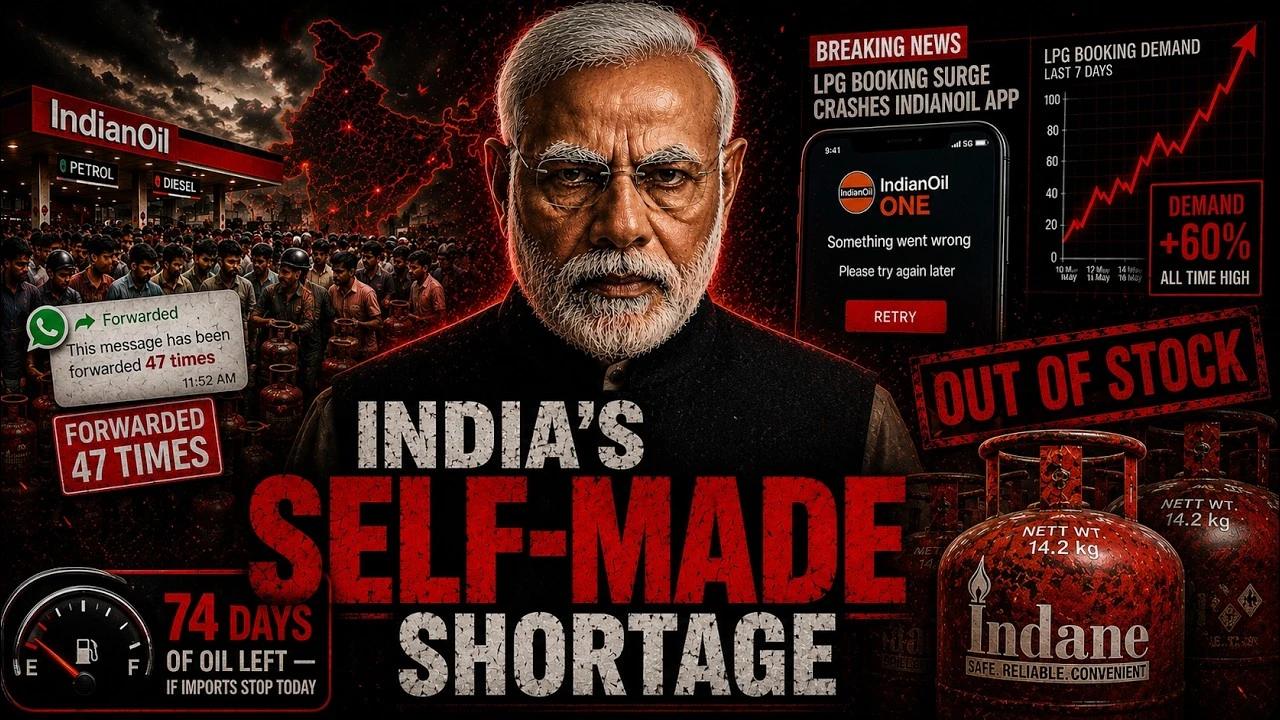
Kunwer Sachdev, founder of Su-Kam Power Systems and known as the Inverter Man of India, built one of the country's most recognized power backup brands from nothing and rebuilt himself after losing it all. Read the full story of ambition, adversity, and reinvention on BIGSTORY's The Challengers
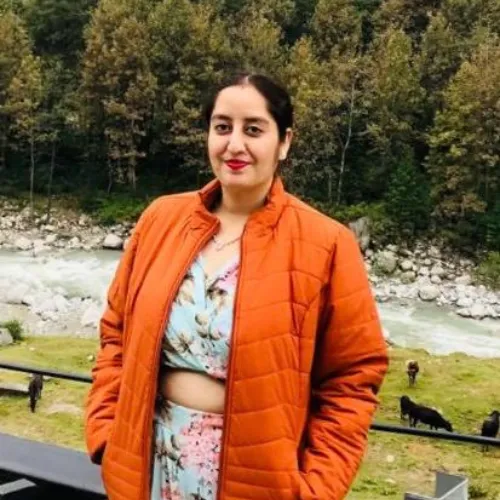 Rashmeet Kaur Chawla
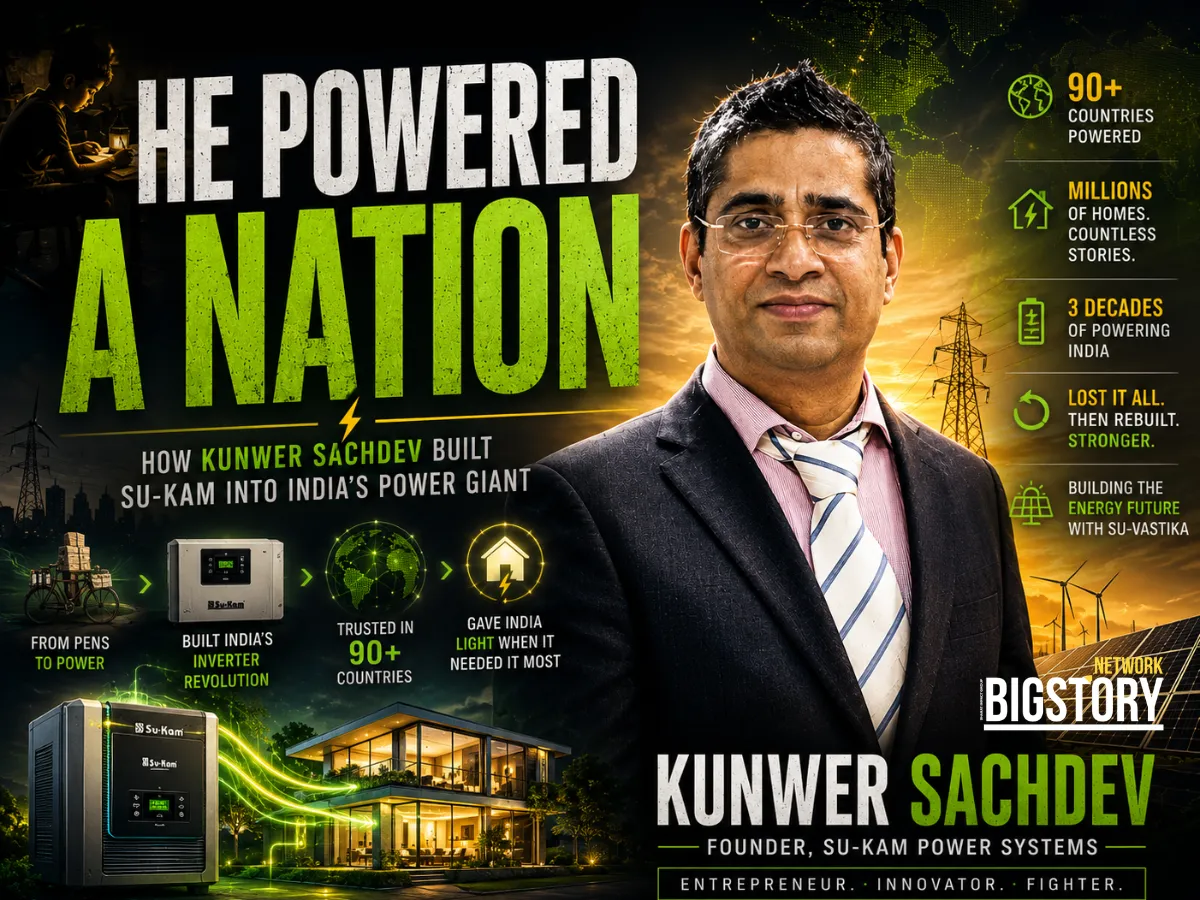
Full Name: Kunwer Sachdev
Born: 16 November 1962, Delhi, India
Education: B.Sc. Statistics – Hindu College; LLB – Delhi University
Known As: "The Inverter Man of India" & "The Solar Man of India"
Founded: Su-Kam Power Systems (1988); Su-vastika Systems (post-Su-Kam)
Global Reach: Su-Kam operated in 90+ countries at its peak
Books Featured: Connect the Dots (Rashmi Bansal); Making Breakthrough Innovations Happen (Porus Munshi)
Awards: Bharat Shiromani (Govt. of India); EY Entrepreneur of the Year
Net Worth Signal: ₹100 Crore+ Gurugram mansion (reported, News18)
Current Focus: Su-vastika Systems – Lithium-ion BESS, Solar Storage, EV Charging
For most people, a power cut is an inconvenience to endure. For one young man standing in that darkness, it was an opportunity hiding in plain sight. That man was Kunwer Sachdev. And what he saw in the dark, he spent the next three decades turning into light for homes, for hospitals, for small businesses, and for an entire country that had quietly accepted powerlessness as a fact of life.
India in the 1990s was a nation in flux. Economic liberalisation had begun; ambitions were rising but the infrastructure had not kept pace. Load-shedding was relentless; businesses lost revenue, students could not study, families cooked by candlelight.
The inverter market existed in patches fragmented, unreliable, and ignored by serious capital. No dominant brand, no standardised quality, no real attempt to serve the vast middle class with affordable power backup. Into this gap walked a man with no engineering degree, no family fortune, and no blueprint.
A brand that, at its peak, operated across more than 90 countries and redefined how India approached power backup. Born on 16 November 1962 into a middle-class family in Delhi, he grew up studying in a government school in Punjabi Bagh, where his father worked as a section officer in Indian Railways.
He carries two titles earned through decades of relentless work: "The Inverter Man of India" and "The Solar Man of India." He is featured in Connect the Dots by Rashmi Bansal which profiles 20 self-made entrepreneurs from modest backgrounds and in Making Breakthrough Innovations Happen by Porus Munshi, which highlights Su-Kam's role in creating India's inverter industry. He has been awarded the Government of India's Bharat Shiromani and Ernst & Young's Entrepreneur of the Year.
Today, after a turbulent exit from Su-Kam, he leads Su-vastika Systems a next-generation energy storage company proving that reinvention, not retirement, is his default mode.
There was no silver spoon. From an early age, Kunwer helped his older brother sell pens cycling through Delhi's neighbourhoods and riding buses to hawk writing instruments. It would be easy to call this hardship. Sachdev would call it his first MBA.
The street teaches what no classroom can: how to read a customer, handle rejection without internalising it, and find the right pitch for the right person. He completed his graduation in Statistics from Hindu College and an LLB from Delhi University. His dream of becoming a doctor remained unfulfilled after he was unable to pass the medical entrance exam. Instead of mourning the closed door, he went looking for the open window.
What made Su-Kam successful it was about paying attention to the daily frustrations of ordinary people, to the silent suffering of a family whose child could not study because the lights went out every night.
"You don't wait for opportunities; you create them." — Kunwer Sachdev
He saw the inverter as a product of dignity a way to give people reliability and control over their own environment. He understood that in a fragmented, trust-deficient market, brand credibility had to be earned through product quality, not manufactured through advertising.
No honest telling of Kunwer Sachdev's story can skip over what happened to Su-Kam in its later years. The company that once powered millions of Indian homes found itself unable to keep its own lights on financial distress mounted, insolvency proceedings followed, and legal scrutiny cast a long shadow over a brand that had been synonymous with reliability.
At 40, Sachdev had also faced a personal health crisis high blood pressure and the physical toll of building an empire at breakneck speed. The years of relentless work had costs that did not show up on balance sheets.
Su-vastika Systems was born not as a rebranding of Su-Kam, but as a genuinely independent venture representing a strategic shift toward cutting-edge energy storage technologies.
Su-vastika focuses on lithium-ion and LiFePO4 battery systems, Battery Energy Storage Solutions (BESS), and advanced power electronics for solar and wind storage, grid stabilisation, and peak demand management with large-scale installations already serving hotels, hospitals, offices, and industry.
This is not a man running from his past. This is a man who studied it carefully, extracted every lesson, and aligned his next act with where the future was heading.
Field-First — Always in the field, meeting dealers, watching products work in tier-3 cities, not just labs.
Relentless Learner — Voracious reader. Mentors’ young entrepreneurs. Unusually willing to discuss failures alongside wins.
Trust Builder — Understood that word-of-mouth from a satisfied dealer was worth more than any advertisement.
Take a moment to imagine the distance between selling pens on crowded streets and building one of India’s most recognized power brands, how many rejections, sleepless nights, risks, failures, doubts, and silent battles must exist between those two realities?
Kunwer Sachdev’s journey was never just about inverters, batteries, or business expansion. It was about vision. About seeing possibility in darkness when the world only saw inconvenience. It was about carrying ambition even when circumstances were small.
From standing on the streets trying to sell a pen…
To understanding consumer behaviour…
To entering industries without privilege…
To building Su-Kam into a household name…
To facing downfall publicly…
And still finding the courage to rise again through reinvention…
Is it success alone?
Or is it the courage to continue moving even after life tests every ounce of your belief?
And most importantly, in the ability to see possibility where others only see limitations.
What makes Kunwer Sachdev’s story compelling to me is not only the rise of Su-Kam or the luxury that followed success. It is the fact that his journey reflects both ambition and adversity. He experienced remarkable growth, faced public setbacks, and yet chose reinvention over surrender.
And perhaps that is what being a Challenger truly means.
I believe journey like this matter because they remind people that extraordinary beginnings are often hidden inside ordinary struggles.
Every Challenger starts somewhere small. What separates them is the courage to continue when the path becomes uncertain.
And that is exactly why this story belongs to the Challengers section of BIGSTORY.
His work has been recognised with the Bharat Shiromani, the EY Entrepreneur of the Year award, and features in two celebrated books on Indian innovation Connect the Dots by Rashmi Bansal and Making Breakthrough Innovations Happen by Porus Munshi. Su-Kam's rise also earned it a place in the India Inc. 500.
https://en.wikipedia.org/wiki/Kunwer_Sachdev
https://suvastika.com/mr-kunwer-sachdev-the-inverter-man-of-india-journey/
https://suvastika.com/su-vastika-news/kunwer-sachdeva-the-power-man-of-india/
https://indiankanoon.org/doc/159964184/
https://www.saurenergy.com/tags/kunwer-sachdev
 Exclusive Content



Sign up for the Daily newsletter to get your biggest stories, handpicked for you each day.


 Trending Now! in last 24hrs