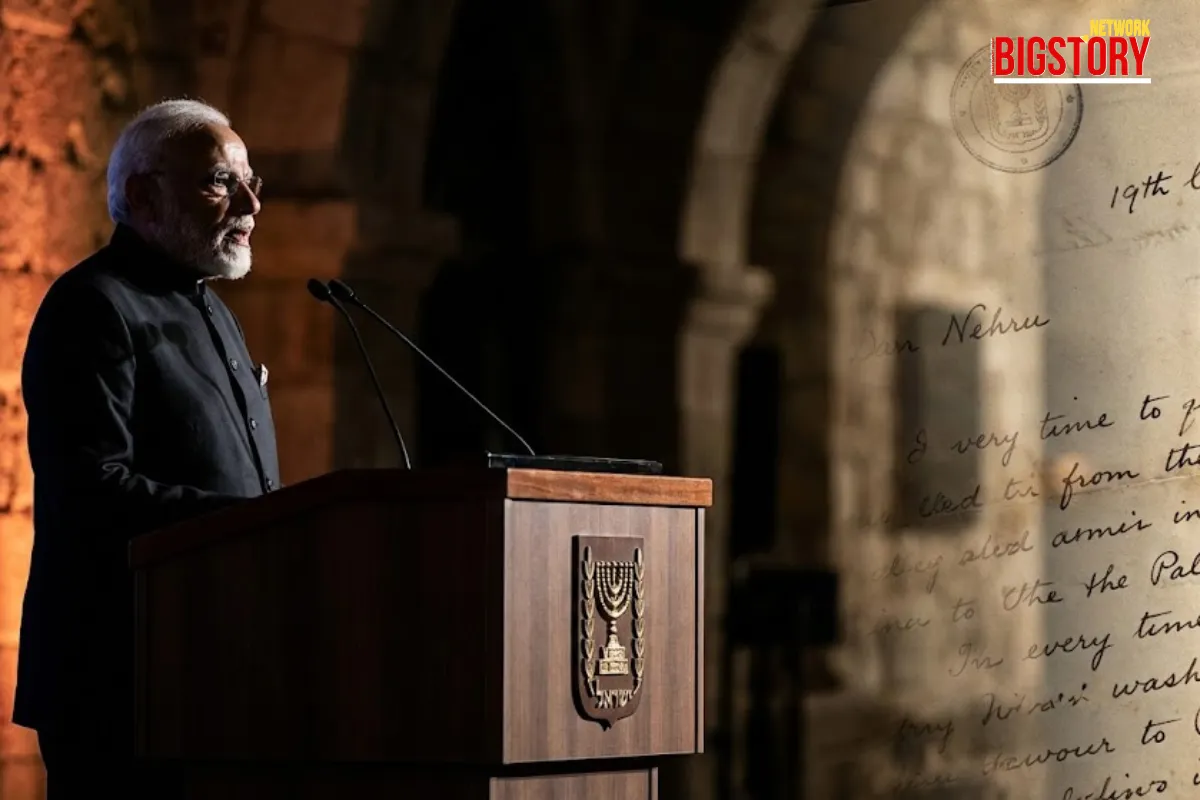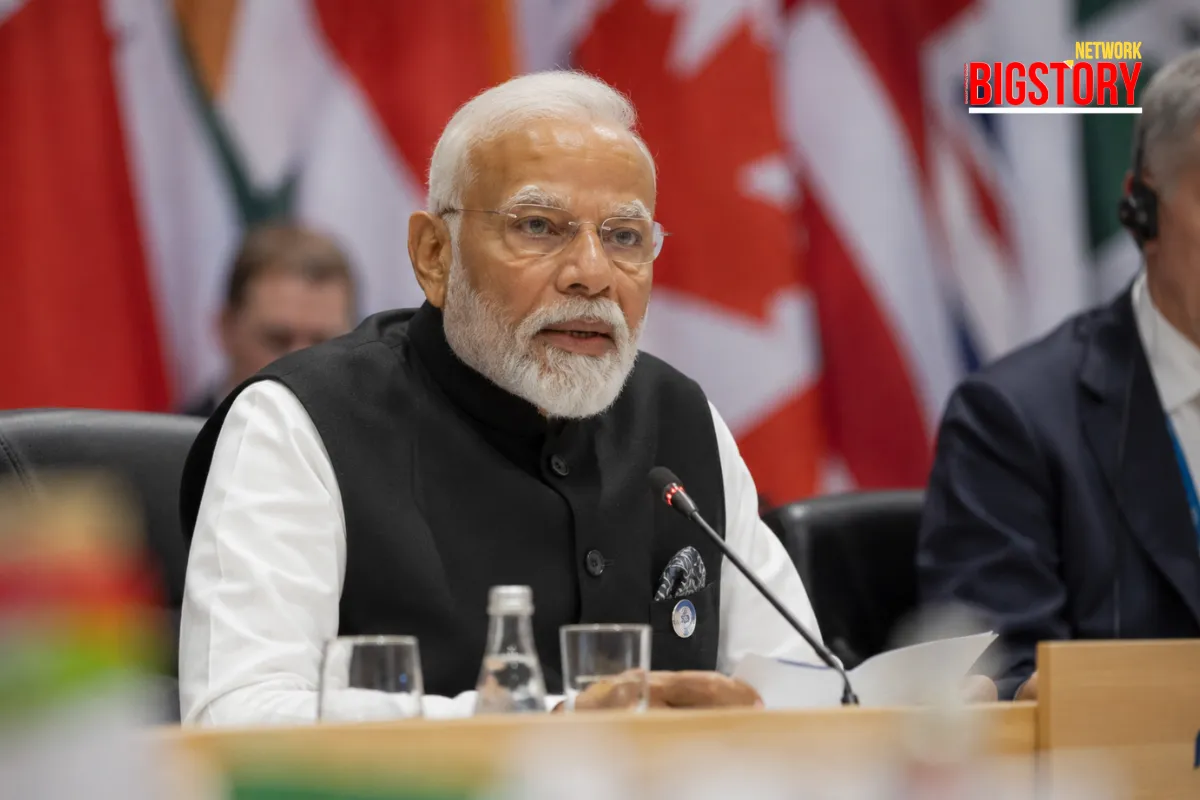
What was designed as a crowning milestone in India-Israel relations has instantly ignited a fierce domestic battle over India's geopolitical soul. On Wednesday, Prime Minister Narendra Modi stood before the Israeli Knesset, declaring India's "uncompromising policy of zero tolerance for terrorism" and firmly aligning New Delhi with Jerusalem.
This matters because the address officially signals the end of India's decades-long geopolitical "balancing act." Almost immediately, the Congress party aggressively pushed back. By Thursday morning, the opposition framed the visit not as a diplomatic victory, but as an abandonment of India's historical non-alignment. By weaponizing a 1947 exchange between India's first Prime Minister Jawaharlal Nehru and physicist Albert Einstein, the opposition is arguing that New Delhi has traded its global moral authority for a localized, transactional defense pact.
The "BigStory" Angle (Birthday Diplomacy & AI Fact-Checking)
Mainstream media is obsessing over the Israeli opposition's walkout—which, factually, was directed at Prime Minister Benjamin Netanyahu over internal judicial disputes, not PM Modi. They are missing the "Birthday Diplomacy" Masterstroke.
During his address, PM Modi intricately tied the geopolitical to the deeply personal. He highlighted that India officially recognized the State of Israel on September 17, 1950—the exact day he was born. This is not just trivia; it is strategic "Personalized Geopolitics." By framing the alliance as a "destined" bond intertwined with his own life, Modi makes it incredibly difficult for any future Indian government to quietly downgrade the relationship back to a "silent engagement."
Meanwhile, the technological warfare behind the scenes is escalating. Opposition research cells are reportedly utilizing AI-driven language models to scan the exact phrasing of Modi's Knesset speech. By quantifying the complete absence of traditional diplomatic terms like "Two-State Solution" or "Sovereign Palestine," the opposition is feeding a data-backed narrative of "moral cowardice" directly to its voter base.
The Context (Rapid Fire)
- The Trigger: PM Modi’s historic address to the Knesset, where he received the Knesset Speaker’s Medal and was greeted with massive "Modi, Modi" chants from Israeli lawmakers.
- The Backstory: The opposition is anchoring its critique on history. In 1947, Nehru wrote to Albert Einstein expressing deep sympathy for the Jewish people, but firmly stating that India could not support policies that unjustly displaced the Arab population—a nuance Congress claims is now dead.
- The Escalation: Congress claims the current administration's stance has alienated over 250 million people globally who looked to India as a historic mediator for Palestinian rights.
Key Players (The Chessboard)
- Narendra Modi (The Ally): Reaffirmed India’s "unwavering" support for Israel against terrorism, stating that "no cause can justify the murder of civilians," while advocating for an expansion of the 43 India-Israel agricultural Centres of Excellence.
- Jairam Ramesh (The Critic): The Congress General Secretary spearheaded the historical counter-attack, accusing the Prime Minister of acting as an "unabashed defender" of Netanyahu rather than a global statesman.
- Yair Lapid (The Bipartisan Host): The Israeli Opposition Leader, who led a walkout against Netanyahu, returned to the chambers specifically to honor PM Modi, thanking him for his leadership and "standing with us in difficult times."
The Implications (Your Wallet & World)
- Short Term (Domestic Politics): The "History War" will dominate the upcoming parliamentary sessions in New Delhi. Expect heavy political polarization in states like Kerala and West Bengal, where India’s traditional "Palestine-First" policy holds significant electoral weight.
- Long Term (Global Strategy): By anchoring the relationship in shared anti-terrorism goals and deep technological integration, the Modi administration is betting that the economic and security benefits of the Israel alliance heavily outweigh the diplomatic blowback from traditional non-aligned nations.
The Closing Question
Congress argues that India’s global strength has always been its balanced moral authority, while the BJP argues that modern terrorism requires choosing firm allies. Can India successfully balance its historic empathy for Palestine with its modern strategic reliance on Israel? Tell us in the comments.

FAQs
- Q: Why did Congress criticize PM Modi's address to the Israeli Parliament?
- A: The Congress party accused PM Modi of delivering an "unabashed defence" of Israeli PM Benjamin Netanyahu, arguing that the speech ignored the humanitarian crisis in Gaza and abandoned India's historically balanced West Asia policy.
- Q: What was in Nehru's 1947 letter to Albert Einstein about Israel?
- A: In 1947, Jawaharlal Nehru wrote to Albert Einstein expressing deep sympathy for the Jewish people's historical suffering but stated that India could not support the displacement of the Arab population, advocating for a balanced, empathetic approach.
- Q: Did the Israeli opposition boycott PM Modi's speech?
- A: No. The Israeli opposition, led by Yair Lapid, staged a walkout during PM Netanyahu's opening remarks due to an internal domestic dispute. However, they explicitly returned to the chambers to welcome and listen to PM Modi's address.
- Q: What did Modi say about the Gaza crisis in his Knesset address?
- A: PM Modi reaffirmed an uncompromising "zero tolerance for terrorism" and stood firmly with Israel regarding the October 7 attacks. He also backed general peace initiatives, stating that "no cause can justify the murder of civilians."
Sources: