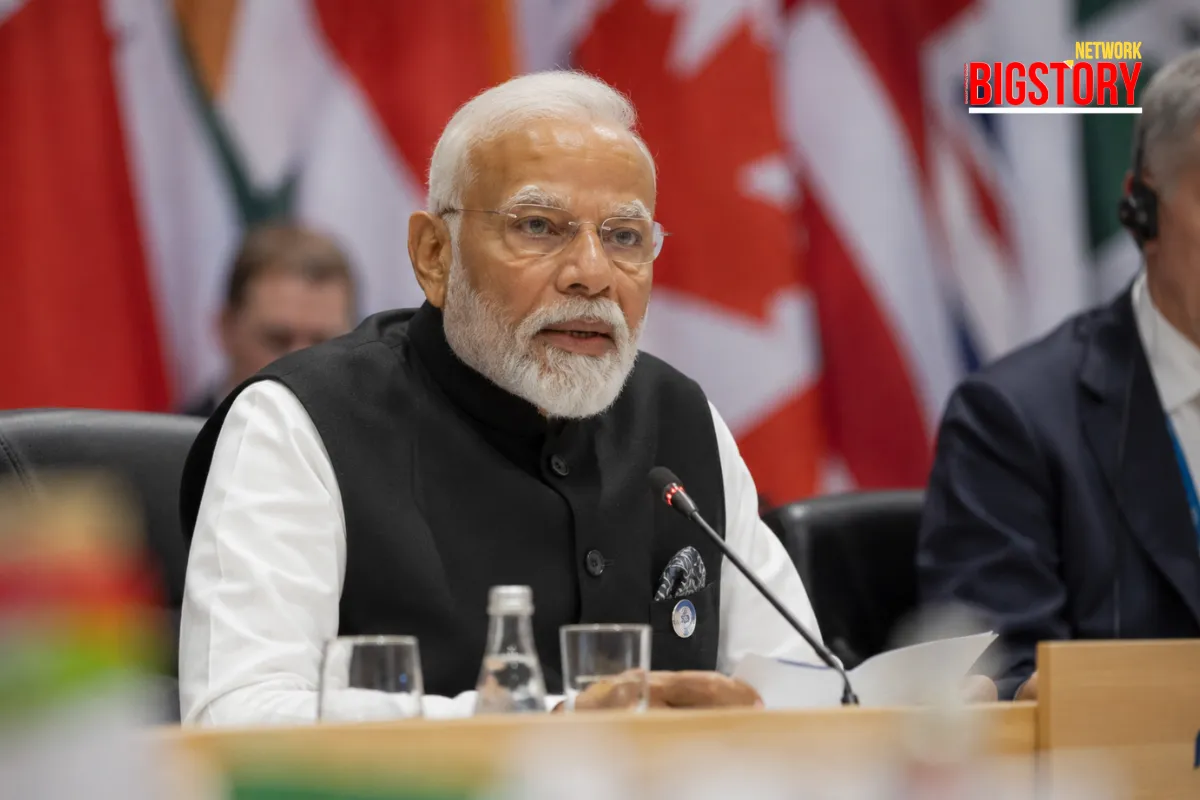
The geopolitical axis of the Middle East and South Asia is about to permanently shift. On Monday, February 23, Israeli Ambassador Reuven Azar set the stage for Prime Minister Narendra Modi’s highly anticipated diplomatic mission to Tel Aviv later this week. The agenda is heavy: finalizing a long-awaited Free Trade Agreement (FTA) and sealing a defence "tech-share" deal that involves weapon systems previously classified as too sensitive to offer to foreign partners.
This matters because it redefines how India secures its borders. For years, India has been a top client for Israeli defence contractors. Now, the relationship is evolving from a standard buyer-seller dynamic into a joint-development powerhouse. The crown jewel of this new pact is "Mission Sudershan," an ambitious project to build an impenetrable, multi-layered anti-ballistic missile shield over India. By securing access to restricted high-tech laser defences and long-range stand-off systems, India is actively bypassing its traditional reliance on Western tech-transfers.
The "BigStory" Angle (The "Silicon-Security" Convergence)
Mainstream defence analysts are obsessing over the missiles. They are completely missing the Pax Silica Convergence.
This pact is not just about intercepting rockets; it is about building a "Middle East-India Corridor" for advanced computing. By linking Israel's world-leading Cyber and Quantum capabilities with India’s massive semiconductor scaling ambitions, the two nations are integrating into the broader "Pax Silica" framework.
Furthermore, Prime Minister Netanyahu recently confirmed that the deal includes a "Special Collaboration" in Artificial Intelligence. The focus is on developing Sovereign GPU clusters capable of managing autonomous border surveillance systems that operate without human intervention—a necessary evolution for guarding India's vast and volatile frontiers.
The Context (Rapid Fire)
- The Trigger: The foundation was laid in September 2025 when India and Israel signed a landmark Bilateral Investment Treaty (BIT), unlocking the legal framework required for sensitive joint ventures.
- The Backstory: In November 2025, India's Defence Secretary visited Tel Aviv, where a Joint Working Group established the protocols for sharing highly restricted laser and interceptor technologies.
- The Escalation: The momentum peaked on February 20 at the AI Impact Summit in New Delhi, where an MoU was signed to deepen industrial cooperation between 30 Indian and 26 Israeli deep-tech and defence firms.
Key Players (The Chessboard)
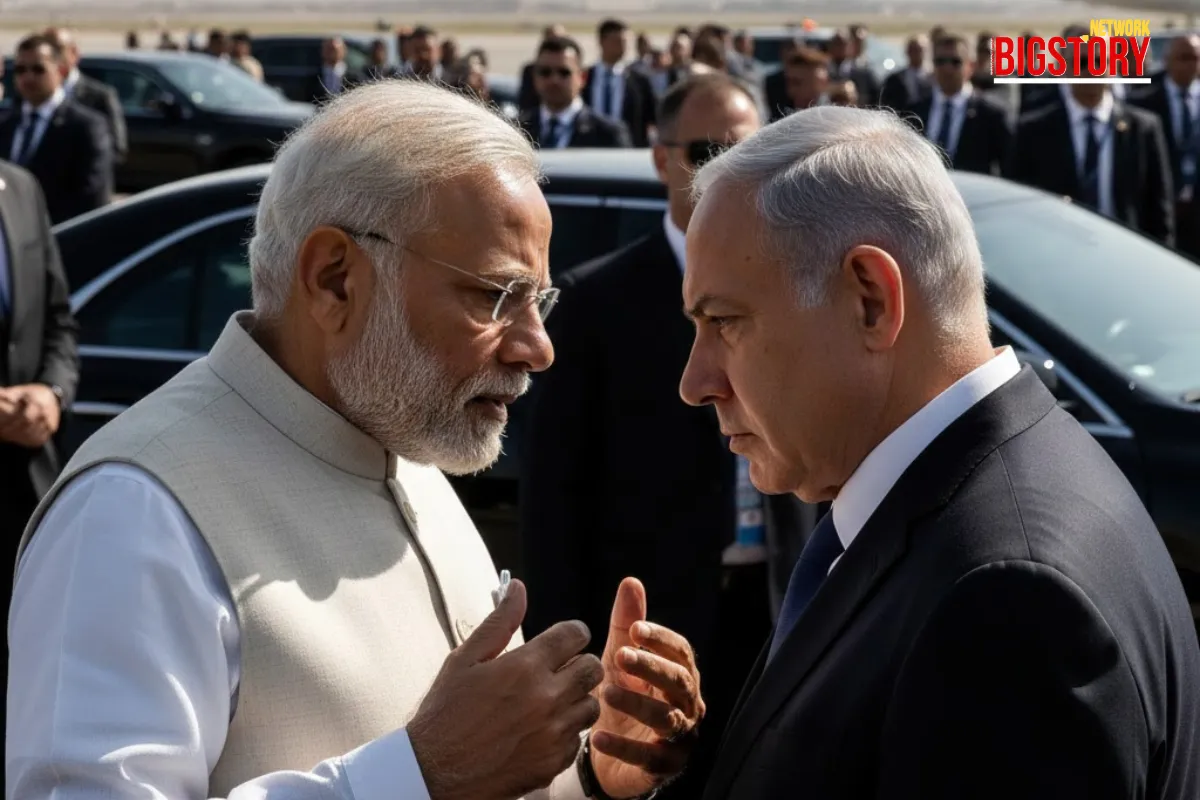
- Narendra Modi & Benjamin Netanyahu (The Architects): The two Prime Ministers are championing an "Axis of Nations" vision, cementing a strategic alliance built on mutual trust, high-tech innovation, and shared regional security anxieties.
- Reuven Azar (The Diplomat): The Israeli Ambassador coordinating this "Decisive Visit," who publicly noted that the rapid evolution of global threats requires updating security agreements for highly sensitive, joint projects.
- Ashwini Vaishnaw (The Tech Bridge): India's IT Minister is playing a crucial role in merging defence hardware procurement with the broader "Pax Silica" semiconductor and AI alliance goals.
The Implications (Your Wallet & World)
- Short Term (Tech Innovators): Indian AI, Quantum, and defence-tech startups should immediately monitor the "I4F" (India-Israel Industrial R&D and Innovation Fund) portal. New, high-value bilateral grants are expected to be announced directly following the February 26 summit conclusion.
- Long Term (Global Trade): The impending Free Trade Agreement is projected to triple the current $3.75 billion bilateral trade volume by 2030, drastically lowering tariffs for Indian IT services, pharmaceuticals, and agricultural exports entering the Israeli market.
The Closing Question
While "Mission Sudershan" promises to shield Indian airspace, integrating foreign AI and quantum technology into sovereign defence systems carries inherent cyber risks. Is co-developing this tech with Israel the safest path, or should India rely entirely on indigenous research? Tell us in the comments.
FAQs
- Q: What is the India-Israel Mission Sudershan for missile defence?
- A: Mission Sudershan is India's ambitious project to build a multi-layered, indigenous anti-ballistic missile shield. The upcoming tech-share deal with Israel will integrate advanced Israeli laser and interceptor technology into this sovereign architecture.
- Q: Will India sign a Free Trade Agreement with Israel in 2026?
- A: Yes, negotiations are in the final stages. Prime Minister Narendra Modi's visit to Israel on February 25–26, 2026, is expected to center on finalizing and officially signing the FTA to boost bilateral trade.
- Q: What defence technologies is Israel sharing with India during Modi's visit?
- A: Israel has agreed to share highly restricted, next-generation technologies, including high-power laser defence systems, long-range stand-off munitions, and collaborative AI and Quantum computing frameworks for border surveillance.
- Q: Is India buying the Iron Dome from Israel?
- A: No. India is not purchasing the Iron Dome as an off-the-shelf product. Instead, India is co-developing its own defence architecture (Mission Sudershan) that utilizes shared Israeli interception technologies adapted for India's massive geographic scale.
Sources:

 Brajesh Mishra
 Exclusive Content