IndiaOne Air flight crash-lands near Rourkela. All 6 survive. Analysis of the single-engine risks in the UDAN scheme and the pilot's heroic actions.
 Brajesh Mishra
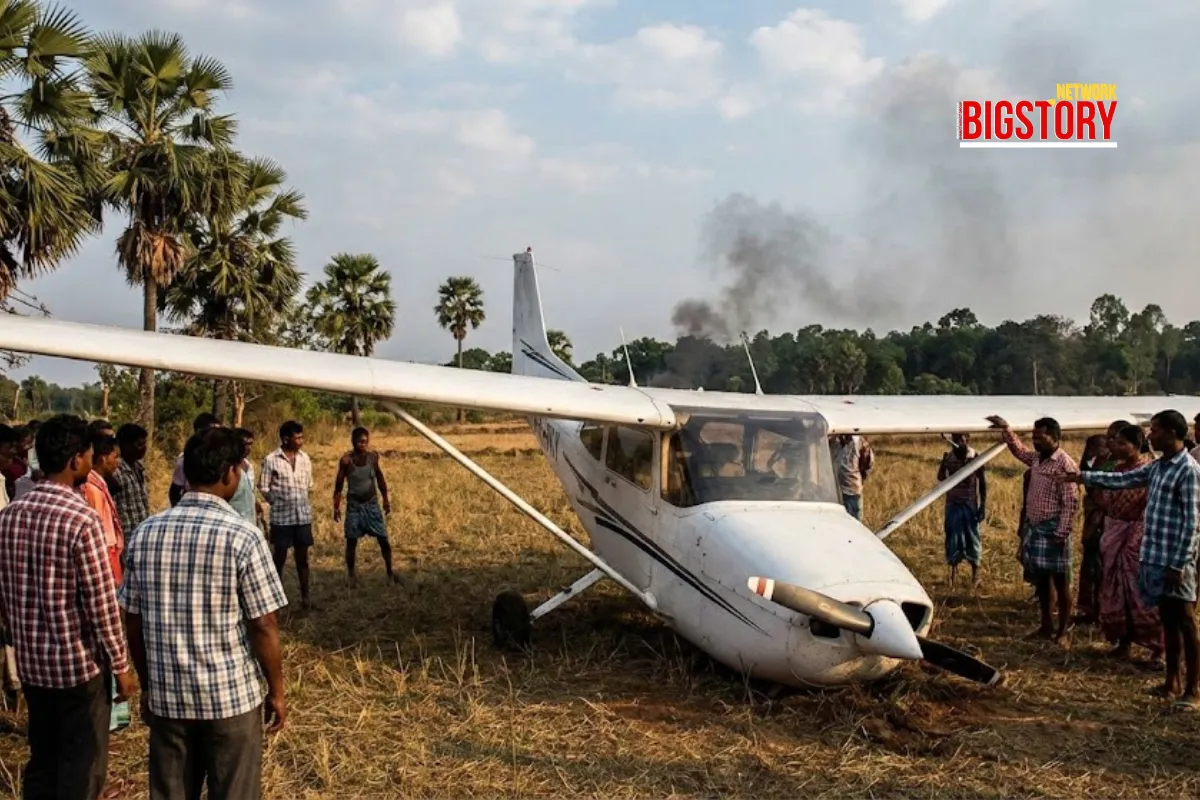
Disaster was averted by a matter of seconds—and meters—in Odisha today. At approximately 1:20 PM IST on January 10, 2026, an IndiaOne Air flight carrying six people crash-landed in an open field near Rourkela, avoiding a densely populated area. The nine-seater Cessna Grand Caravan (VT-KSS) executed a "forced landing" after developing a technical snag just 10 kilometers short of the runway. Remarkably, all six occupants—two pilots and four passengers—survived. While Pilot Captain Naveen sustained serious head injuries and is battling for recovery, the incident has largely been hailed as a "miracle" by state officials.
The flight departed Bhubaneswar’s Biju Patnaik International Airport at 12:27 PM, bound for the steel city of Rourkela—a crucial route under the government's UDAN (regional connectivity) scheme. Around 1:15 PM, the pilots issued a "Mayday" call, reporting a technical failure. With the aircraft losing altitude and no second engine to fall back on, the pilots made a split-second decision to ditch the plane in a field in the Jalda/Kansar area. Odisha Chief Minister Mohan Charan Majhi immediately stepped in, directing top-tier medical care for the survivors at JP Hospital. But as the dust settles, the focus is shifting from the rescue to the machine itself.
While mainstream media celebrates the "Miraculous Escape," the deeper story is the "Single-Engine Risk Profile." The aircraft involved, a Cessna 208B Grand Caravan, is a Single-Engine Turboprop (SET). Unlike commercial jets (Boeing/Airbus) or larger turboprops (ATR-72) which have two engines, a Cessna has zero redundancy. If that one engine fails—due to fuel starvation, bird hit, or mechanical seizure—the plane becomes a heavy glider instantly. The UDAN Scheme has aggressively pushed these aircraft to connect smaller towns because they are cheaper to operate. This crash forces a policy question: Are we trading safety margins for connectivity? Today’s incident wasn’t just a "snag"; it was a systemic vulnerability of single-engine commercial aviation exposed in broad daylight.
Furthermore, the "Maintenance Reality" of small regional carriers needs scrutiny. Unlike indigo or Air India with massive engineering departments, small players often operate with leaner support crews. The investigation by the DGCA and AAIB will need to determine if this "snag" was a sudden anomaly or a result of maintenance stress on an aging fleet.
This crash could dent confidence in the UDAN scheme, specifically for business travelers who use these "air taxis" to save time. If the investigation reveals engine failure, we may see stricter regulations or even temporary groundings of single-engine commercial flights, disrupting connectivity across Odisha, Jharkhand, and the Northeast.
If the engine had failed five minutes earlier over the dense forests of Sundargarh, would we still be calling this a miracle?
Who were the passengers in the Rourkela plane crash? The passengers on board the IndiaOne Air flight were Susanta Kumar Biswal, Anita Sahoo, Sunil Agarwal, and Sabita Agarwal. All four, along with the two pilots, survived the incident with varying injuries.
Did the IndiaOne flight to Rourkela crash? Technically, officials have termed it a "forced landing" rather than a crash, as the pilot successfully brought the plane down in an open field after a technical failure. However, the aircraft sustained significant damage. The incident occurred at approximately 1:20 PM on January 10, 2026.
Is the Cessna Grand Caravan safe for passenger flights? The Cessna 208B Grand Caravan is a globally widely used aircraft known for its ruggedness. However, it is a single-engine turboprop, meaning it lacks the redundancy of multi-engine planes. If its sole engine fails, the pilot must execute a glide landing immediately, as happened in Rourkela
News Coverage
Context & Background
 Exclusive Content




Sign up for the Daily newsletter to get your biggest stories, handpicked for you each day.

 Trending Now! in last 24hrs