Kunal Kamra challenges the Sahyog Portal in Bombay HC, alleging 'automated censorship' and violation of IT Act safeguards. Next hearing scheduled for March 16, 2026.
 Brajesh Mishra
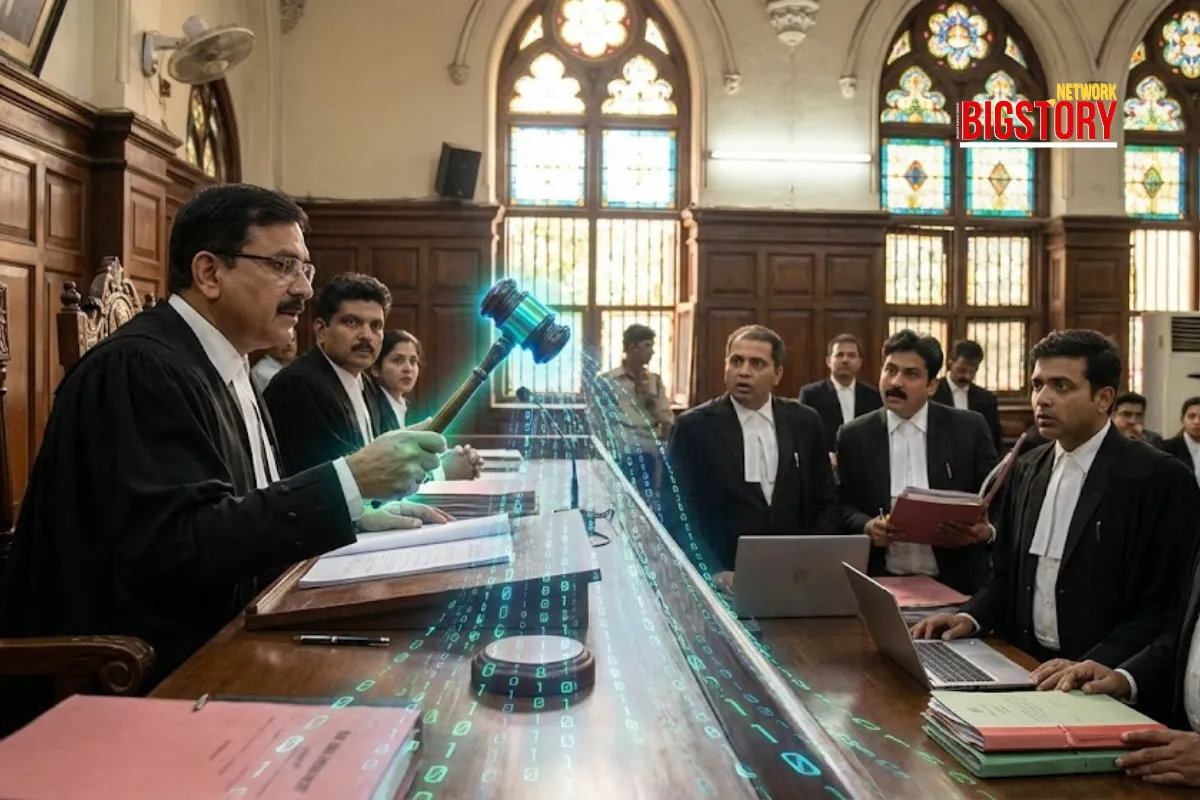
In a fresh offensive against state-led digital regulation, stand-up comedian and satirist Kunal Kamra today moved the Bombay High Court to challenge the constitutional validity of the "Sahyog Portal" and the 2025 Amendment to the IT Rules. Kamra, alongside Senior Advocate Haresh Jagtiani, argues that the newly operationalized mechanism allows government officials to unilaterally bypass the rigorous procedural safeguards of the IT Act, effectively creating a "parallel content-blocking regime."
The petition comes at a critical juncture as the Ministry of Electronics and Information Technology (MeitY) ramps up its "automated" enforcement under the amended Rule 3(1)(d). Mentioned before a bench of Justice Ravindra Ghuge and Justice Abhay Mantri, the plea contends that the Sahyog Portal empowers thousands of junior-level officials to issue takedown orders without the mandatory notice or hearing requirements upheld by the Supreme Court in the landmark Shreya Singhal judgment.
Kunal Kamra (Petitioner/Satirist): The Challenger. By focusing on the "chilling effect" on professional commentators, Kamra is testing whether the judiciary will allow "automated justice" to replace statutory review.
Justice Ravindra Ghuge (Bombay High Court): The Arbiter. Heading the bench that will decide if the Sahyog Portal’s lack of a pre-decisional hearing violates the principles of natural justice.
Sahyog Portal (I4C-led Platform): The Tool. An automated interface connecting over 50 government agencies directly to social media compliance officers, allowing for "instant" takedown requests.
The mainstream media is framing this as another "Comedian vs. State" scuffle, but the real story is the "Code as Law" transition. By moving from Section 69A (which requires a high-level committee and reasoned orders) to a portal-based "intimation" system, the government has replaced judicial oversight with a software interface.
The Sahyog Portal effectively removes the "human friction" of due process. When a takedown becomes as easy as a dashboard notification, the constitutional right to a hearing is replaced by a compliance ticker. The "reframe" here is that the government is trying to automate the suppression of speech under the guise of "technical efficiency," making the intermediary (X, Meta, Google) an uncompensated enforcement arm of the executive.
If a government portal can delete your content without ever sending you a notice, is the "Safe Harbour" protecting the platforms, or is it just protecting the state from accountability?
FAQs
Why has Kunal Kamra moved the Bombay High Court in 2026?He is challenging the constitutional validity of the Sahyog Portal and the 2025 amendment to IT Rule 3(1)(d), alleging they allow arbitrary content blocking without notice.
What is the Sahyog Portal controversy?Critics argue the portal allows government officials to bypass the procedural safeguards (like hearings and reasoned orders) mandated under Section 69A of the IT Act.
What is the 2025 amendment to IT Rule 3(1)(d)? It requires social media platforms to remove "unlawful" content within 36 hours of receiving "reasoned intimation" through the government's Sahyog Portal.
Did the Bombay High Court stay the Sahyog Portal? No. The court has listed the matter for a detailed hearing on March 16, 2026, without granting an immediate interim stay.
How does the Sahyog Portal affect social media users?It enables government agencies to request the takedown of posts or accounts. Users often find their content removed or accounts suspended without prior notice or a chance to appeal.
News Coverage
Context & Analysis
 Exclusive Content






Sign up for the Daily newsletter to get your biggest stories, handpicked for you each day.



 Trending Now! in last 24hrs