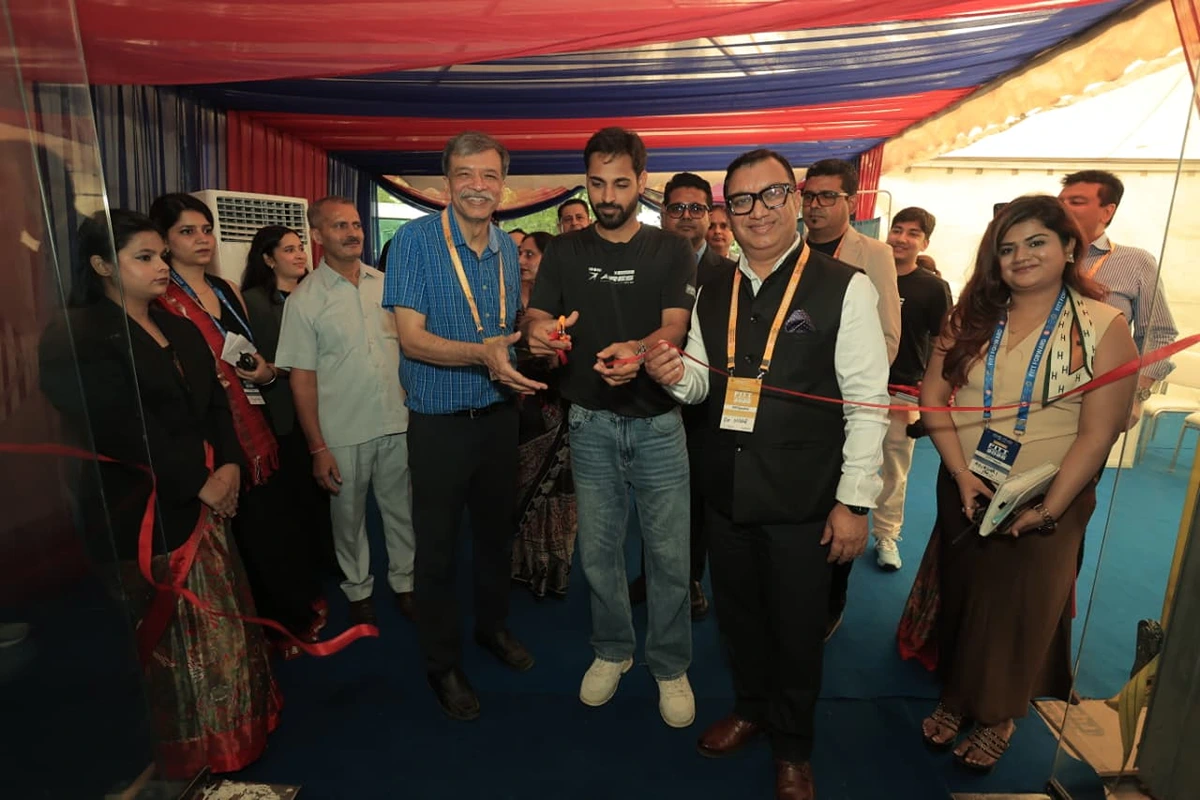
The UAE-India Start-up Series 2.0 in Bengaluru reveals a major structural shift in the economic corridor. Abu Dhabi is moving beyond traditional trade, utilizing sovereign capital and the CEPA mandate to accelerate India's battle-tested B2B and deep-tech enterprises.
 Brajesh Mishra

The UAE is evolving from a traditional trade partner into a strategic venture accelerator for Indian startups, driven by the CEPA mandate. As seen in the UAE-India Start-up Series 2.0 in Bengaluru, Abu Dhabi is ignoring ideation-stage consumer apps in favor of battle-tested, revenue-generating B2B, SaaS, and deep-tech enterprises. Winning startups secure sovereign backing, funding via SAFE notes, and direct integration into Abu Dhabi’s Hub71 ecosystem to scale their infrastructure solutions across the Middle East.
For decades, the economic corridor between India and the United Arab Emirates was defined by a traditional and highly reliable exchange of capital. The Gulf supplied energy resources and capital for large-scale real estate development, while India provided a vast workforce, remittances, and a strong market for commodities. Today, however, a fundamental structural evolution is underway. Under the mandate of the UAE-India Comprehensive Economic Partnership Agreement (CEPA), the UAE is expanding its role from a traditional trade partner to a strategic venture accelerator.
The clearest evidence of this evolution is unfolding in Bengaluru. On November 17 and 18, 2026, the Final Pitch Event of the UAE-India Start-up Series 2.0 brings this new strategy into sharp focus. Organized by the UAE-India CEPA Council, this initiative goes beyond traditional startup competitions. It is a highly curated, sovereign-backed pipeline designed to identify battle-tested Indian technology and integrate it directly into Abu Dhabi’s rapidly expanding tech ecosystem. Out of an impressive 11,000 initial applicants from across India, just ten startups were selected to take the stage. Their seven-minute pitches represent the new frontier of Gulf-India relations: a deep, strategic focus on B2B infrastructure and deep-tech scaling.
To understand exactly where the Middle East is directing its strategic capital, one must analyze the composition of the ten finalists in Bengaluru. While the previous decade of Indian venture capital was heavily defined by hyper-local consumer apps and digital marketplaces, the UAE’s current focus has pivoted decisively. Abu Dhabi is actively seeking hard infrastructure, deep-tech, and B2B SaaS solutions—the essential operational engines required to transition an energy-dependent economy into a diversified, digital-first powerhouse.
The shortlisted companies offer a direct window into Abu Dhabi's strategic priorities:
Abu Dhabi’s strategy is highly pragmatic. Indian founders have already stress-tested complex, scalable technological solutions in one of the world's most dynamic and competitive markets. Rather than building these specialized solutions from scratch domestically, the UAE is partnering with proven Indian enterprises to accelerate its own industrial and technological scaling.
The prize structure of the UAE-India Start-up Series 2.0 reveals exactly how Abu Dhabi plans to anchor and support this talent. The objective is to physically and operationally integrate these companies into the UAE through Hub71, Abu Dhabi’s premier global tech ecosystem.
Through this series, up to three shortlisted startups will secure a place in the Hub71 Access Programme, with one ultimately being onboarded to receive a highly specific financial package. This includes up to AED 250,000 (approximately ₹56.75 lakh) in cash injected via a SAFE (Simple Agreement for Future Equity) note, alongside another AED 250,000 in in-kind operational incentives. By utilizing a SAFE note, the UAE-India CEPA Council establishes an equity-aligned partnership, directly linking the sovereign ecosystem's success to the startup's long-term global valuation.
Furthermore, up to seven additional startups will join the Hub71 Immersion Programme. For a growing enterprise, this access is often as valuable as seed capital. The Immersion Programme acts as a sovereign fast-track, providing these founders with direct, curated introductions to key UAE stakeholders, institutional investors, and corporate partners. It offers a streamlined pathway to regulatory licensing and corporate setup in Abu Dhabi. By doing this, the UAE is proactively removing the bureaucratic friction that can sometimes slow down foreign startups expanding into the Middle Eastern market.
This rigorous selection process also signals a clear maturity in how cross-border incubation operates today. The evaluating jury’s focus has shifted firmly from ideation-stage concepts to proven execution and commercial viability.
The 10 finalists taking the stage in Bengaluru are well past the whiteboard phase. They are product-stage and revenue-generating entities. Companies like Nawgati are already live with leading energy companies and maintain physical deployments across India, while others on the list are already successfully serving clients in the UAE.
The lesson for the broader Indian startup ecosystem eyeing the Gulf is highly encouraging but grounded in commercial reality: a successful UAE market entry is driven by paying customers and proven operational metrics. The UAE expects startups to treat the Middle East as an active, strategic sales territory. The startups capturing sovereign backing are those that have demonstrated strong product-market fit and possess a clear, actionable roadmap for UAE engagement. Cross-border programs are now heavily focused on commercial conversion and scalable enterprise revenue.
This startup integration is not an isolated initiative; it is a structural mandate of international trade strategy. The UAE-India Comprehensive Economic Partnership Agreement (CEPA), which entered into force in May 2022, is widely celebrated for reducing tariffs and boosting the trade of physical goods. However, Article 13.2 of the CEPA explicitly outlines a bilateral commitment to strengthen cooperation in the digital and startup domains, specifically bridging incubators and related institutions.
The Start-up Series 2.0 is the tangible, on-the-ground realization of that treaty. It represents a sophisticated evolution in the corridor—from trading commodities to collaborating on intellectual property and digital infrastructure. Through CEPA and vehicles like Hub71, Abu Dhabi is ensuring that as India's enterprise tech matures, the UAE is positioned as a primary global launchpad and a key partner in that growth.
As the final ten founders deliver their pitches in Bengaluru, the underlying narrative is a highly positive rewriting of the UAE-India economic corridor. The Middle East is evolving from a traditional consumer of Indian labor and commodities into a strategic partner scaling Indian enterprise innovation.
For the winners of the Start-up Series 2.0, a spot in Hub71 and a ₹56.75 lakh SAFE note is just the starting line of a much larger journey. The ultimate metric of success will be how these founders convert this premium sovereign access into long-term, sustainable enterprise contracts across the Gulf over the coming years. The UAE is actively building the digital infrastructure of tomorrow, and it is partnering with India's best founders to make it a reality.
 Exclusive Content






Sign up for the Daily newsletter to get your biggest stories, handpicked for you each day.


 Trending Now! in last 24hrs