BIGSTORY Network


Technology Feb. 19, 2026, 9:28 p.m.

The May 5 Showdown: Why the Supreme Court Just Split the CAA Hearings in Two

The Supreme Court has set May 5, 2026, for the final hearing on the CAA. From the Assam Accord exception to the "irreversibility" debate, here is the insider legal breakdown.

by Author Ritika Das
Hero Image

The six-year legal limbo surrounding India's most fiercely debated citizenship law finally has an expiration date. Today, Chief Justice Surya Kant, alongside Justices Joymalya Bagchi and Vipul M Pancholi, locked down May 5 to May 12, 2026, to hear the final arguments on the constitutional validity of the Citizenship (Amendment) Act, 2019.

This matters because the clock is actively ticking on irreversible demographic shifts. The Union Government already notified the CAA Rules in March 2024 and has been actively processing applications and granting citizenship certificates. If the Supreme Court ultimately strikes down the law after May 12, it faces the impossible legal knot of attempting to revoke citizenship from thousands of newly naturalized Indians.

The "BigStory" Angle (The Two-Front Legal War)

The mainstream headlines are focusing on the dates, but the real story is the strategic Bifurcation of the Bench.

By ordering the Registry to segregate the "Assam and Tripura" petitions from the "Pan-India" challenges, the Supreme Court has admitted that this is not a single constitutional question. The pan-India argument (led by the IUML) claims the law violates secularism and Article 14 (Right to Equality) by excluding Muslims.

But the North-East is fighting a completely different war. Petitioners from Assam argue that extending the citizenship cut-off date to December 31, 2014, blatantly violates the Assam Accord of 1985, which had set the strict deportation cut-off at March 24, 1971. The Court’s decision to hear the "general" matters first before pivoting to the North-East means the government will have to defend the exact same law against two entirely contradicting legal philosophies within 48 hours.

The Context (Rapid Fire)

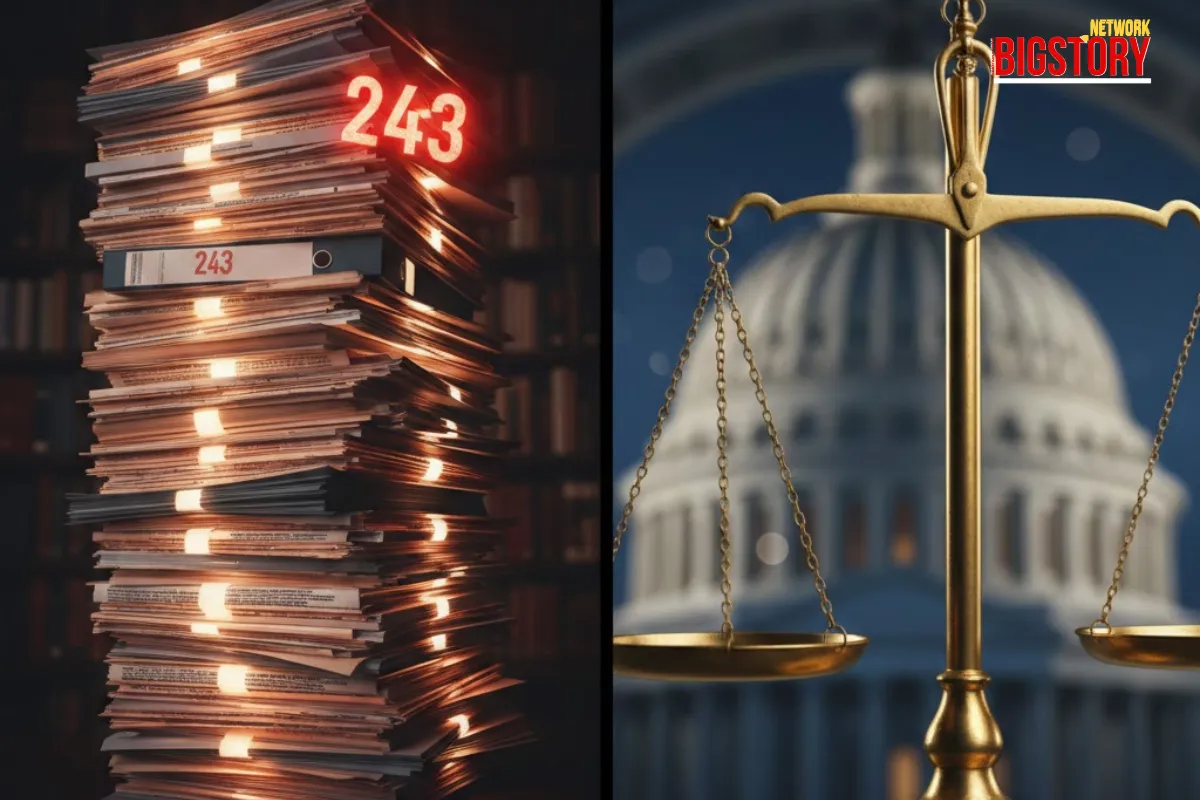
  • The Trigger: Senior Advocates Indira Jaising and Siddharth Luthra pressed the Court today, stating the written submissions were complete and the 243 petitions were finally "ripe for final hearing".
  • The Backstory: The CAA was passed in December 2019 to fast-track citizenship for non-Muslim minorities (Hindus, Sikhs, Buddhists, Christians, Jains, and Parsis) who fled Pakistan, Bangladesh, and Afghanistan before the end of 2014.
  • The Escalation: The Supreme Court previously refused to stay the implementation of the Act or the 2024 Rules, meaning the government has had a two-year runway to operationalize the law while the courts waited.

Key Players (The Chessboard)

  • Chief Justice Surya Kant (The Arbiter): He is enforcing strict time limits, granting the petitioners one-and-a-half days, the Centre one full day, and concluding rejoinders strictly by May 12 to prevent endless filibustering.
  • Solicitor General Tushar Mehta (The Defender): Representing the Centre, his core argument is that the CAA is a "benign piece of legislation" providing amnesty, and does not strip any existing Indian of their citizenship.
  • Kapil Sibal (The Challenger): Arguing for the lead petitioners, he has consistently warned the Court of the "irreversibility" of the process, asserting that once citizenship is granted, rolling it back creates a humanitarian and constitutional crisis.

The Implications (Your Wallet & World)

  • Short Term (This Month): Nodal counsels have exactly two weeks to bucket the 243 cases into the two geographic categories, and four weeks to file supplementary documents. Legal tech firms will be working overtime to process this massive document discovery.
  • Long Term (Post-May 2026): If the Supreme Court upholds the CAA, expect a renewed, aggressive push to implement a nationwide National Register of Citizens (NRC)—a combination that petitioners argue will explicitly target undocumented Muslims while shielding undocumented non-Muslims.

The Closing Question

The Supreme Court has refused to halt the granting of citizenship while it decides if the law is actually constitutional. Do you think the Court should freeze all new CAA approvals until the May 12 verdict is delivered? Tell us in the comments.

FAQs

  • Q: When is the final hearing for CAA petitions in the Supreme Court?
  • A: The Supreme Court has scheduled the final hearings to begin on May 5, 2026, and conclude with rejoinder arguments on May 12, 2026.
  • Q: Why is the Assam CAA case being heard separately?
  • A: The issues in Assam and Tripura are demographically and legally distinct. Petitioners there argue the CAA violates the Assam Accord by extending the cut-off date for migrants from 1971 to 2014.
  • Q: Who is the lead petitioner in the CAA challenge?
  • A: The Indian Union Muslim League (IUML) is the lead petitioner among the 243 pleas challenging the constitutional validity of the law.
  • Q: Has the Supreme Court stayed the implementation of CAA in 2026?
  • A: No. The Supreme Court has repeatedly declined to stay the Citizenship (Amendment) Act or its 2024 Rules, allowing the government to continue processing citizenship applications.

Sources: Live Law, The Hindu, India Today, SC Observer.

Ritika Das
Ritika Das Editor

Experienced editor focused on healthcare and social issues, including criminal justice. Her work reflects deep investigative rigor and a commitment to social impact through journalism.

BIGSTORY Trending News! Trending Now! in last 24hrs

The "10-Day" Ultimatum: Is Trump Using Russian Oil as an Excuse for a New Trade War?
Technology
The "10-Day" Ultimatum: Is Trump Using Russian Oil as an Excuse for a New Trade War?
The Vetting Failure: Why a Store-Bought Robot Fooled India's Biggest AI Expo
Technology
The Vetting Failure: Why a Store-Bought Robot Fooled India's Biggest AI Expo
The May 5 Showdown: Why the Supreme Court Just Split the CAA Hearings in Two
Technology
The May 5 Showdown: Why the Supreme Court Just Split the CAA Hearings in Two
Why a Tribal Candidate's Death in Maktal Just Redrew Telangana’s Poll Map
Technology
Why a Tribal Candidate's Death in Maktal Just Redrew Telangana’s Poll Map