The US and China agreed to a one-year trade truce cutting tariffs and easing rare-earth tensions, but core tech controls and security-led trade barriers remain firmly in place.
 Sseema Giill
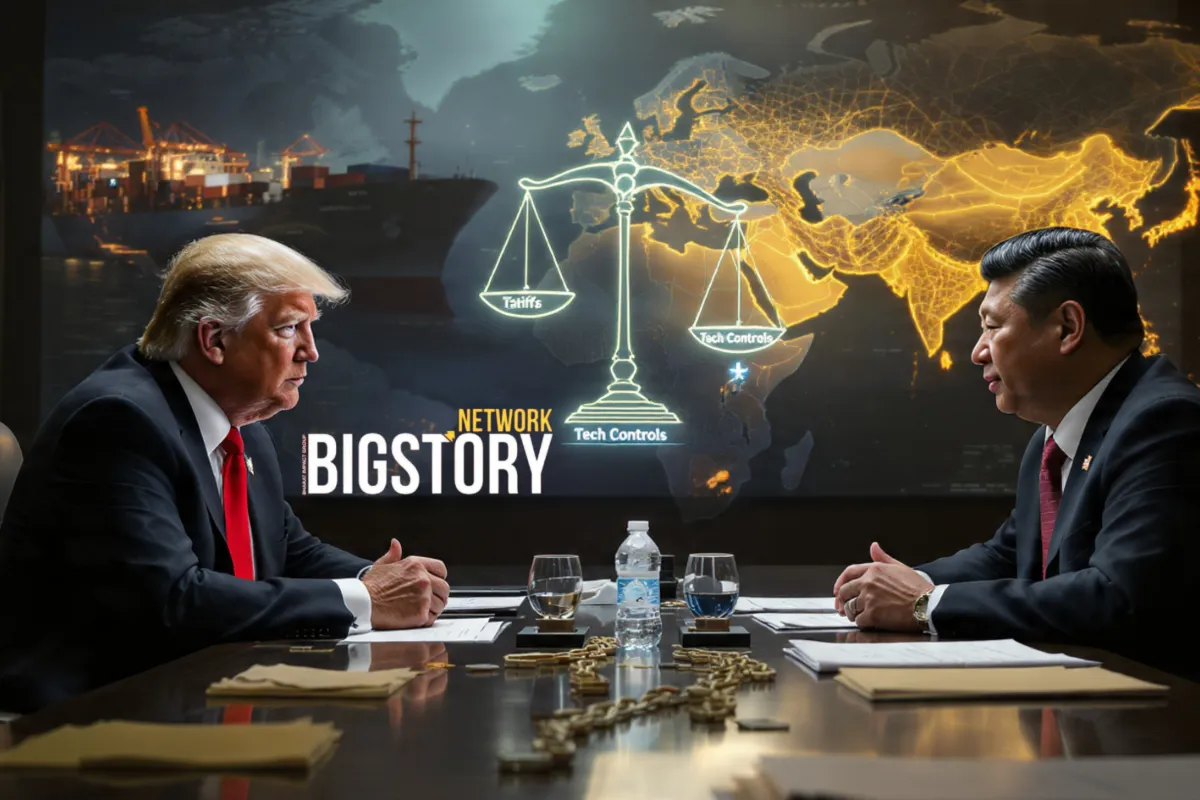
The United States and China agreed to a one-year trade pact that trims US tariff rates on Chinese goods by 10 percentage points, suspends China’s latest rare-earth export curbs, resumes soybean purchases, and reduces so-called “fentanyl tariffs” to 10%—averting a threatened 100% escalation. The headline relief doesn’t touch the hard spine of the rivalry: export controls, semiconductor tariffs, maritime fees, and Section 301 probes remain in force. Stabilization, yes; reset, no.
Over the past two years, tariffs and security rules have hardened into a security-first trade architecture. This deal releases short-term pressure while leaving the structure intact. Beijing converts rare earths into an annual bargaining valve; Washington banks tariff optics without loosening chip and tools controls. Markets get calm headlines, but compliance and tech walls still shape the field.
Escalations from late 2024 through 2025 (tariff staircase, maritime fees, port equipment scrutiny) created political and economic incentives to pause before bigger measures bite in Q4 2025–2026. Trump sought visible de-escalation without market shock; Xi sought external stability and material flows while preserving structural leverage via annual minerals review.
This is managed, security-conditioned trade. Commodities (soybeans, rare earths) become short-cycle pressure valves, while long-cycle tech decoupling hardens. The pact is a tactical pause, not a strategic pivot.
Likely near-term winners:
Still in the grind:
1) Did the deal end the US-China trade war?
No. It pauses escalation for a year and trims tariffs, but export controls, tech tariffs, maritime fees, and Section 301 actions continue.
2) How big is the tariff cut, really?
About 10 percentage points off the current average—roughly 57% → 47%—subject to product coverage and timing schedules.
3) What happens to rare earths now?
China suspends the latest curbs for 12 months. Access becomes an annual renegotiation, which preserves Beijing’s leverage while offering Washington near-term certainty.
4) Are chips and AI affected by this truce?
No change. Semiconductor export controls and chip-related tariffs remain intact (with 50% rates in 2025 on certain items). The compute bifurcation stays.
5) What are “fentanyl tariffs,” and why cut them to 10%?
They’re customs measures aimed at precursor chemicals and related products. The cut is partly political optics and coordination signaling; broader enforcement still relies on policing, sanctions, and investigations beyond tariffs.
 Exclusive Content






Sign up for the Daily newsletter to get your biggest stories, handpicked for you each day.



 Trending Now! in last 24hrs