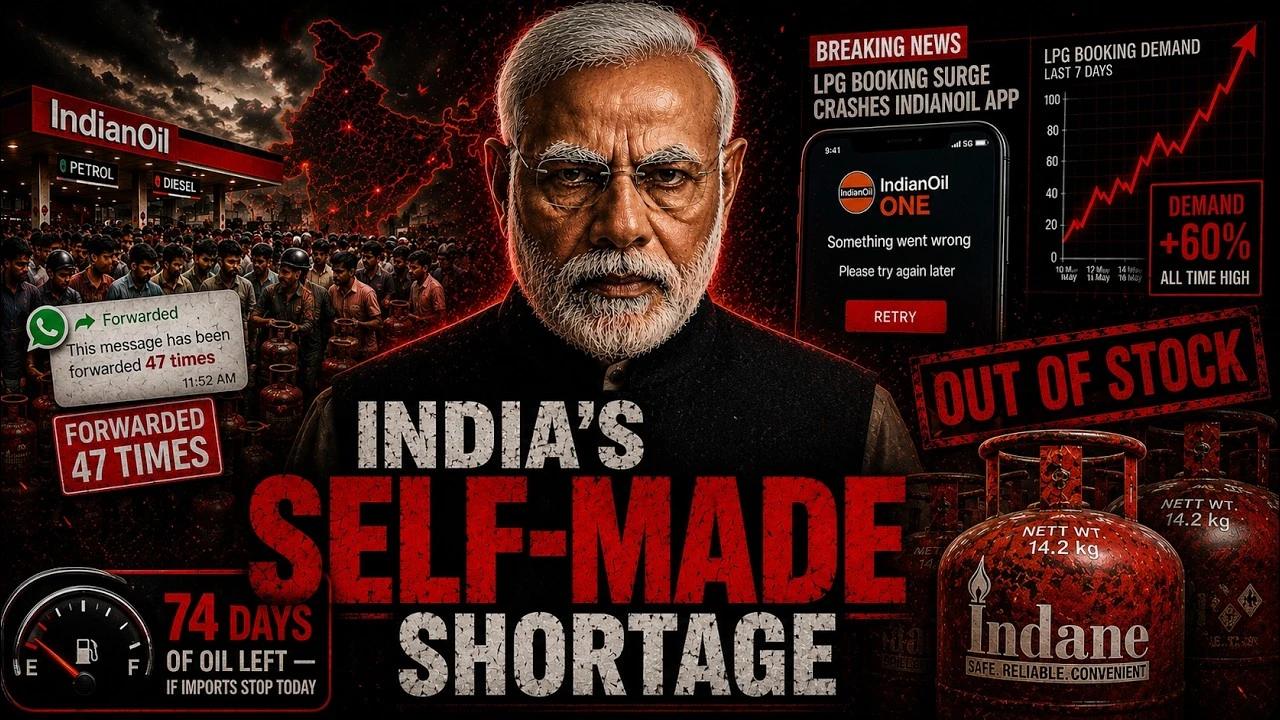
With the Strait of Hormuz blockade severely threatening India's energy imports, Oil Marketing Companies are weighing a radical plan to stretch the nation's cooking gas supply by filling less gas into standard steel cylinders.
 Brajesh Mishra
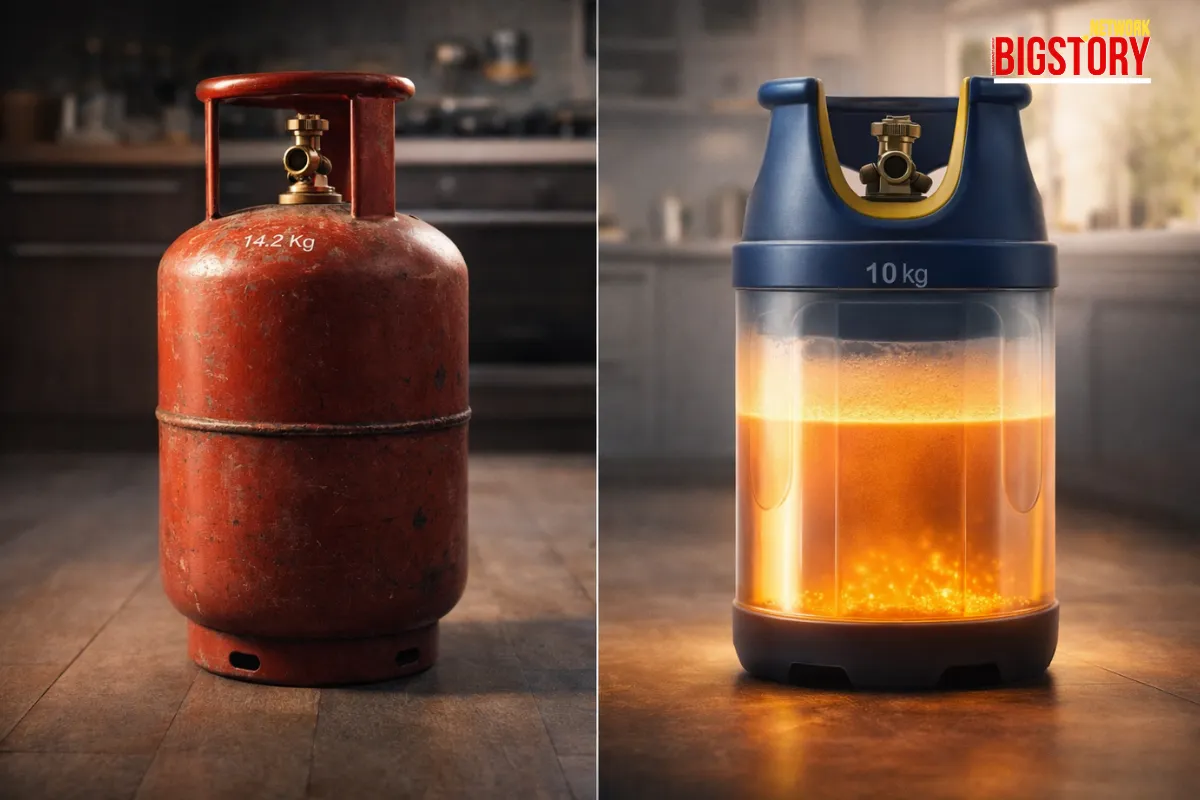
What happened: The Indian government and Oil Marketing Companies (OMCs) are evaluating a contingency plan to supply only 10 kg of LPG inside the standard 14.2 kg steel cylinders.
Why it happened: The ongoing West Asia conflict and the disruption of the Strait of Hormuz—which handles nearly 60% of India's LPG imports—has pushed domestic stocks to "worrisome" levels.
The strategic play: By reducing the fill weight, the government aims to stretch existing inventory by roughly 30%, allowing gas to be distributed to more households more frequently to prevent localized "dry outs."
India's stake: While the Ministry of Petroleum has termed the reports "speculative," the potential implementation would mean consumers receive a proportionately cheaper cylinder that lasts 25-30 days instead of the usual 35-40 days.
The deciding question: Will the logistical nightmares of recalibrating bottling plants and updating billing systems outweigh the necessity of rationing cooking gas before the national reserves are depleted?
As the geopolitical crisis in the Middle East continues to choke the world's most critical energy arteries, the Indian government is weighing a radical domestic intervention. Recent reports indicate that the Centre and state-run Oil Marketing Companies (OMCs) are actively evaluating an emergency contingency plan to supply only 10 kg of LPG inside the standard 14.2 kg steel domestic cylinders.
With the Strait of Hormuz blockade severely limiting the arrival of new cargo, this proposed "short-fill" strategy aims to manage the national cooking gas crisis by stretching existing inventory, ensuring that more households receive gas, albeit in smaller quantities.
India imports nearly 60% of its total LPG requirements, with the vast majority historically arriving via the now-blockaded Persian Gulf. With domestic stocks reaching what officials have privately termed "worrisome" levels, OMCs like Indian Oil Corporation (IOC), Bharat Petroleum (BPCL), and Hindustan Petroleum (HPCL) have been asked to explore rapid rationing measures.
While OMC executives confirm that feasibility studies regarding the recalibration of bottling plants are underway, the government is proceeding with extreme caution to avoid triggering nationwide panic buying.
Sujata Sharma, Joint Secretary in the Ministry of Petroleum and Natural Gas, officially addressed the reports on Tuesday, terming them "highly speculative." She emphasized that domestic LPG and piped natural gas (PNG) remain the highest priority and that retail supply chains are currently operating normally. However, industry insiders note that if the 48-hour ultimatum from President Trump results in a wider regional war, this contingency plan could be activated within a matter of days.
It is crucial for consumers to distinguish this emergency rationing plan from the pre-existing 10 kg "Composite" cylinders already available in the market.
Separate from the current wartime emergency measures, OMCs have offered a permanent 10 kg Composite Cylinder (like Indane's "Xtralite") as a premium lifestyle upgrade for several years.
Key Differences:
If you are interested in moving away from the heavy, traditional 14.2 kg steel cylinder to the modern 10 kg composite version, the process is straightforward:
As PM Modi recently addressed the Rajya Sabha regarding India's strategic oil reserves, the government is fighting on multiple fronts to keep the country fueled. Whether the gas arrives in a heavy steel shell or a translucent fiberglass one, ensuring that Indian kitchens remain lit is now the administration's most urgent domestic priority.
News & Wire Coverage:
 Exclusive Content




Sign up for the Daily newsletter to get your biggest stories, handpicked for you each day.


 Trending Now! in last 24hrs