BIGSTORY Network


International News March 10, 2026, 8:32 p.m.

The Human Shield Crisis: Iran's Drone Strike on a US Tanker Traps Indian Seafarers in the Gulf

As the IRGC enforces its maritime blockade with targeted drone attacks, the Indian government faces mounting pressure to evacuate its citizens crewing the world's most dangerous waters.

by Author Sseema Giill
Hero Image

⏱️ 30-Second Brief

Expand to Read

What happened: Iran's IRGC claimed responsibility for striking the US-linked oil tanker "Louise P" with a drone in the Strait of Hormuz. Why it happened: The attack enforces Iran's blockade of the strait and fulfills its threat to target all American assets in retaliation for US-Israeli military strikes. The strategic play: Tehran is actively demonstrating that it can and will physically enforce the closure of the world's most critical oil chokepoint despite the US Navy's presence. India's stake: The indiscriminate drone strikes put thousands of Indian seafarers at extreme risk, with at least three Indian crew members already killed in previous attacks this month. The deciding question: Will the Indian government ban its citizens from crewing commercial ships in the Persian Gulf, effectively paralyzing global fleets reliant on Indian labor?

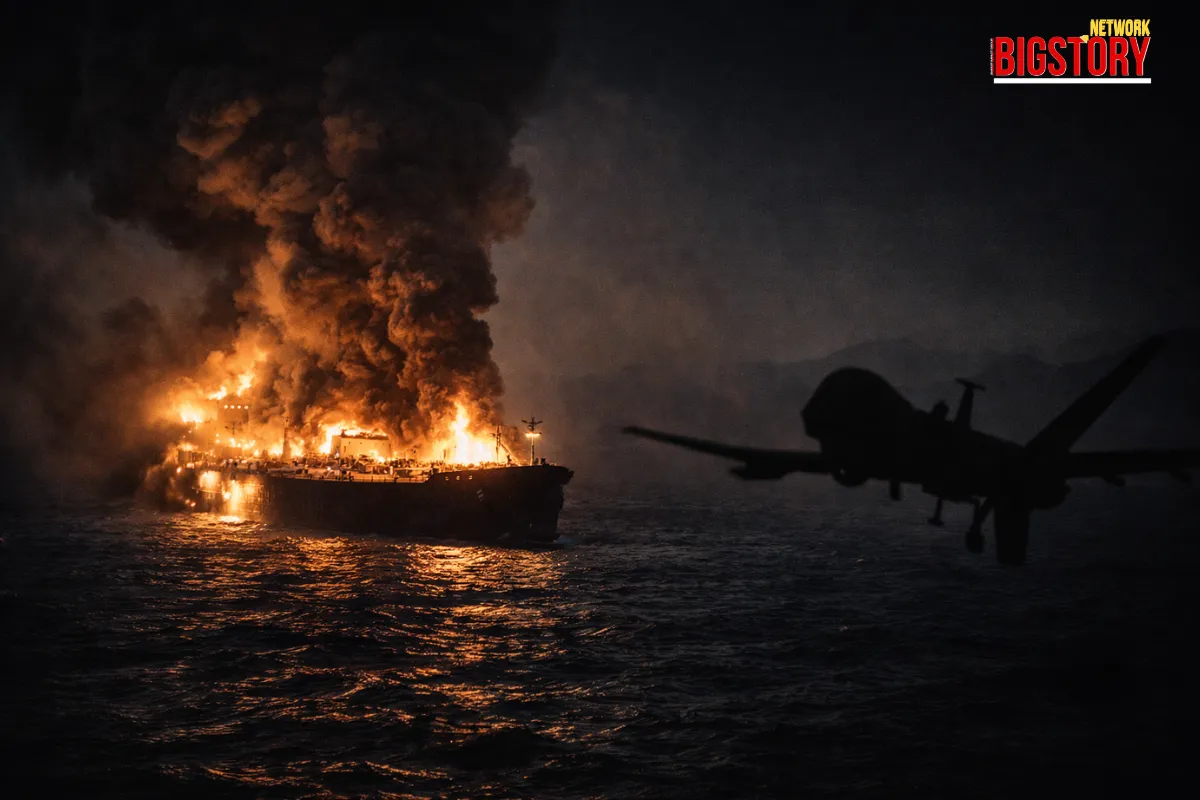
The unprecedented drone strike by Iran on a US-linked tanker in the Strait of Hormuz in early 2026 has transformed a vital global energy artery into a deadly maritime trap. On Saturday, Iran's Islamic Revolutionary Guard Corps (IRGC) formally claimed responsibility for striking the Marshall Islands-flagged Louise P with an unmanned aerial vehicle. This drastic military escalation immediately threatens the physical safety of thousands of Indian seafarers caught in the crossfire of a rapidly expanding blockade.

This attack physically enforces Tehran's threat to eliminate all American and Israeli assets from the Persian Gulf in retaliation for 'Operation Epic Fury'. With commercial traffic plunging 70 percent and three Indian sailors already killed in previous maritime strikes this month, the global shipping industry is effectively paralyzed, leaving the Global South to bear the heavy human cost of a superpower standoff.

How We Got Here

  • The Trigger: The United States and Israel launch 'Operation Epic Fury' against Iran on February 28, sparking a major regional war and violently disrupting Middle East supply lines.
  • The Background: Initial projectile strikes in the Strait hit multiple commercial tankers, including the Skylight and MKD Vyom, resulting in the deaths of at least three Indian crew members.
  • The Escalation: An IRGC commander officially declared the Strait of Hormuz "closed" on March 2, halting nearly all commercial shipping traffic through the waterway that processes 20 percent of global crude.
  • The Stakes: On March 7, the IRGC confirmed a targeted UAV strike on the Louise P, officially declaring all US and Israeli assets in the region as "legitimate targets" for destruction.

The Key Players

Islamic Revolutionary Guard Corps (IRGC) The Iranian paramilitary force claimed direct responsibility for the UAV strike. They are aggressively enforcing their threat to shut down the Strait of Hormuz, explicitly stating the Louise P was struck simply "on the grounds that it belongs to the US."

Donald Trump, President of the United States Trump initiated the intense military strikes on Iran and recently offered federal insurance backstops to shippers, threatening massive military retaliation to forcibly keep the strait open for Western commerce.

Indian Seafarers Indian nationals constitute nearly 10 percent of the global commercial shipping workforce. These civilian mariners are currently serving as involuntary human shields, suffering fatal collateral damage from indiscriminate drone strikes while manning foreign-flagged vessels.

The BIGSTORY Reframe — The Human Shield Crisis

International media outlets and Western analysts fixate entirely on fluctuating oil prices and the geopolitical chess match between Washington and Tehran. This narrow framing completely ignores the human cost currently being extracted from the Global South. The targeted vessels fly Western or convenience flags, and their cargo is insured by massive American and European institutions, but the men dying in the engine rooms are overwhelmingly Indian. By deliberately targeting commercial vessels like the Louise P, the IRGC is actively turning civilian mariners into human shields in a high-stakes proxy war.

India faces a severe diplomatic and humanitarian emergency that eclipses the macroeconomic oil shock. With three Indian sailors already dead, New Delhi can no longer treat this solely as an energy supply chain issue. The Indian government is permitting its citizens to sail into a declared combat zone where indiscriminate drones cannot distinguish between an American corporate asset and an Indian engine mechanic. The crisis demands immediate, aggressive intervention from New Delhi to secure the lives of its diaspora before the casualty list lengthens.

What This Means for India

  • Right of Refusal: The Ministry of External Affairs faces massive domestic pressure to mandate a "right of refusal" for Indian sailors operating in the newly declared high-risk zone without fear of contract termination.
  • Regulatory Intervention: The Directorate General of Shipping (DGS) must issue an immediate advisory restricting Indian nationals from crewing vessels actively transiting the Persian Gulf.
  • Union Action: Watch closely to see if Indian maritime unions launch a mass strike or boycott of Gulf routes, a move that would effectively paralyze the global commercial fleets reliant on their specialized labor.

The Implications

  • Short Term: Shipping companies will struggle intensely to crew vessels entering the Middle East, driving insurance premiums and global freight costs to unsustainable, wartime highs.
  • Medium Term: The Indian government will be forced to demand explicit civilian safety guarantees from both Washington and Tehran, complicating its diplomatic balancing act.
  • India-Specific Consequence: The deaths of Indian citizens on foreign ships highlight the severe vulnerability of India's massive overseas workforce, demonstrating that geopolitical neutrality does not protect citizens from crossfire.

If the United States and Iran are willing to sink commercial tankers to win a geopolitical standoff, why is the Indian government allowing its citizens to crew the target practice?

Sseema Giill
Sseema Giill Founder & CEO

Sseema Giill is an inspiring media professional, CEO of Screenage Media Pvt Ltd, and founder of the NGO AGE (Association for Gender Equality). She is also the Founder CEO and Chief Editor at BIGSTORY NETWORK. Giill champions women's empowerment and gender equality, particularly in rural India, and was honored with the Champions of Change Award in 2023.

BIGSTORY Trending News! Trending Now! in last 24hrs

The Illusion of an Endgame: IRGC Rejects Trump's Timeline and Threatens India's Energy Lifeline
International News
The Illusion of an Endgame: IRGC Rejects Trump's Timeline and Threatens India's Energy Lifeline
The Extraterritorial Blacklist: How the Anthropic-Pentagon Lawsuit Traps India's IT Giants
International News
The Extraterritorial Blacklist: How the Anthropic-Pentagon Lawsuit Traps India's IT Giants
The Diaspora Crossfire: Iran's Devastating Strikes on Bahrain Trap Three Lakh Indians
International News
The Diaspora Crossfire: Iran's Devastating Strikes on Bahrain Trap Three Lakh Indians
The Human Shield Crisis: Iran's Drone Strike on a US Tanker Traps Indian Seafarers in the Gulf
International News
The Human Shield Crisis: Iran's Drone Strike on a US Tanker Traps Indian Seafarers in the Gulf