Amid a spiraling global energy and supply chain crisis, India and South Korea are rushing to integrate their economies, launching a massive strategic push into shipbuilding, AI, and green energy during the first state visit by a South Korean leader in eight years.
 Brajesh Mishra
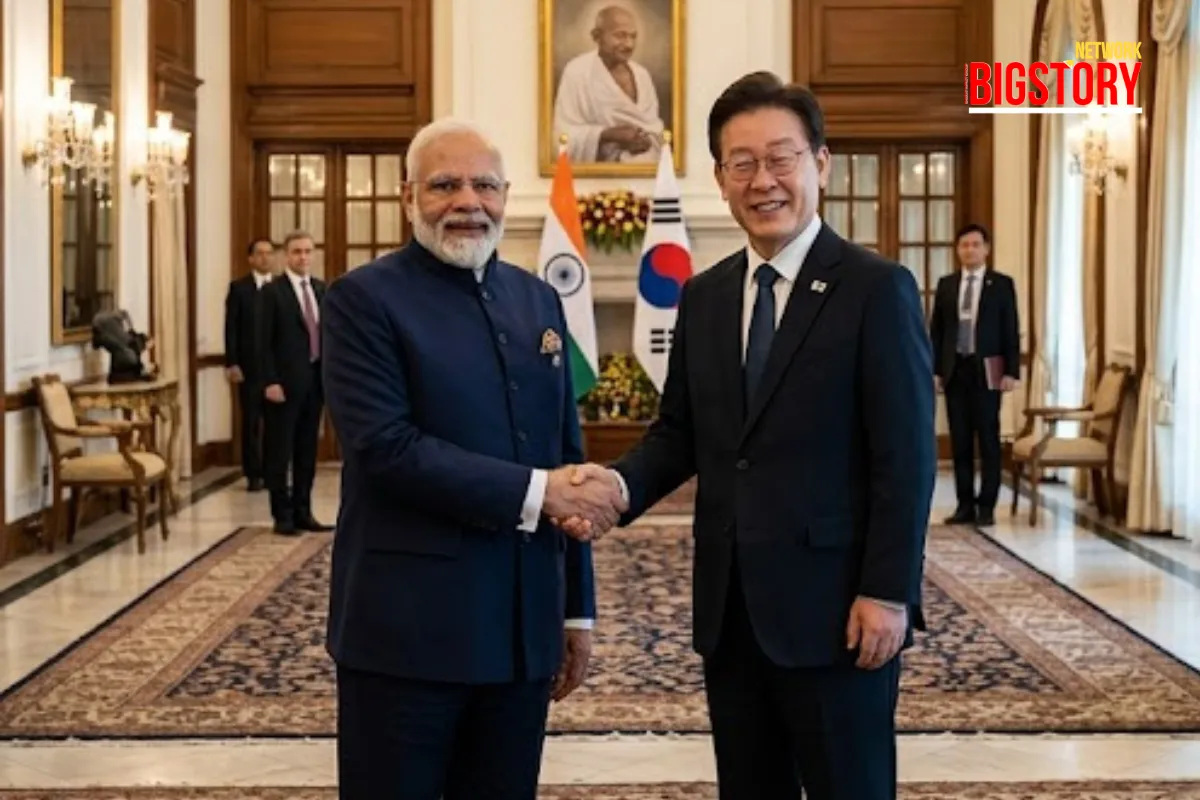
Amid the spiraling global energy and supply chain crisis, a massive diplomatic reset is officially underway in New Delhi. Today, Monday, April 20, 2026, Prime Minister Narendra Modi held an extensive bilateral summit with South Korean President Lee Jae-myung, marking the first state visit by a South Korean leader to India in eight years.
Arriving in the capital on Sunday accompanied by First Lady Kim Hea-kyung and a massive delegation of corporate titans, President Lee's three-day official state visit is designed to rapidly accelerate the "Special Strategic Partnership" between the two Asian democratic powers.
Following a ceremonial reception at Rashtrapati Bhavan and a solemn wreath-laying at Rajghat this morning, President Lee and PM Modi sat down for high-stakes talks at Hyderabad House. The two leaders formally agreed to launch immediate negotiations to drastically upgrade the Comprehensive Economic Partnership Agreement (CEPA). The mutual goal is to double the current $25 billion bilateral trade volume, pushing it to $50 billion by 2030.
While the talks heavily focused on critical technologies such as artificial intelligence (AI), semiconductors, and green energy, the absolute centerpiece of this visit is a massive joint push into maritime infrastructure.
South Korea, a reigning global shipbuilding powerhouse, has agreed to aggressively assist India in scaling up its domestic shipyards. The collaboration centers on the "Make in India" initiative and involves critical transfers of technology to help India construct large civilian vessels, including highly specialized LNG tankers. Furthermore, Memorandums of Understanding (MoUs) are being shaped to jointly design, develop, and manufacture next-generation maritime and port crane ecosystems within India.
This strategic alignment allows South Korea to expand its manufacturing footprint outside of the increasingly volatile East Asian theatre, while simultaneously reducing India's heavy reliance on foreign-built vessels.
While the diplomatic machinery is framing this as a routine strategic tech and trade summit, the "Missed Angle" here is the sheer geopolitical anxiety driving both capitals to the negotiating table.
Both India and South Korea are energy-hungry economies that rely massively on the Strait of Hormuz—which Iran just abruptly shut down again over the weekend amid the tightening U.S. naval blockade. Furthermore, both export-heavy nations have been hit hard by the shockwaves of President Trump's aggressive tariff threats and trade wars.
This summit isn't just a polite exploration of AI cooperation; it is a frantic, mutual attempt to physically insulate their supply chains. South Korea is desperately looking to India as a massive, friendly manufacturing alternative to bypass U.S. and Chinese economic friction. Conversely, New Delhi urgently needs Seoul's threshold technology in heavy industry to survive the current disruption of global trade routes and secure its own energy transport capabilities.
News & Wire Coverage:
 Exclusive Content



Sign up for the Daily newsletter to get your biggest stories, handpicked for you each day.

 Trending Now! in last 24hrs