As the US-Iran war threatens global supply chains, India rapidly pivots to Abu Dhabi to lock down strategic oil reserves and assert dominance over maritime shipping lanes.
 Sseema Giill
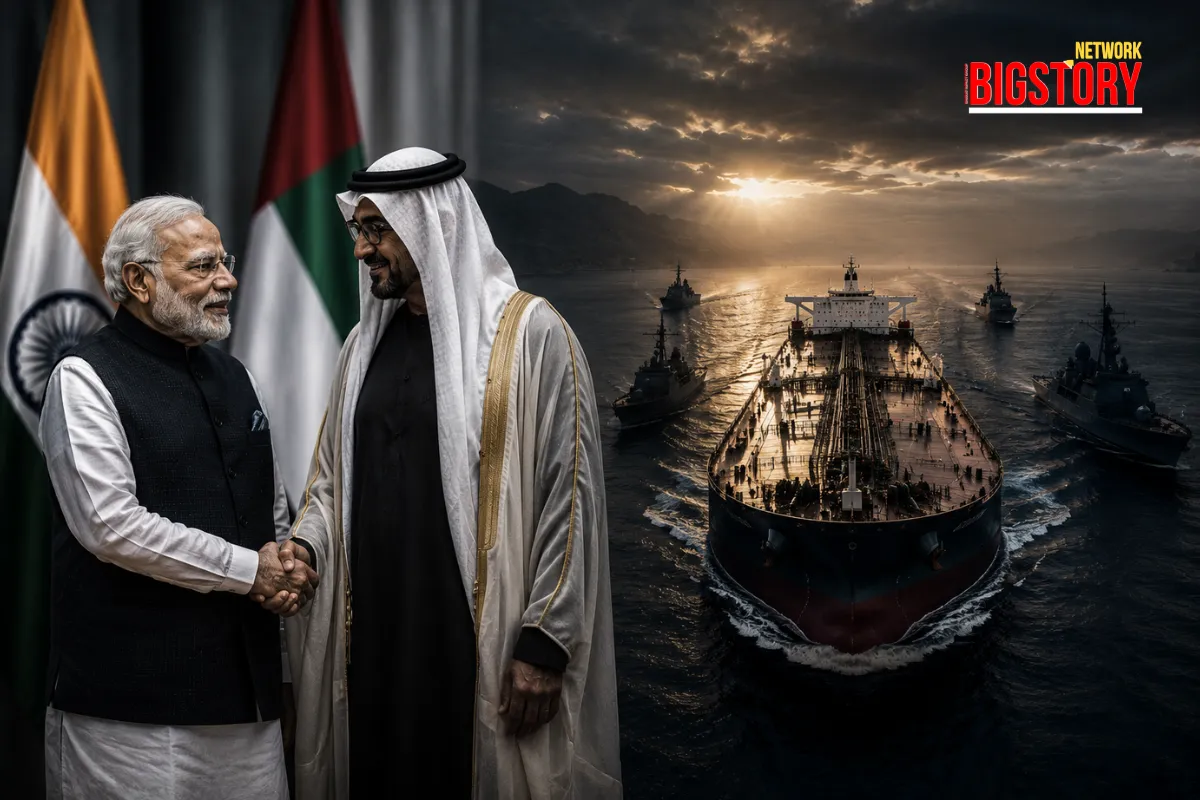
• What happened: Prime Minister Narendra Modi completed a highly strategic stopover in the UAE, officially agreeing on a framework for a Strategic Defence Partnership with President Sheikh Mohamed bin Zayed Al Nahyan.
• Why it happened: With the US-Iran war heavily disrupting global oil markets, India urgently needed to secure energy guarantees, resulting in a pact to increase ADNOC's crude oil storage in India to 30 million barrels.
• The strategic play: The UAE is aggressively looking to India as an independent, reliable security partner outside of traditional US or Saudi umbrellas, specifically focusing on maritime security and cyber defence.
• India's stake: Because India imports roughly half of its crude oil through the Strait of Hormuz, securing the UAE's cooperation is absolutely vital for maintaining domestic energy stability and protecting international shipping lanes.
• The deciding question: As the UAE distances its security reliance from Riyadh and Washington, will this new India-UAE defence pact fundamentally alter the balance of power in the Persian Gulf?
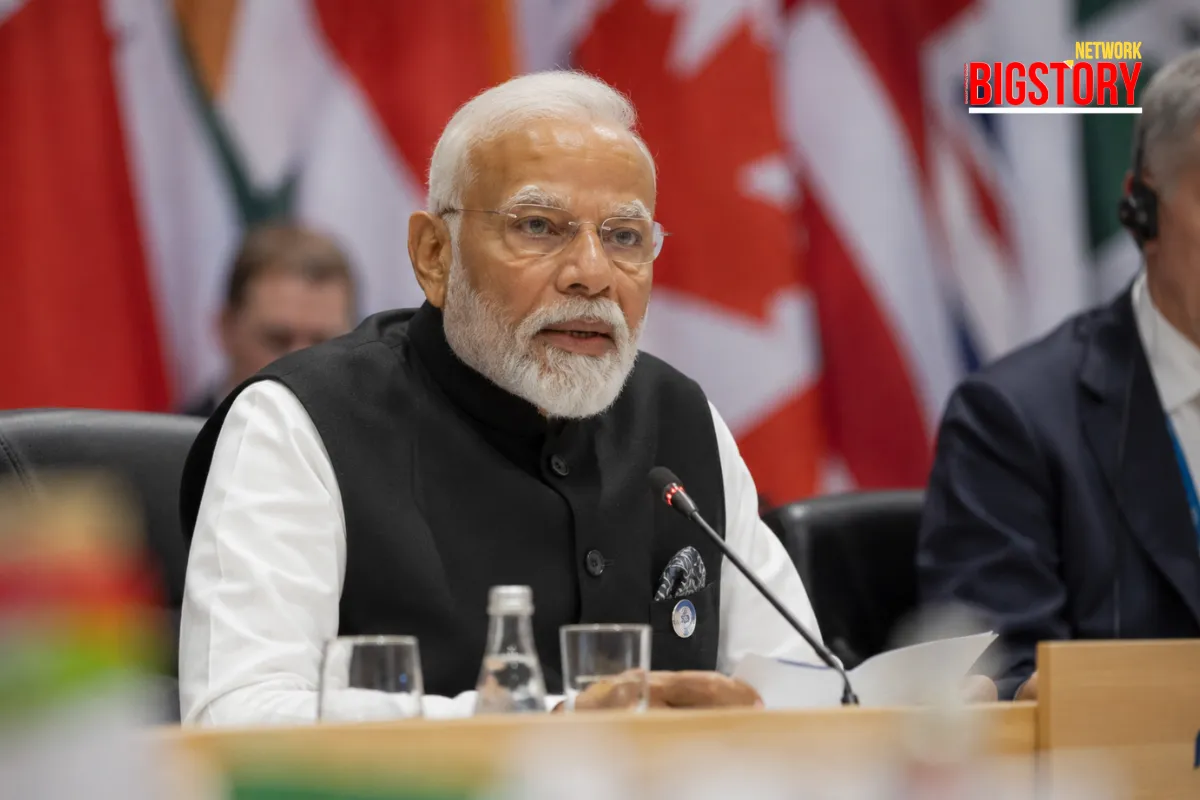
PM Modi's five-nation tour kicked off with an immediate, high-stakes geopolitical maneuver. Touching down in Abu Dhabi on Friday, May 15, the Prime Minister secured a sweeping Strategic Defence Partnership and critical energy guarantees from UAE President Sheikh Mohamed bin Zayed Al Nahyan. The UAE rolled out a massive welcome, complete with a military jet escort into Emirati airspace.
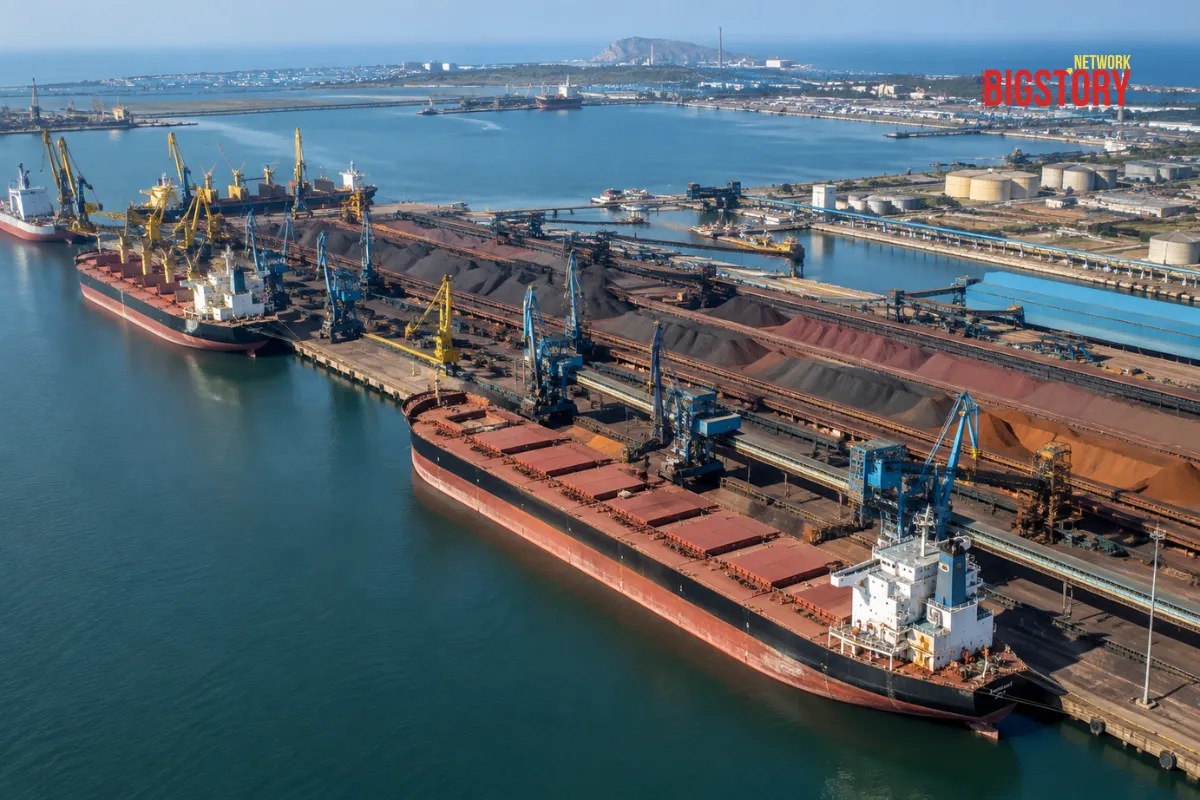
This stopover was explicitly designed to insulate India from the chaos of the ongoing US-Iran war. As global oil markets fracture, the two nations signed pacts that include a potential massive increase of ADNOC's crude oil storage in India (up to 30 million barrels), fundamentally reinforcing India's strategic reserves.
• The Trigger: Recognizing the vulnerability of India's energy supply lines due to the Middle East conflict, the Prime Minister's Office engineered a critical UAE stopover at the start of an extensive European tour.
• The Background: The Strait of Hormuz, through which India imports roughly half of its crude oil, has seen massive disruptions since the outbreak of hostilities between the US, Israel, and Iran.
• The Escalation: India and the UAE officially agreed on a framework focusing heavily on defence industrial collaboration, maritime security, cyber defence, and secure communications.
• The Stakes: Following Saudi Arabia's mutual defence pact with Pakistan in late 2025, the UAE is aggressively attempting to solidify ties with New Delhi to establish an independent security architecture.
Narendra Modi, Prime Minister of India Modi used the visit to draw a hard line on maritime security, explicitly releasing footage emphasizing that "keeping Hormuz free, open and safe is our highest priority."
Sheikh Mohamed bin Zayed Al Nahyan, President of the UAE The UAE President is utilizing this partnership to pivot away from strict reliance on traditional US and Saudi security umbrellas, favoring India as a more reliable and geographically critical defense partner.
Rob Jetten, Prime Minister of the Netherlands Having secured his Gulf flank, PM Modi has now arrived in the Netherlands for bilateral talks with PM Jetten, kicking off the European leg of his tour focused on green energy and technology.
Mainstream coverage treats this as a standard bilateral energy meeting, but the real play is the subtle but massive shift in Gulf security alliances. While Modi isn't visiting Saudi Arabia on this trip—relying on phone diplomacy with Crown Prince Mohammed bin Salman—geopolitical analysts are tracking a distinct pivot. The UAE is aggressively positioning itself alongside India as a guarantor of maritime security.
Following Riyadh's controversial mutual defence pact with Islamabad late last year, Abu Dhabi is looking for an independent, reliable security partner that doesn't carry the baggage of the US or the regional complexities of Saudi Arabia. By signing a Strategic Defence Partnership focusing on maritime and cyber defense right now, India is not just securing oil; it is stepping into the security vacuum created by the US-Iran war. The UAE is betting its regional security on New Delhi's rising naval capabilities.
• Energy Buffers: The agreement to increase ADNOC's crude storage in India to 30 million barrels, alongside exploring storage in Fujairah, creates a massive buffer against sudden global oil price spikes.
• European Leverage: By stabilizing energy concerns on the first day of his tour, PM Modi walks into his meetings in the Netherlands, Sweden, Norway, and Italy with significantly more macroeconomic leverage.
• The Nordic Push: The Prime Minister will now pivot entirely to securing investments in green transition, artificial intelligence, and blue economy technologies during the upcoming India-Nordic Summit.
• Immediate Governance: The Indian Navy will likely increase its joint patrols and interoperability exercises with the UAE Navy to secure the approaches to the Strait of Hormuz.
• Structural Shift: The traditional reliance on Saudi Arabia as the ultimate power broker in the Gulf is fracturing, with the UAE and India building a separate, highly integrated economic and military corridor.
• India-Specific Consequence: By prioritizing the UAE over Saudi Arabia on this physical tour, India is sending a clear diplomatic signal regarding which Gulf state it views as its primary strategic anchor for the next decade.
If the UAE is willing to entrust its maritime security and massive oil reserves to New Delhi rather than Washington, has India quietly become the most vital stabilizing force in the Middle East?
• Ministry of External Affairs (MEA): Prime Minister's visit to the United Arab Emirates (May 15, 2026)
• The Hindu: PM Modi UAE visit highlights: 'Impact of West Asia conflict being felt globally,' PM tells UAE President
• Asian News International (ANI): PM Modi lands in Amsterdam for second leg of five-nation tour, to meet Dutch PM Jetten
• The National (UAE): UAE President and India's Modi discuss impact of Iran war in Abu Dhabi
 Exclusive Content


Sign up for the Daily newsletter to get your biggest stories, handpicked for you each day.

 Trending Now! in last 24hrs