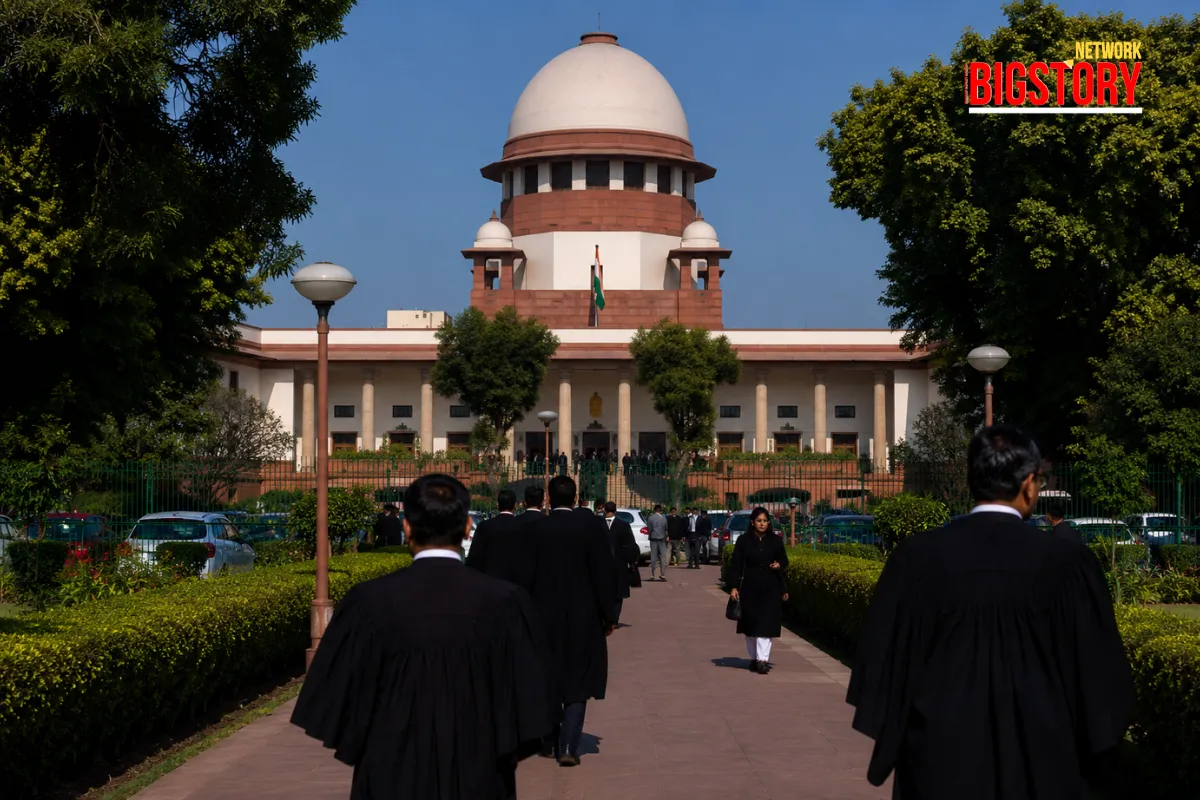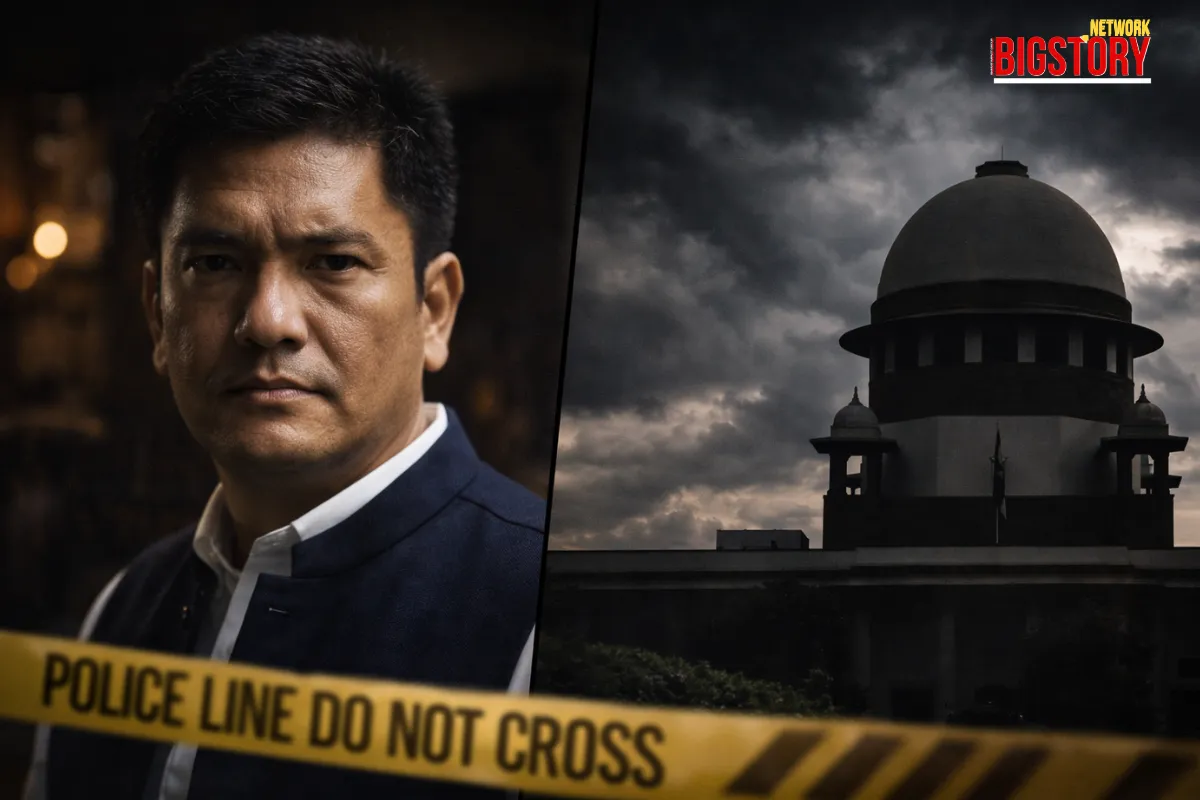
Just weeks after being convicted as the "mastermind" of a political assassination, the former Chief Minister's son wins a massive, sudden reprieve from the nation's top court, freezing his imminent arrest.
 Brajesh Mishra

A massive legal twist has just occurred in one of Chhattisgarh's longest-running and most politically charged criminal cases. Today, Thursday, April 23, 2026, the Supreme Court officially stayed the recent conviction and life sentence of Amit Jogi in the sensational 2003 murder case of Nationalist Congress Party (NCP) leader Ram Avatar Jaggi.
The sudden intervention provides extraordinary interim relief to Jogi, son of former Chhattisgarh Chief Minister Ajit Jogi, effectively freezing his imminent arrest.
A three-judge bench comprising Justices Vikram Nath, Sandeep Mehta, and Vijay Bishnoi heard the urgent appeal and granted interim relief, legally staying the "operation and effect" of the Chhattisgarh High Court's recent verdict.
During the hearing, the Supreme Court severely questioned the procedural fairness of the High Court's ruling. Noting that Jogi was allegedly not given a proper, adequate hearing before his acquittal was reversed, Justice Sandeep Mehta orally remarked: "What kind of judgment... conviction and sentence before hearing?"
This immediate relief halts the High Court's strict directive requiring Jogi to surrender to jail authorities and formally waives the immediate requirement to furnish bail bonds. The top court has now issued a formal notice to the Central Bureau of Investigation (CBI), giving the agency time to respond to Jogi's appeal.
The Supreme Court's stay comes just weeks after a massive legal blow to Jogi. Earlier this month, on April 2, the Chhattisgarh High Court sensationally overturned his 2007 trial court acquittal.
The High Court bench had convicted Jogi under Sections 302 (Murder) and 120-B (Criminal Conspiracy). In a scathing judgment, the HC described him as the absolute "mastermind, principal architect, and driving force" behind the assassination.
Furthermore, the High Court aggressively criticized the 2007 trial court judgment that originally acquitted him while convicting 28 others. The appellate judges called the original 2007 acquittal "palpably illegal, wrong, perverse, and without any concrete basis."
While the procedural nuances dominate the courtroom, the "Missed Angle" here is the sheer volatility of the judicial process spanning over two decades, and the emotional toll it takes on the concept of justice.
Ram Avatar Jaggi was shot dead on June 4, 2003, in what the CBI described as a calculated political plot to disrupt an upcoming NCP rally ahead of the assembly elections. For an agonizing 23 years, the victim's family, led relentlessly by his son Satish Jaggi, fought through lower courts, appeals, and political pressure to pin the murder on the then-Chief Minister's son.
Just two weeks ago, the family celebrated the High Court's life sentence as the ultimate, hard-fought triumph of truth. Today's Supreme Court stay instantly rewinds the clock. It serves as a stark reminder that the intersection of elite political power and the labyrinthine Indian appellate system can freeze high-profile convictions in their tracks indefinitely, leaving families trapped in a seemingly endless cycle of legal whiplash.
News & Wire Coverage:
 Exclusive Content






Sign up for the Daily newsletter to get your biggest stories, handpicked for you each day.


 Trending Now! in last 24hrs