Analyze the economic, ecological, and human costs of the Great Nicobar Holistic Development Project. Explore the VGF funding, Galathea Bay, and the Shompen people.
 Brajesh Mishra
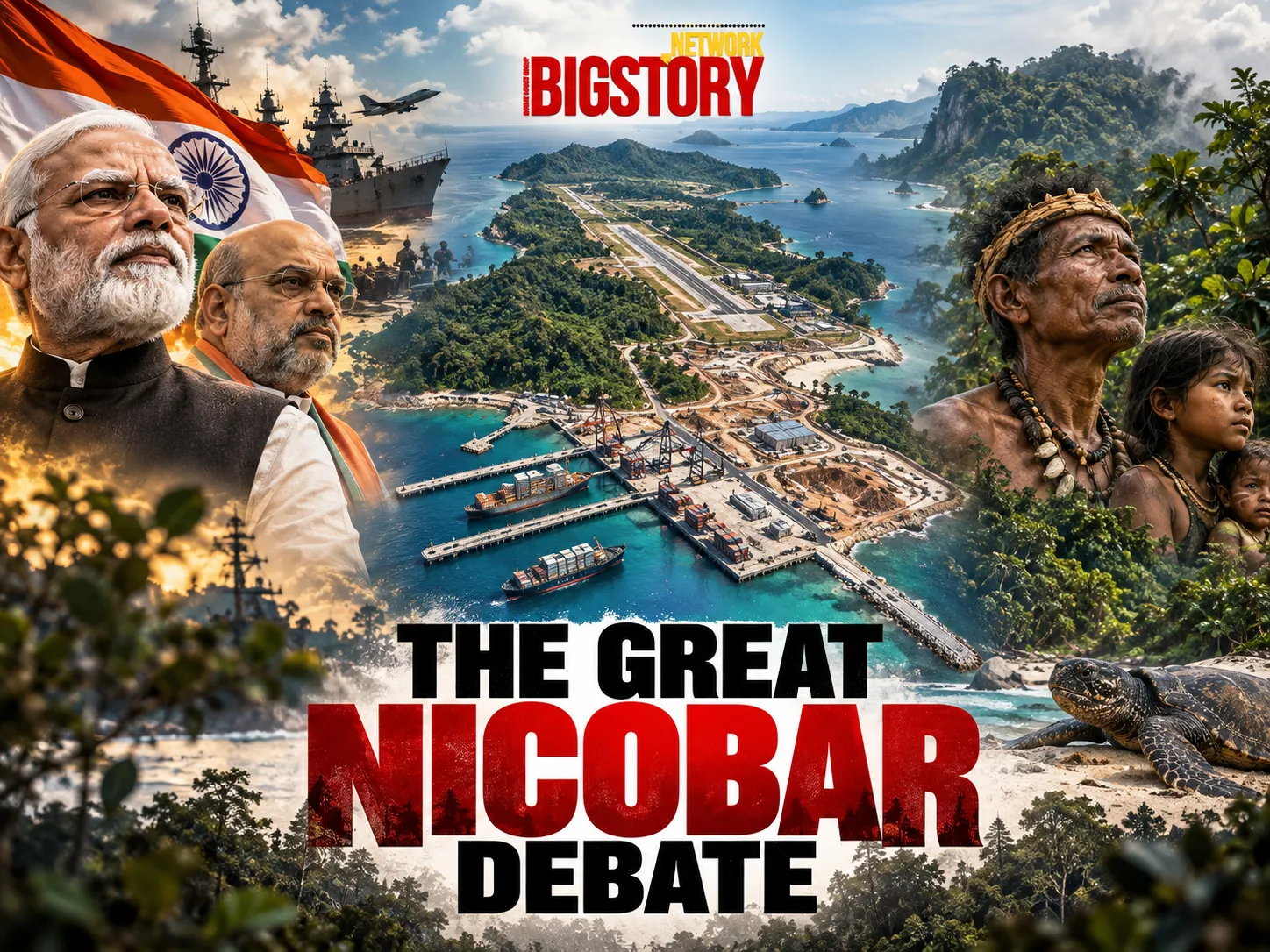
In India public apathy has become the state's most valuable asset in today’s time often saturated by perpetual outrage and when the mainland is exhausted by daily headlines of blockades, court battles, and television debates, the average citizen has developed a protective numbness and the political establishment relies entirely on this fatigue thinking that a ₹81,000-crore mega-project located 1,400 kilometers away in the Bay of Bengal can be quietly bulldozed through the dark.
The Great Nicobar Holistic Development Project is not just a routine infrastructure dispute. It is quietly becoming a terrifying masterclass in how a sovereign power can bypass environmental laws, indigenous sovereignty, and constitutional safeguards simply by wrapping a commercial mega-project in the national flag.
The state has framed the Great Nicobar project as a desperate, non-negotiable geopolitical necessity to counter Chinese naval expansion and Union Minister Bhupender Yadav publicly defended the project by asserting that it enhances India's maritime security and "strategic capabilities," declaring that it has successfully survived "judicial scrutiny". While the hostile foreign flags fluttering over Indian territory monologue is self explanatory, the statements regarding this project does force us to look on the matter for if it is really the truth.
The government's own documents expose the strategic alibi as a Trojan horse for a massive, speculative commercial real estate and transshipment hub. The state has earmarked 16,610 hectares (166.10 sq km) of the island to build an International Container Transhipment Terminal (ICTT) with a staggering capacity of 14.2 million TEUs, a 450 MVA gas and solar-based power plant, an international airport designed for 4,000 peak-hour passengers, and a sprawling coastal luxury township. So, we are building a shipment hub to challenge giants like Singapore and Colombo which on its own seems pretty like a big deal and a great thing to achieve but how would you justify the project if the economics and environment take a back seat .
Challenging entrenched maritime giants like Singapore and Colombo reads like an ambitious economic milestone on paper but that ambition wobbles when scrutinized against basic logistics: If you see, The Great Nicobar possesses no domestic industrial hinterland to feed cargo into those berths. Every single container must be shipped across the ocean to the main island, just to be moved again. Furthermore, the Indian government is already developing the Vizhinjam deep-water transshipment port in Kerala, a facility actually connected to the mainland’s rail and road network. The Great Nicobar port will not defeat Singapore; it might simply cannibalize Vizhinjam’s traffic while attempting to fight Colombo.
According to the leaked March 2026 minutes of the Public Private Partnership Appraisal Committee (PPPAC), the government allegedly admitted that the port remains financially unviable in its initial years. The overall project is branded at ₹81,000 crore, but the PPPAC appraised just Phases I and II of the port alone at ₹48,862 crore.
To make private bidders even remotely interested in this massive risk, the Ministry of Ports requested a staggering ₹12,230 crore in Viability Gap Funding (VGF). The Finance Ministry immediately noted that this single request is larger than the entire national VGF scheme's outlay over the past five years. The state is not building a secure naval base; it is underwriting a speculative commercial gamble with taxpayer money, hoping to figure out how to sell it only after the concrete is poured.
If the economic math is a speculative gamble, the environmental math is a deliberate bureaucratic fiction.
To clear the land for the transshipment terminal, the government quietly de-notified the Galathea Bay Wildlife Sanctuary in 2021, stripping protection from the world's premier nesting site for the Giant Leatherback Sea Turtle. The total blueprint requires the diversion of 130 square kilometers of primary, equatorial rainforest. While the government officially admits that up to 9.64 lakh ancient trees will be felled, independent ecologists warn that based on the actual canopy density, the true number of destroyed trees will be exponentially higher.
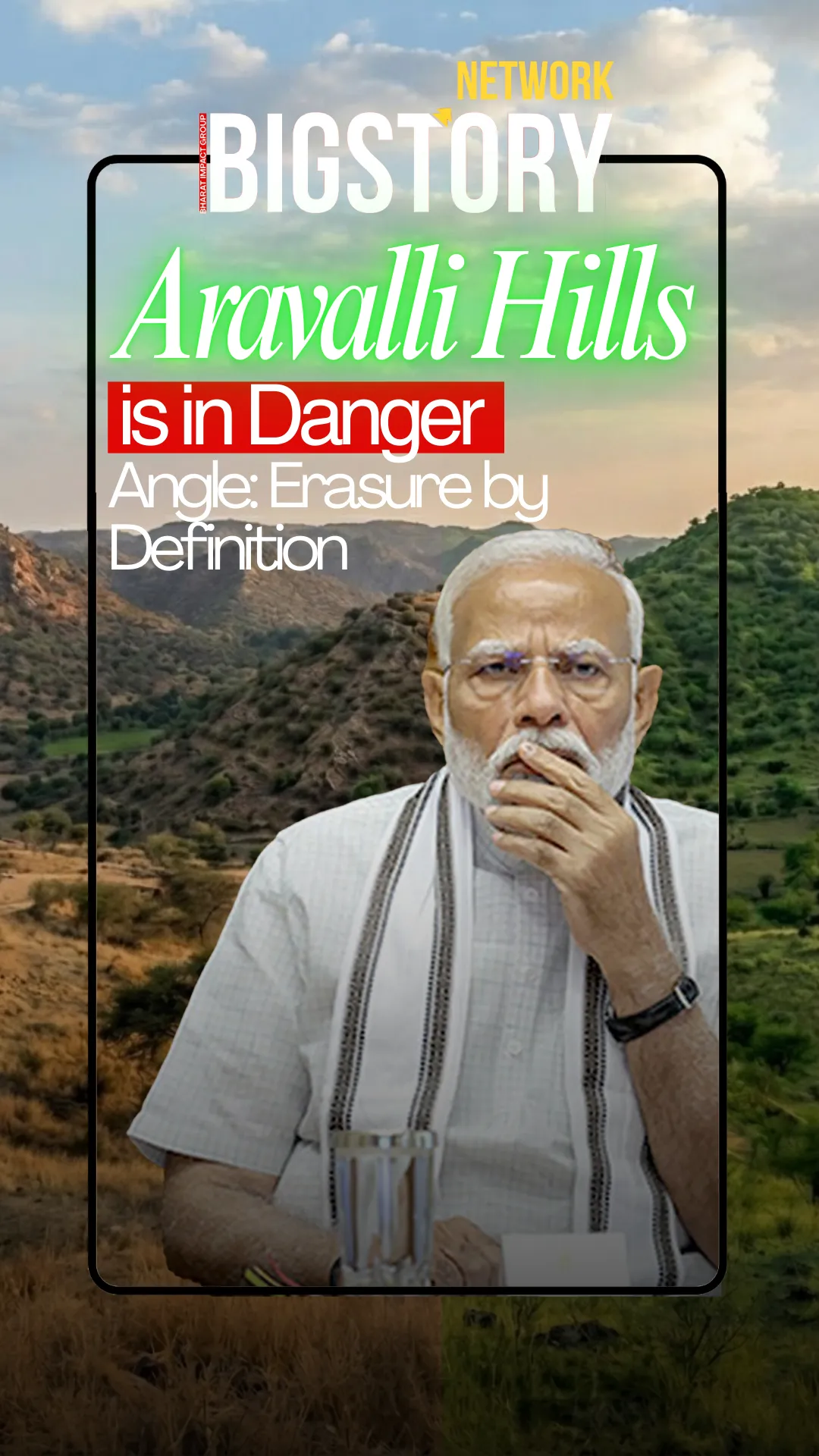
To bypass the legal hurdles of this destruction, the state has used a statutory loophole known as "Compensatory Afforestation." Because Great Nicobar is a small island with limited landmass, the government decreed that the ecological compensation for its destruction cannot be carried out locally. Instead, the state claims it is offsetting the obliteration of a pristine equatorial rainforest by pledging to plant monoculture tree saplings across 97.30 sq km in the arid Aravali hills of Haryana and Madhya Pradesh.
How logical and kind of the government is to do that right ? but you cannot offset the destruction of a fragile island ecosystem and its unique biodiversity by planting scrubland trees thousands of kilometers away. Ecosystems are not fungible bank accounts
Worse still, this entire ₹48,862-crore concrete port is being constructed in Seismic Zone V right on the volatile fault lines that triggered the 2004 Indian Ocean Tsunami. That disaster physically sank parts of the Nicobar island chain by several meters. The state is systematically erasing an irreplaceable ecosystem to build what could be an economically unviable port in a known tsunami drop zone.
This is not an argument about politics, party lines, or being blind to the harsh realities of national security. Every citizen recognizes that a nation must defend its borders, safeguard its sea lanes, and build an economy capable of competing on the global stage. Framing this debate as a cynical brawl between "national interest" and "anti-development activism" misses the real human tragedy unfolding on the ground. The question Great Nicobar poses to all of us is in our rush to build the future, who are we willing to leave behind?
We at BIGSTORY Network always strive to ignite the thought of having a Greener India, not forcefully but intentionally because what we are is what nature allows us to be; pretty sentimental and poetic might feel idiotic to some but it is like that.
For the Nicobarese families who survived the horrors of the 2004 tsunami and waited two decades for the chance to return to their ancestral shores, a concrete transshipment berth is not a triumph of engineering; it is permanent displacement. For the Shompen people who have walked beneath that equatorial canopy in voluntary isolation for centuries, whose language, food, and spiritual universe exist entirely within the forest, the trees are not board-feet of timber to be audited on an Excel sheet. They are life itself, we cannot "compensate" a forest in Haryana for a human being whose soul is rooted in Nicobar.
A truly great civilization is not measured solely by the depth of its container ports or the sheer tonnage of concrete it can pour into the sea. It is measured by its capacity for restraint, its empathy, and its willingness to protect the vulnerable who cannot speak for themselves in boardroom meetings or parliamentary debates.
 Exclusive Content



Sign up for the Daily newsletter to get your biggest stories, handpicked for you each day.


 Trending Now! in last 24hrs