Why India faces intense Western media scrutiny, the hypocrisy of Russian oil sanctions, and the systemic double standard of the global diplomatic order.
 Brajesh Mishra
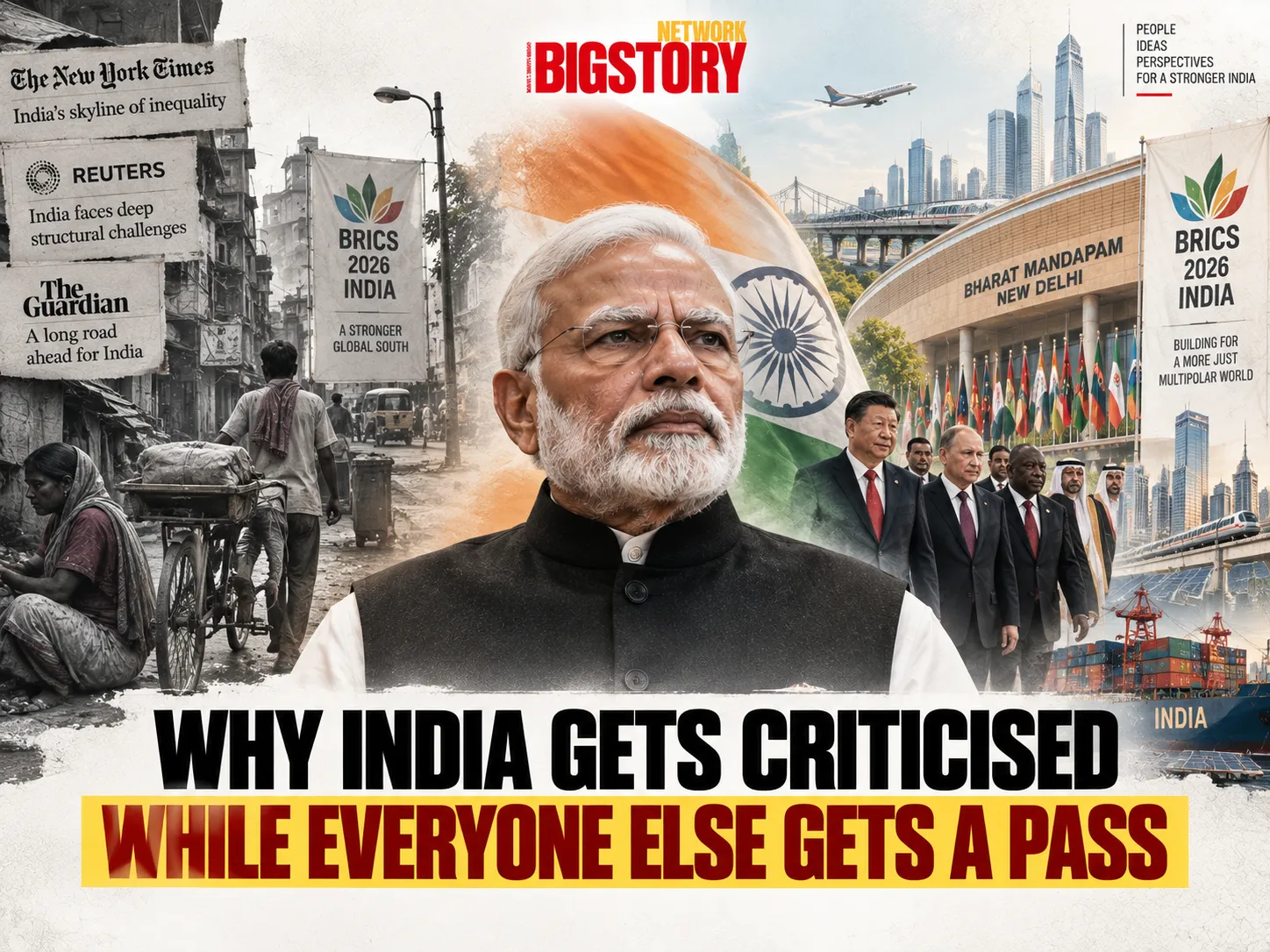
For decades, the diplomatic architecture of the world has operated on a simple, unspoken premise: developing nations are expected to ask for assistance and not assert parity. From the "ship-to-mouth" indignity of American PL-480 food aid in the 1960s to the sanctions that followed India's nuclear tests in 1998, the international order has always demanded compliance from us. You were permitted a seat at the table only if you accepted the hierarchy of the architects who built it.
That hierarchy was supposed to be permanent but Global Powers change with Time and this time, the 18th BRICS Summit has just delivered over fifty tangible geopolitical outcomes and a 140-paragraph New Delhi Declaration adopted unanimously after hours of bruising, high-stakes negotiations It is a moment of immense diplomatic gravity, a definitive proof-of-concept that the global balance of power is shifting.
But if you are consuming international media, that is not the story you see.
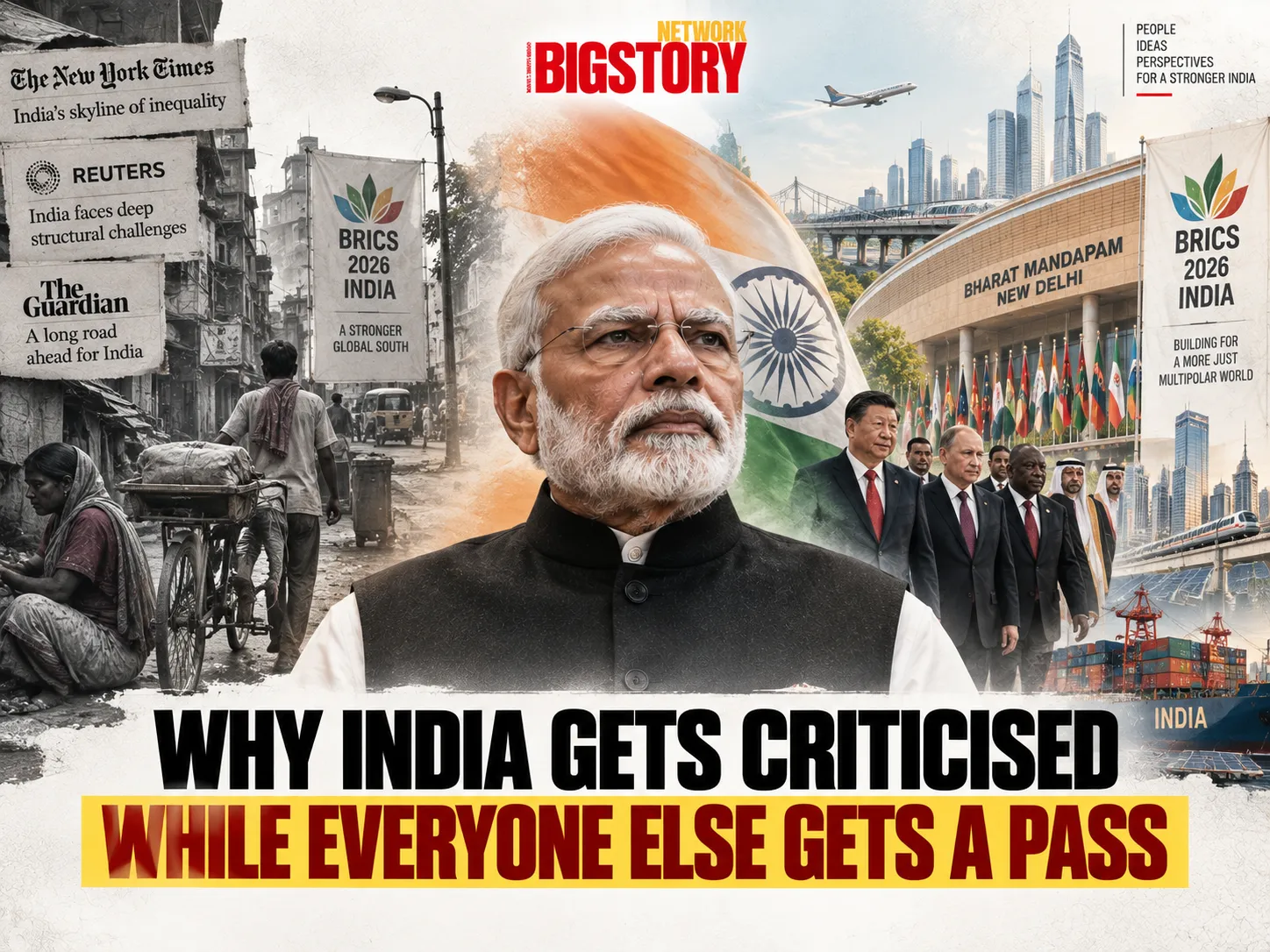
Instead, Western wire agencies flood the information ecosystem with imagery drenched in the visual tropes of third-world struggle. Agence France-Presse leads its coverage with a photograph of a cyclist pedaling laboriously past a towering political hoarding of the Indian Prime Minister. Reuters distributes an image of a solitary street sweeper working in the shadow of a glowing BRICS billboard. Meanwhile, social media is consumed by a viral, aggressively amplified rumor that world leaders, including Cyril Ramaphosa and Xi Jinping, suffered mass food poisoning—a completely fabricated crisis the Ministry of External Affairs had to publicly debunk
The poverty in these images is real, but their selection is not an accident of photojournalism. Rather it is a control mechanism.
It is a systemic framing that looks at a nation fundamentally reshaping the global economic order and whispers to its audience: Look at this developing country playing dress-up.
This intense global scrutiny is not a reaction to Indian failure but a friction of success. The international system is not punishing India for being weak; it is reacting to a nation succeeding in a way the existing system cannot structurally accommodate.
To understand the sheer scale of this double standard, you only need to look at how the exact same system processes failure when it happens inside the club.
Consider the 2026 Asian Games in Japan. As international athletes arrived in Nagoya, they were met with a staggering logistical collapse. National contingents found themselves sleeping on bare floors because organizers opted against a traditional athletes' village. Competitors were left stranded in airport terminals for 14 hours. The Thai national team was famously relegated to camping out in the lobby of a cruise ship. To compound the chaos, a major diplomatic incident erupted with South Korea after a welcoming ceremony thoughtlessly invoked the imagery of a brutal Japanese warlord.
If this sequence of events had unfolded in New Delhi, the global commentary would have been swift and apocalyptic. It would have generated endless op-eds about state capacity, institutional rot, and the hubris of a developing nation overreaching on the world stage, because it happened in Japan, the international press seamlessly adopted a vocabulary of grace.
The catastrophic planning failures were gently framed as "teething difficulties." The Olympic Council of Asia, rather than issuing condemnations, publicly described the host nation's scramble to fix the disaster as "extraordinary."
"The system gives the benefit of the doubt to those who built the table. It weaponizes doubt against anyone pulling up a new chair."
But this dynamic extends far beyond media framing and sports diplomacy. It is written into the hard code of global trade and international sanctions.
In the fiscal year 2026, India imported $40.8 billion in Russian crude oil. It constituted nearly one-third of the country's total oil imports. For a nation of 1.4 billion people with a rapidly expanding industrial base, securing cheap energy is not a geopolitical provocation; it is a mathematical imperative for survival.
To understand the sheer hypocrisy of the Western response, you have to look at the timeline.
Historically, Washington weaponized its financial dominance to force India to zero out its Iranian oil imports, severely compromising New Delhi's energy security. But as regional wars erupted and global energy markets threatened to fracture entirely, the United States quietly changed its tune. Washington actively urged India to absorb discounted Russian crude. The logic was entirely self-serving: if a massive consumer like India competed with Europe for Middle Eastern oil, global prices would skyrocket, crushing Western economies.
India stepping in to buy Russian oil was a geopolitical safety valve that the West desperately needed. India did exactly what the global system required to prevent an economic meltdown and now, it is being threatened for it.
The United States House of Representatives recently passed the Lindsey Graham Sanctioning Russia and Iran Act of 2026. While not yet enacted into law, the legislation is currently being weaponized in diplomatic talks. If finalized, it hands the Oval Office the unilateral lever to impose up to 100 percent tariffs on buyers of Russian oil.
This looming threat of economic retaliation arrives on the heels of Donald Trump already raising general tariffs on India to 50 percent—a move New Delhi correctly described as "unjustified and unreasonable."
The vise does not stop at energy. Through a stroke of the pen, the US revoked the specific waiver that had historically allowed India to develop the Chabahar Port in Iran without triggering secondary sanctions. Overnight, a $370 million, 10-year strategic contract designed to secure India's access to Central Asia was placed under existential threat.
"India’s sovereign choices are only acceptable as long as they align with the strategic preferences of the West."
Yet, the hypocrisy of this disciplinary framework crystallizes the moment you look at the system's primary adversary.
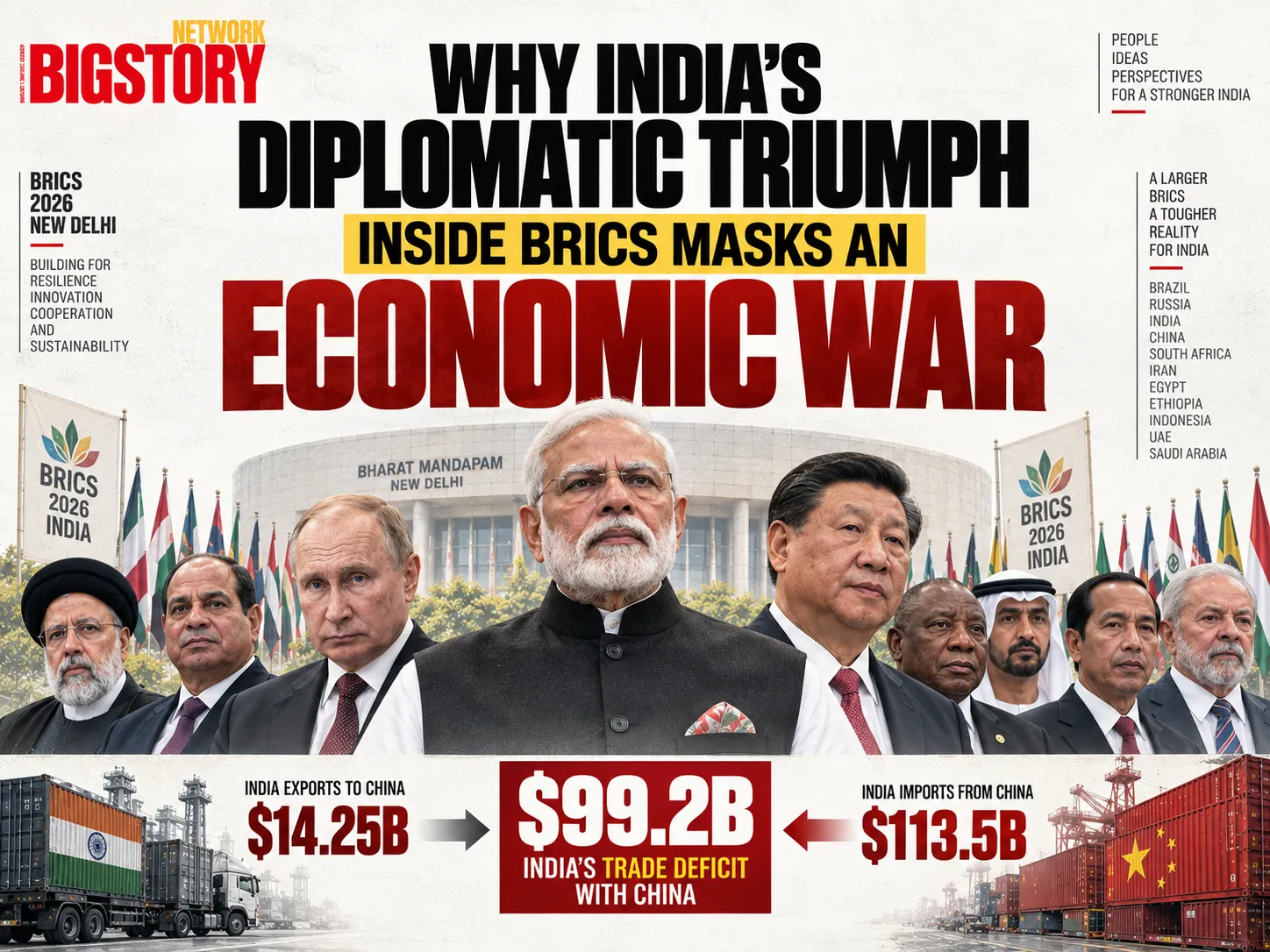
China buys substantially more Russian oil than India. China maintains vastly deeper, more systemic, and heavily weaponized ties with Iran. China runs a trade surplus with the United States that dwarfs India’s, and Beijing executes all of this with absolute zero democratic accountability.While on paper, China faces the exact same legislative threats. In practice, the diplomatic pressure evaporates.
The global order absorbs China’s transgressions because Beijing's sheer economic and military gravity forces compliance. You do not lecture a nation that can crash your supply chains by Tuesday.
India, however, occupies a volatile middle ground. It is acting with the strategic autonomy of a superpower, but it does not yet possess the unassailable economic fortress of one. It is large enough to disrupt the order, but still perceived as vulnerable enough to be disciplined by it.
It requires an honest reckoning to admit that India provides plenty of ammunition for its critics. The bureaucratic friction, the domestic fault lines, the stark wealth inequalities, these are not fabrications but the global gaze does not fixate on these issues to help solve them. It fixates on them to maintain a hierarchy.
This brings us to the ultimate paradox of India's current global position.
In July 2026, during India’s eighth Trade Policy Review at the World Trade Organization, the reality of the country's footprint was impossible to ignore. India received a staggering 1,090 written questions from 44 different WTO members, while 68 separate delegations took the floor. With national imports rocketing toward the $1 trillion mark, the international community was desperate to understand, access, and secure a piece of the Indian market.
The empirical proof of this desperation lies in the frantic pace of global trade negotiations. Look at the ledger just between 2024 and 2026. India signed the Trade and Economic Partnership Agreement with the European Free Trade Association (EFTA). In July 2026, the Comprehensive Economic and Trade Agreement (CETA) with the United Kingdom officially went into force. This was flanked by the monumental conclusion of the India-European Union Free Trade Agreement in January 2026, establishing one of the largest free trade zones on earth and covering nearly two billion consumers. Simultaneously, New Delhi formally launched free trade negotiations with the Gulf Cooperation Council (GCC), a bloc that already represents over $178 billion in bilateral trade.
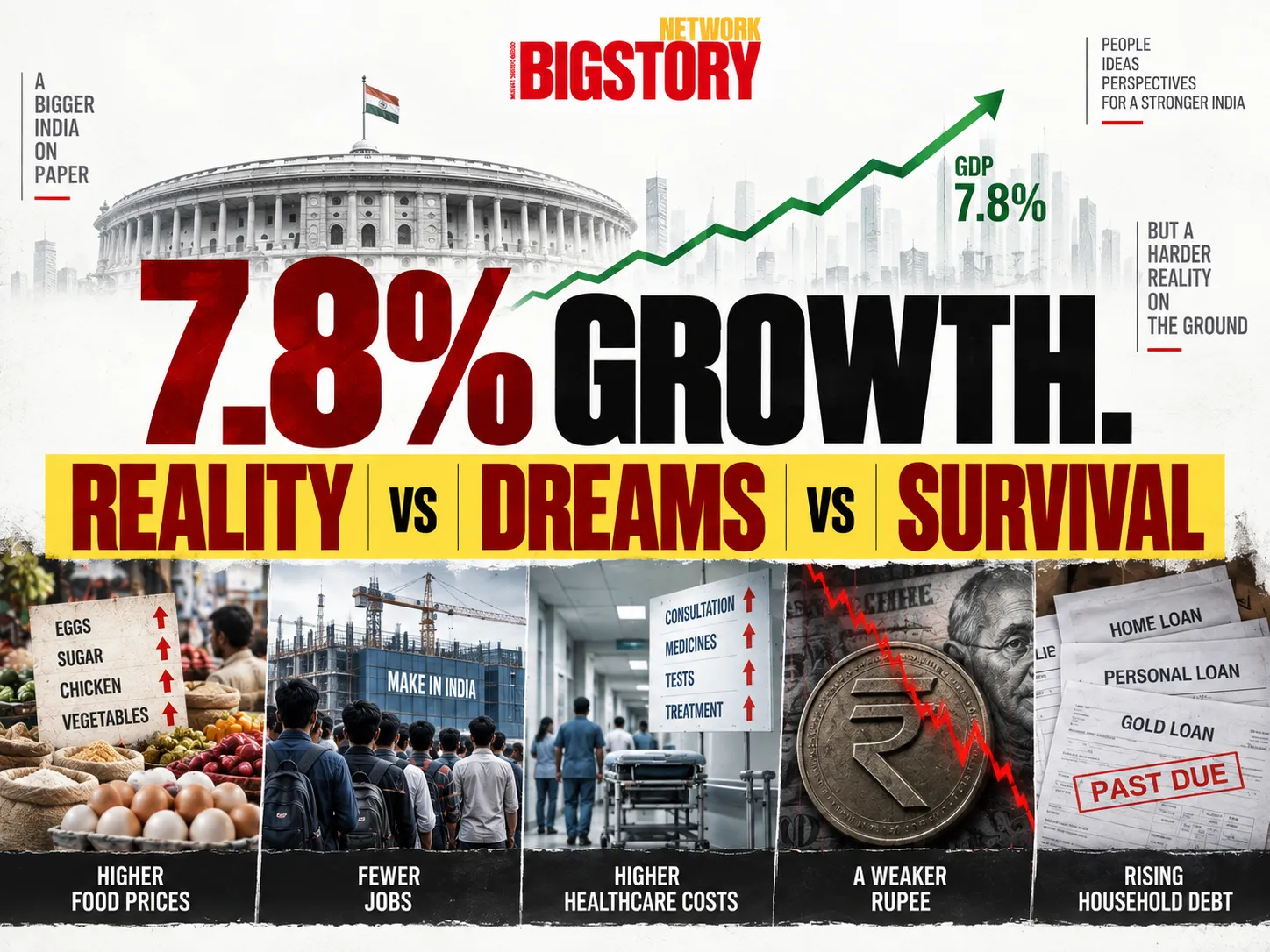
The International Monetary Fund projects India to be the fastest-growing major economy on earth, clocking 6.4 percent growth through 2026 and 2027, against a sluggish global average of 3.3 percent.
The world literally cannot afford to ignore India. The market is too vast, the demographic dividend too critical, the growth too essential to a stagnating global economy.
Yet, simultaneously, the world cannot stop pressuring India.
This is not just about current events. It is about historical and institutional reality. From pioneering the Non-Aligned Movement during the Cold War to enforcing modern strategic autonomy, India has spent decades refusing the binary choices imposed by superpowers. But it is exceptionally difficult for any developing nation to overpower Western giants who have controlled the institutional architecture that includes the trade courts, the SWIFT network, and the secondary sanctions, for the last eighty years.
You are watching a geopolitical system trying to digest an anomaly.
India is indispensable, yet deeply vulnerable. It is courted in the boardroom and penalized in the legislature. It is relied upon for global growth and ridiculed in global media.
This is not a contradiction. It is the exact blueprint of a shifting world order. The relentless scrutiny is not a punishment for failing to meet the standards of the international community.
It is the permanent price of arriving at a table that was not built for you, and refusing to leave.
 Exclusive Content



Sign up for the Daily newsletter to get your biggest stories, handpicked for you each day.

 Trending Now! in last 24hrs