A horrifying and heartbreaking incident in Keonjhar district exposes the severe disconnect between rigid corporate banking regulations and India's marginalized rural populations.
 Brajesh Mishra
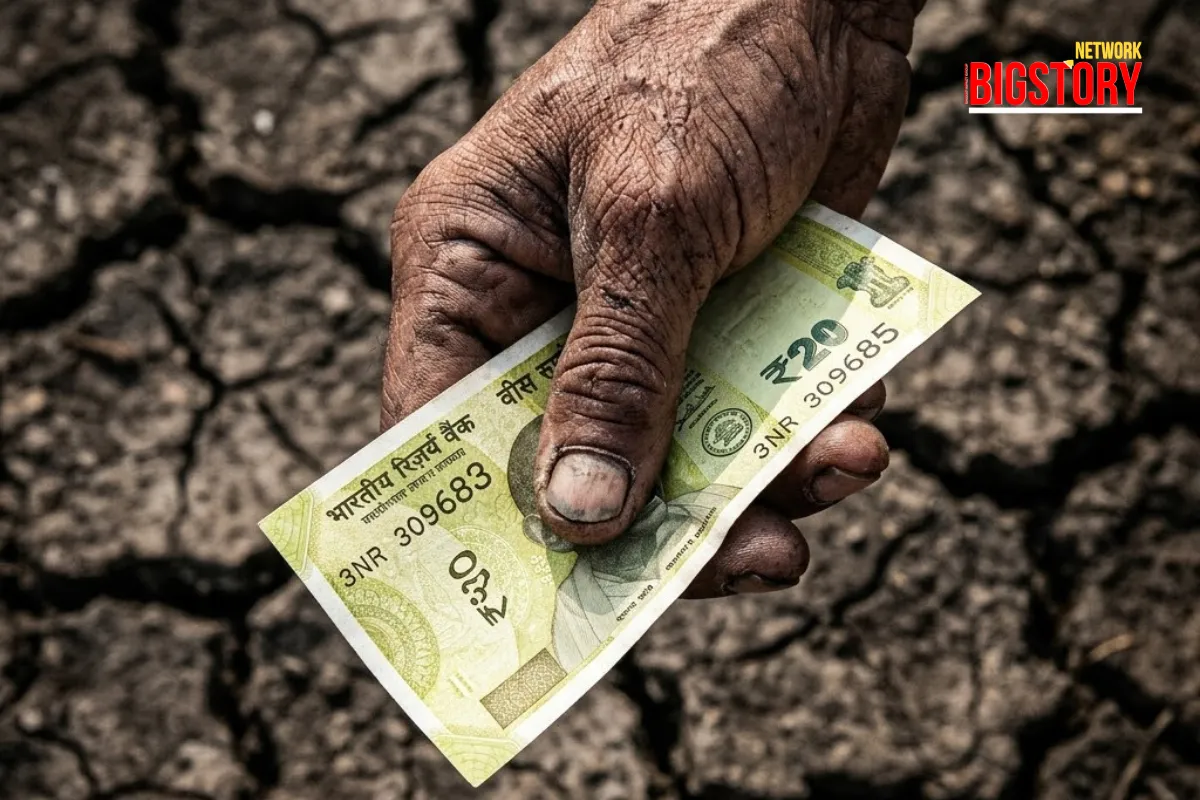
It is a heartbreaking piece of breaking news that violently exposes the disconnect between rigid bureaucratic procedures and India's most marginalized communities. Earlier this week, a tribal man in Odisha's Keonjhar district literally dug up his deceased sister's skeletal remains and carried them to a rural bank branch to prove she was dead after struggling to navigate the paperwork required to withdraw her savings.
On Monday, April 27, 2026, Jitu Munda, a 50-year-old tribal man from Dianali village in Keonjhar, walked nearly 3 kilometres carrying his sister's exhumed skeletal remains in a sack to the Mallipasi branch of the Odisha Grameen Bank.
His motive was rooted in absolute desperation and confusion. His sister, Kala Munda (also referred to locally as Kalara Munda), had passed away on January 26, 2026, leaving behind savings of approximately ₹19,300. Jitu, her surviving relative, visited the bank to withdraw the funds.
Because Jitu was not listed as a nominee on the account, bank officials told him that third-party withdrawals were strictly prohibited without proper authorization. They instructed him to provide documentary proof of her death—specifically a death certificate and legal heir documents. Uneducated and entirely unaware of standard banking procedures, Jitu misinterpreted the bureaucratic demand to "prove she was dead." Left without guidance, he dug up her grave and brought her physical remains to the branch counter as evidence.
The shocking, tragic visuals quickly went viral, prompting immediate, high-level administrative intervention.
Moved by the man's severe distress and the ensuing public outrage, the Keonjhar district administration swung into action on Tuesday, April 28. They rapidly facilitated the issuance of the required death and legal heir certificates through the local tehsildar. By Tuesday afternoon, the bank successfully handed over ₹19,402 (the principal amount plus interest) to Jitu and the other legal heirs.
Recognizing the family's extreme financial vulnerability, the Keonjhar district administration also sanctioned an additional ₹30,000 as emergency aid from the District Red Cross Fund. Following the widespread anger over the lack of sensitivity shown to the tribal man, Odisha Chief Minister Mohan Charan Majhi ordered a formal probe by the Revenue Divisional Commissioner (RDC) to ascertain if there was administrative or institutional negligence.
While the bank released statements clarifying they were technically following standard operating procedures by demanding a death certificate, the "Missed Angle" here is the glaring, systemic failure of financial inclusion policies at the absolute grassroots level.
This distressing incident is the direct result of forcing rigid, corporate banking regulations onto India's most marginalized and illiterate populations without a proper translation mechanism. The total failure of the staff to recognize the man's profound lack of comprehension—and to compassionately guide him to the local tehsildar instead of simply turning him away—forced him into an act of sheer desperation.
It highlights a massive, invisible blindspot in rural infrastructure: "financial inclusion" currently exists on paper, but essential financial literacy and basic institutional empathy do not.
If our banking systems require an uneducated man to exhume his sister's corpse just to be understood, are we truly building an inclusive economy, or simply building administrative walls that the poor can never climb?
News & Wire Coverage:
 Exclusive Content





Sign up for the Daily newsletter to get your biggest stories, handpicked for you each day.


 Trending Now! in last 24hrs