Andhra Pradesh's ruling party is undergoing a massive structural overhaul. By elevating the 43-year-old IT Minister to the undisputed head of the party machinery, Chandrababu Naidu has set a definitive dual-engine succession plan in motion.
 Brajesh Mishra
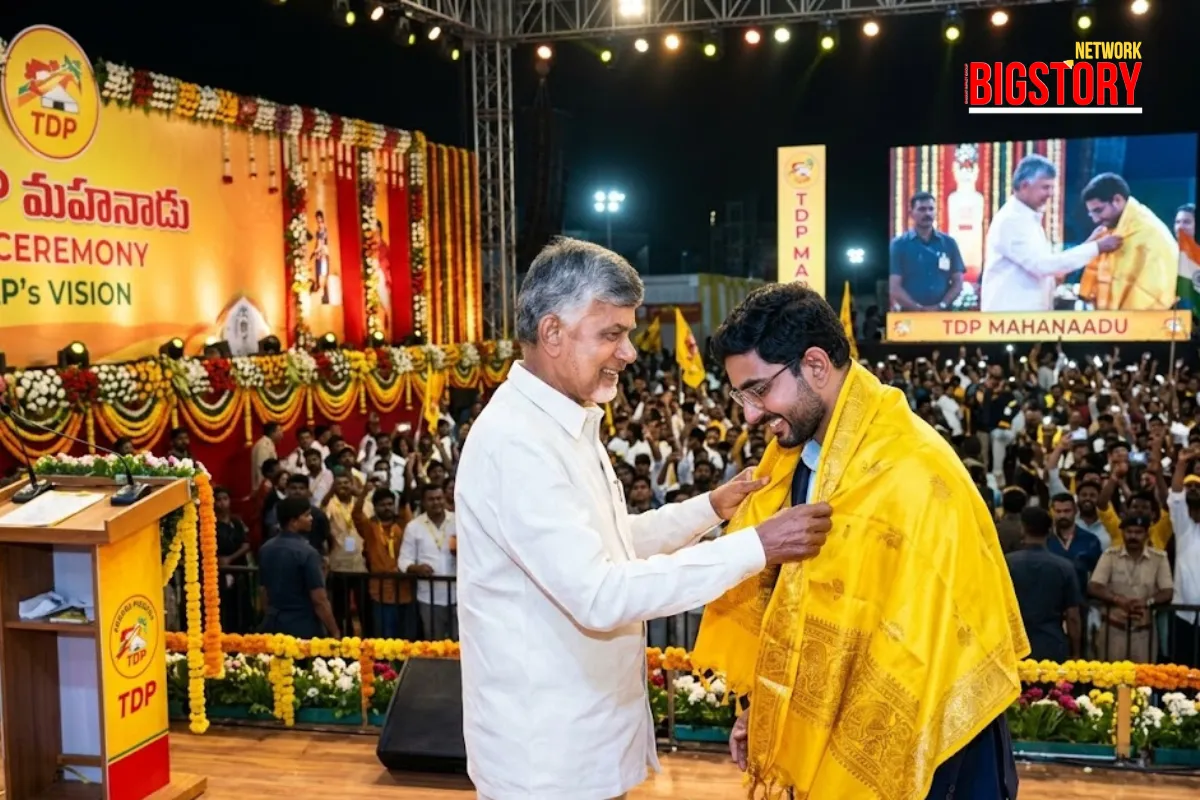
A historic generational power transfer is officially underway in Andhra Pradesh, structurally redefining one of India's most prominent regional parties. Earlier today, Wednesday, April 29, 2026, IT and HRD Minister Nara Lokesh was sworn in as the Telugu Desam Party's (TDP) first-ever National Working President.
The swearing-in ceremony at the party headquarters in Mangalagiri signals his formal elevation as the undisputed political heir-apparent to his father, Chief Minister N. Chandrababu Naidu.
Chief Minister Chandrababu Naidu personally administered the oath of office to his 43-year-old son, formally handing over the day-to-day organizational reins.
The elevation serves as a direct, high-profile reward for Lokesh’s critical organizational role in the TDP's landslide victory two years ago. The party high command specifically recognized the massive public outreach he achieved during his grueling 'Yuvagalam' padayatra while the TDP was fighting from the opposition benches.
The ceremony wasn't just about the top job; it ushered in an entirely revamped executive structure. The party swore in a 29-member Politburo, a 31-member national committee, and a massive 185-member state committee.
Emphasizing the principle that "the cadre is the leader," the new appointments are heavily focused on grassroots empowerment and demographic social engineering. For the first time in the TDP's 44-year history, active mandal and cluster-level in-charges have been directly elevated to the Politburo.
Furthermore, the new 185-member state committee relies heavily on demographic representation to consolidate the party's base. Concrete numbers confirm that over 122 members—roughly 66% of the state committee—are drawn directly from Backward Classes (BCs), Scheduled Castes (SCs), Scheduled Tribes (STs), and minority communities.
While Lokesh's promotion is the headline, the "Missed Angle" here is the precise, strategic division of labor the TDP has just executed heading into the latter half of its term.
By creating the specific "Working President" post, Chandrababu Naidu has effectively decoupled state governance from raw political organizing. At 76, Naidu is fully pivoting his bandwidth to running the state machinery—accelerating mega-projects like the Polavaram irrigation project and the Amaravati capital construction, while managing the delicate NDA coalition dynamic at the Centre.
Simultaneously, he has handed Lokesh the absolute keys to the TDP's massive party machinery. Lokesh is no longer just a cabinet minister; he is now the undisputed boss of the party cadre. This preemptive move firmly shuts down any future internal leadership debates and establishes a heavily fortified, seamless transition of absolute power well ahead of the 2029 elections.
With the undisputed keys to the TDP machinery now firmly in his hands, can Nara Lokesh successfully navigate the intense pressure of succeeding a political titan, or will this generational shift expose hidden fault lines within the party before the 2029 elections?
News & Wire Coverage:
 Exclusive Content




Sign up for the Daily newsletter to get your biggest stories, handpicked for you each day.


 Trending Now! in last 24hrs