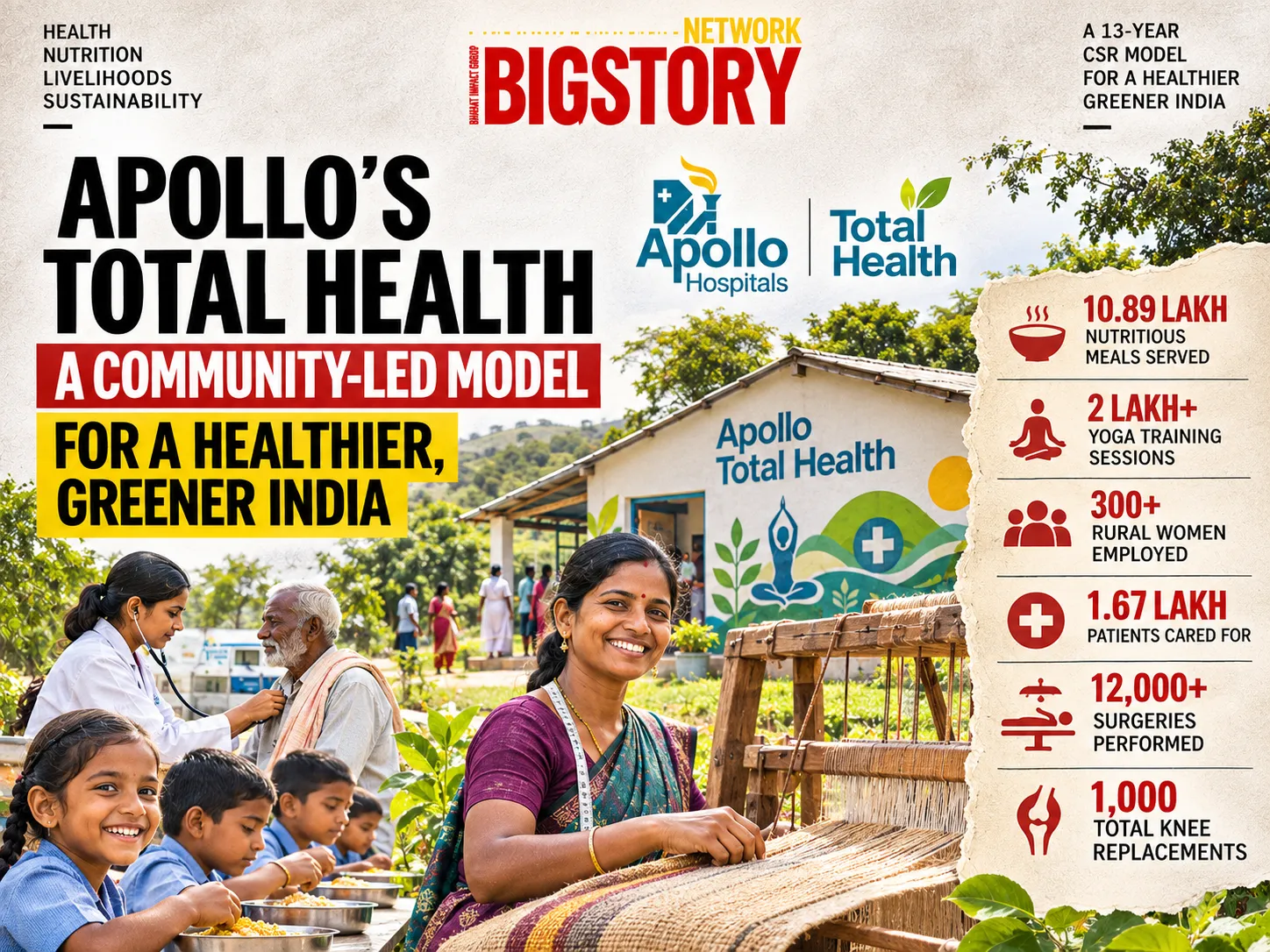
From a meal on a plate to a woman at her loom, Apollo’s Total Health initiative has spent 13 years proving that healthcare doesn’t end at the hospital door. Here’s how Aragonda became a model for sustainable, self-reliant rural India.
 Rashmeet Kaur Chawla
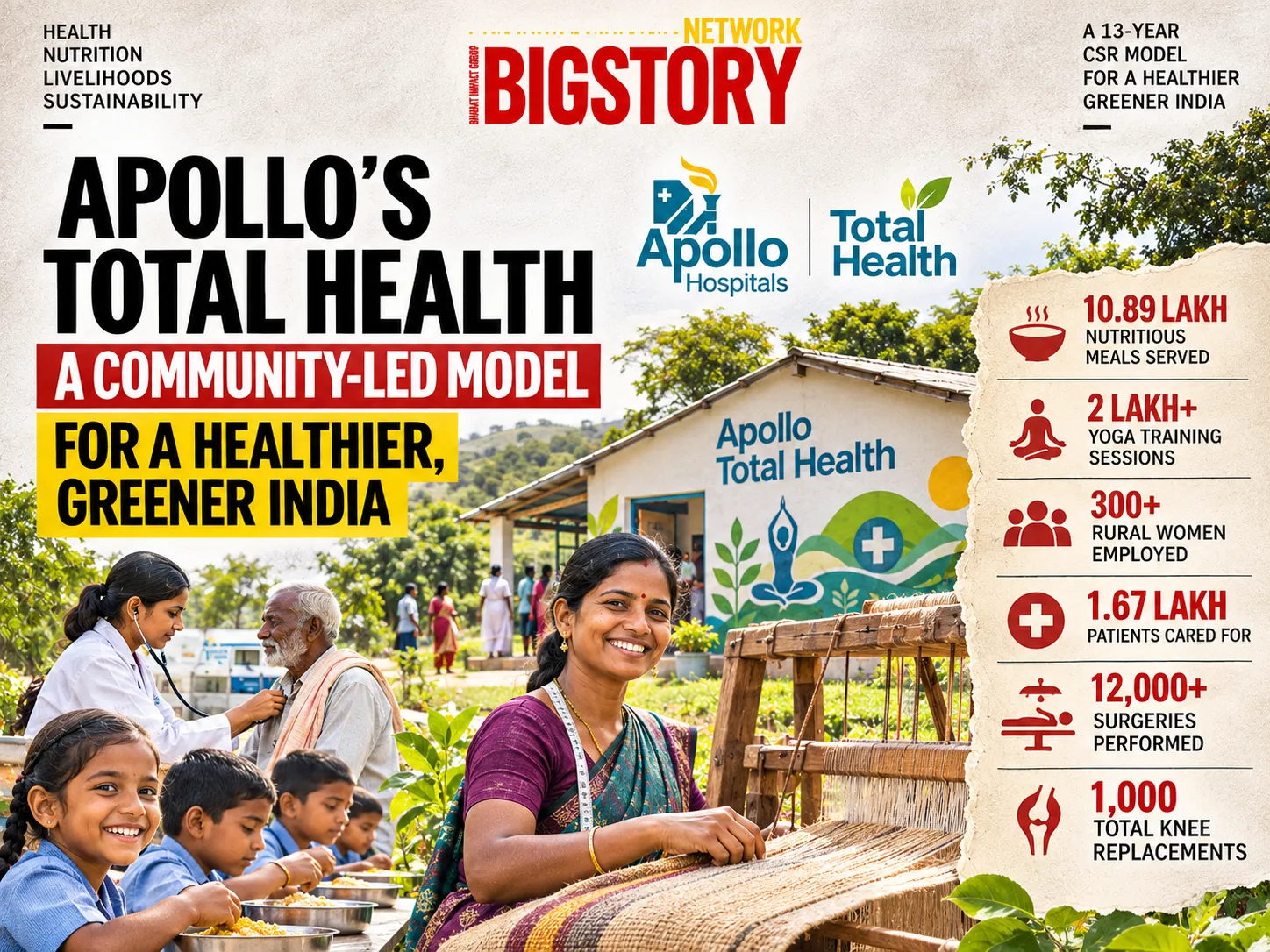
Thirteen years, 23 centres and over 10 lakh meals later, Apollo’s flagship CSR initiative shows what lasting change looks like when healthcare steps outside the hospital.
In Aragonda, a village in Andhra Pradesh’s Chittoor district, the most important thing Apollo Hospitals has built is not a hospital. It is a habit of care: a nutritious meal served on time, a yoga mat unrolled at dawn, a woman at her loom earning an income that is entirely her own.
Recently, Apollo Hospitals Enterprise Limited and the Apollo Foundation gathered here to celebrate 13 years of Total Health, their Corporate Social Responsibility initiative. The milestone speaks louder than any ribbon-cutting: more than 10.89 lakh healthy meals served.
Healthcare in rural India has never been only about doctors and drugs. Nutrition, clean drinking water, education and a steady livelihood all decide whether a family stays well. Treat the illness and send the patient back to the same conditions, and the cycle simply repeats. Total Health begins from that truth.
Launched in 2013, the initiative takes a holistic approach to community development. Healthcare facilities, education, nutrition, clean drinking water, skill development and livelihood activities are not separate programmes. They are connected doors into the same house, each one strengthening the others.
Over the years, that idea has grown into more than 23 centres, reaching communities well beyond where it started.
The Numbers Behind the Story
The scale of the impact is hard to ignore:
Behind every figure is a person: a child who ate well, an elder who walked again, a mother who now earns her own living.
Perhaps the most telling chapter is the one written by hand. More than 300 women now make textile and jute products, gaining income, skills and independence. Jute is a natural, biodegradable fibre, and its place in this story is no accident. It shows how local materials and local talent can create livelihoods that are good for people and gentle on the planet.
That is the quiet link between Total Health and the idea of a green India. Sustainability is not only about trees and technology. It is about communities strong enough to sustain themselves.
For too long, CSR has been measured by the size of the contribution. Total Health proposes a better yardstick: how deeply an initiative is woven into the lives it hopes to change.
By bringing healthcare, nutrition, education and employment together, Apollo demonstrates that businesses can do more than fund change.
They can help build it, meal by meal and stitch by stitch, until communities become healthier, stronger and truly self-reliant. In Aragonda, that is no longer a promise. It is a 13-year track record, and an invitation for corporate India to follow.
 Exclusive Content




Sign up for the Daily newsletter to get your biggest stories, handpicked for you each day.


 Trending Now! in last 24hrs