As the domestic fallout from the Middle East crisis triggers new fuel hikes, the Leader of the Opposition fiercely pivots the blame away from global geopolitics and directly onto the Prime Minister's structural economic policies.
 Brajesh Mishra
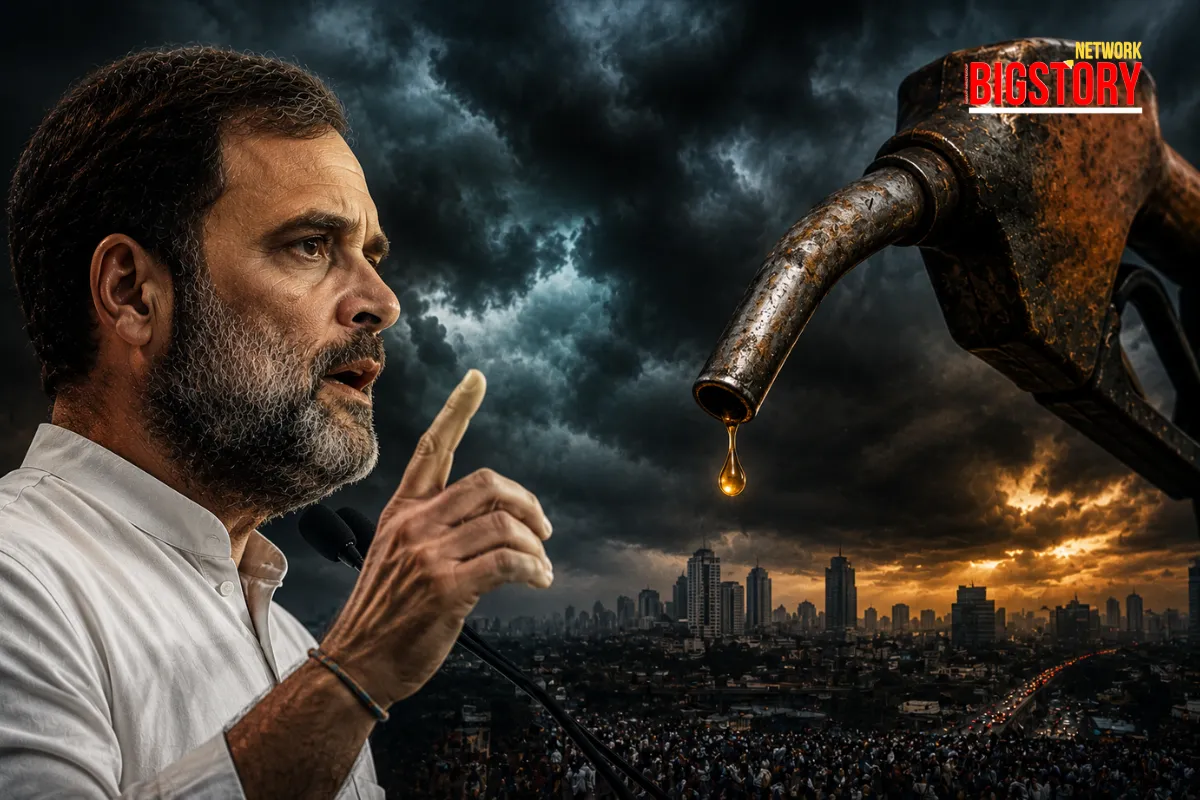
• What happened: Speaking from his constituency in Raebareli, Leader of the Opposition Rahul Gandhi warned that an unprecedented "economic storm" is rapidly approaching India.
• Why it matters: Triggered by recent fuel price hikes linked to the US-Iran war, Gandhi claimed the impending economic shock will devastate the working and middle classes while leaving elite billionaires untouched.
• The strategic play: Gandhi is directly challenging the BJP's narrative, attempting to blame the coming inflationary crisis on crony capitalism rather than letting the government attribute the financial pain solely to global volatility.
• India's stake: With petrol prices nearing ₹100 per litre in major cities and crude oil surging over 50%, the domestic economy is bracing for a massive spike in transport, logistics, and food inflation.
• The deciding question: Can the opposition successfully mobilize public anger over inflation ahead of upcoming state elections, or will the government's narrative of an unavoidable "global decade of challenges" prevail?
The domestic political fallout from the ongoing global crisis has reached a boiling point. Speaking from his parliamentary stronghold in Raebareli on Tuesday, Leader of the Opposition Rahul Gandhi issued a stark and severe warning to the nation, declaring that India is standing on the brink of an unprecedented "economic storm" that will devastate the working and middle classes.
During his two-day visit to Raebareli and Amethi, Gandhi directly attacked the Prime Minister's fiscal policies, claiming the current economic architecture has been deliberately rigged. "The structure he has erected in favour of Adani and Ambani will not endure; it is destined to collapse completely," Gandhi stated to the media, asserting that the country's elite will remain insulated in their palaces while ordinary citizens absorb the impending financial shock.
Gandhi’s aggressive rhetoric comes precisely as the economic reality of the US-Iran war hits the Indian consumer.
• The Price Hike: The immediate catalyst for the political clash is the resumption of fuel price hikes. After an extended period of frozen rates, state-owned oil marketing companies increased petrol and diesel prices by roughly 90 paise per litre earlier this week.
• The Ripple Effect: With petrol nearing ₹98-₹99 per litre in major cities and global crude oil prices surging over 50% since the conflict escalated in the Strait of Hormuz, the opposition is sounding the alarm. This energy shock guarantees a massive, unavoidable spike in transport, logistics, and food inflation that will disproportionately crush farmers, youth, and small business owners.
• The Austerity Paradox: Gandhi heavily criticized the optics of the government's crisis management. He pointed out the glaring irony of PM Modi urging citizens to practice austerity and limit foreign travel during the West Asia crisis, while the Prime Minister himself is currently wrapping up a massive, highly publicized five-nation global tour.
Rahul Gandhi, Leader of the Opposition Gandhi is actively seizing the inflationary momentum, moving to consolidate the working and middle classes by framing the economic pain as a deliberate consequence of crony capitalism rather than a geopolitical accident.
Narendra Modi, Prime Minister of India Currently concluding his European diplomatic blitz, the Prime Minister has sought to prepare the nation for hardship by pointing to external global wars, recently dubbing the current era a "decade of challenges."
Mainstream coverage is treating this as standard political bickering over fuel prices, but the "Missed Angle" here is how both leaders are using the exact same global crisis to pitch entirely opposite domestic narratives.
Just a few days ago in the Netherlands, PM Modi warned of a "decade of challenges" caused by global wars. He framed the economic hardship as an external, unavoidable threat that requires citizens to unite behind the government’s push for self-reliance and weather the storm together.
Rahul Gandhi is now forcefully flipping that script. By branding it an "economic storm" triggered by domestic crony capitalism, Gandhi is aggressively attempting to strip the BJP of its geopolitical shield. He is determined to pin the blame for the coming financial pain squarely on the Prime Minister's structural policies, refusing to let the government attribute domestic inflation solely to the chaos in the Middle East.
• Political Mobilization: The Congress party is clearly positioning inflation and wealth inequality as its absolute core platform ahead of the upcoming, high-stakes state assembly elections.
• Market Anxiety: As political stability rhetoric fractures, Indian equity markets may experience heightened volatility, especially in sectors tied to government infrastructure and energy contracts.
• Policy Pressure: The Finance Ministry will be under immense pressure to either absorb further crude oil price hikes or rapidly roll out expanded welfare subsidies to counter the opposition's "crony capitalism" narrative before the festive season.
If the global energy crisis worsens, which narrative will the Indian voter ultimately accept: the victim of external global wars, or the casualty of internal economic mismanagement?
• The Hindu: National Politics and Opposition Updates
• The Indian Express: India News and Political Economy Tracker
• NDTV: Latest Political News and Congress Statements
• The Economic Times: Fuel Prices, Inflation, and Macroeconomics Desk
 Exclusive Content


Sign up for the Daily newsletter to get your biggest stories, handpicked for you each day.

 Trending Now! in last 24hrs