Just one day before the government's official deadline to declare India "Maoist-free," the Budget Session transformed into a fierce ideological battlefield over the UPA's handling of Left-Wing Extremism and the role of the National Advisory Council.
 Brajesh Mishra
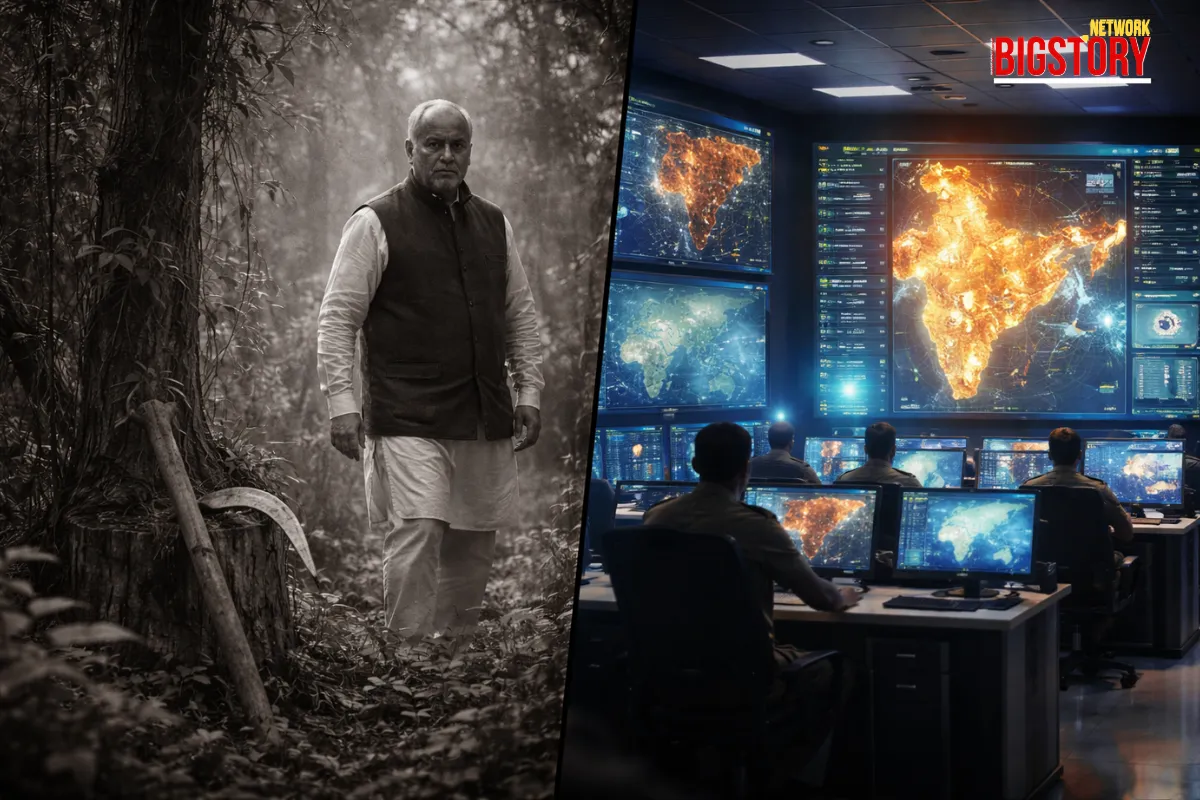
What happened: On the penultimate day of the "Maoist-free India" deadline, BJP MPs utilized the Budget Session to launch a fierce ideological attack, accusing the Congress of historically "romanticising" Naxalism.
Why it happened: The heated debate was triggered during a discussion on the CAPF (General Administration) Bill, where the ruling party sought to contrast its aggressive security approach with the UPA's advisor-led strategy.
The strategic play: By invoking past quotes about "Gandhians with guns" and criticizing the UPA-era National Advisory Council (NAC), the BJP attempted to frame the opposition as intellectually sympathetic to armed insurgency.
India's stake: While government data shows LWE violence has dropped by nearly 90%, the intense political battle over the root causes of Maoism—poverty versus ideology—remains a deep fissure in Indian democracy.
The deciding question: Will the government officially declare India "Naxal-free" tomorrow, or will the opposition's concerns regarding the massive increase in "fortified police stations" challenge the narrative of total normalcy?
Just one day before the government's self-imposed deadline to make India officially "Maoist-free" on March 31, 2026, the Budget Session of Parliament transformed into a high-octane ideological battlefield.
On Monday, the ruling BJP launched a coordinated offensive across both Houses, accusing the Congress party of having "romanticised" Maoism for decades. As the Home Ministry prepares to declare the effective end of the Red Corridor, the debate laid bare the deep political divisions over how Left-Wing Extremism (LWE) was handled in the past and what "eradication" actually means for the future.
The clashes occurred during discussions surrounding the Central Armed Police Forces (CAPF) (General Administration) Bill.
Sambit Patra, BJP Member of Parliament
Patra directly linked the alleged "romanticisation" of Maoism to specific literary and activist figures. "Arundhati Roy, who is a 'sister of Congress', called Maoists 'Gandhians with guns'. Congress has romanticised Maoism while the nation suffered," he stated, arguing that this intellectual sympathy prolonged the armed struggle.
Sudhanshu Trivedi, BJP MP (Rajya Sabha)
Trivedi contrasted the current administration's approach with former Home Minister P. Chidambaram's tenure. Trivedi claimed that the UPA leadership asked Maoists to retain their ideology while coming to the negotiating table, whereas current Home Minister Amit Shah demanded they abandon both their arms and their violent ideology before entering the mainstream.
The Opposition Counter-Narrative
The opposition framed the debate not as an ideological failing, but as a socioeconomic crisis. SP's Dharmendra Yadav argued that the movement was a symptom of systemic inequality. Furthermore, Mahua Moitra questioned the core of the "Maoist-free" deadline, asking the treasury benches why the footprint of heavily armed troop deployments and fortified bases is expanding if the internal threat has truly vanished.
While the ruling party is preparing to celebrate the March 31 deadline as a monumental internal security victory, the true "Missed Angle" lies in how "elimination" is being defined.
The government defines the end of Maoism through the lens of neutralized violence and the shrinking geographical footprint of the "Red Corridor." Official Home Ministry data discussed in the session points to an impressive 88% drop in LWE-perpetrated violence since 2010.
However, the opposition's intense focus on the exponential increase in fortified police stations suggests a reality of "Fortress Stability" rather than an organic, societal shift. The fierce parliamentary debate reveals that while the kinetic military battle may be won, the intellectual and political battle over the root causes of the insurgency—land rights, tribal alienation, and corporate control of mineral wealth—remains as deeply polarized today as it was twenty years ago.
If a region requires 586 fortified police stations to maintain the peace, has the war ended, or has it just been securely contained?
News & Wire Coverage:
 Exclusive Content



Sign up for the Daily newsletter to get your biggest stories, handpicked for you each day.


 Trending Now! in last 24hrs