Following a WHO global emergency declaration, India swiftly reactivates its pandemic-era airport screening infrastructure to insulate the country from the escalating viral outbreak in Central Africa.
 Brajesh Mishra
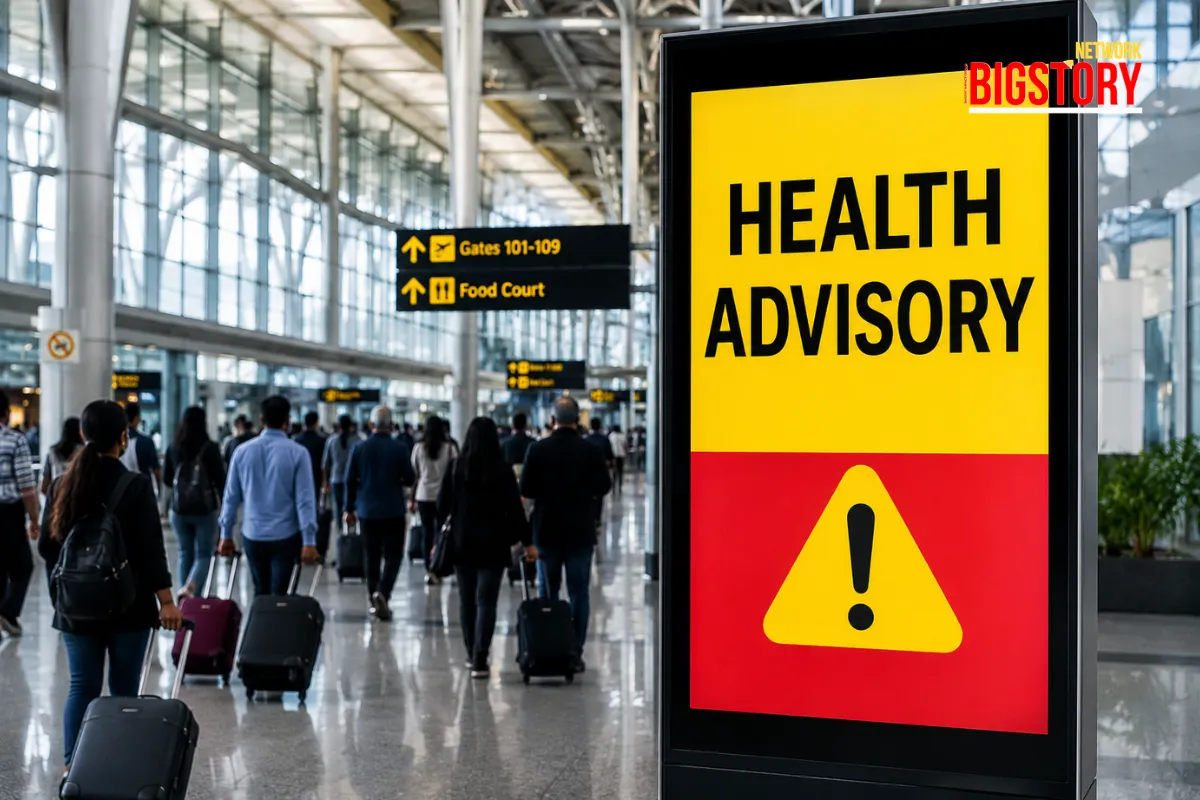
• What happened: Indira Gandhi International Airport (IGI) in New Delhi and other major transit hubs have issued strict public health advisories regarding the ongoing Ebola virus outbreak.
• Why it matters: The alert targets passengers arriving from or transiting through the Democratic Republic of Congo (DRC), Uganda, and South Sudan, urging immediate reporting of symptoms to airport health officers.
• The strategic play: The move comes just after the WHO declared the African outbreak a Public Health Emergency of International Concern (PHEIC), prompting India to rapidly reactivate its airport health screening infrastructure.
• India's stake: While no cases have been detected in India so far, the high fatality rate of the virus requires aggressive preventative measures at immigration lines to prevent any domestic transmission.
• The deciding question: With SOPs already circulated to all states and UTs, is India's post-COVID health surveillance grid robust enough to catch potential bio-threats before they enter the domestic hospital network?
A major public health protocol has been activated out of New Delhi. Amid growing global vigilance over a renewed and deadly viral outbreak in parts of Central Africa, the Indira Gandhi International Airport (IGI) in Delhi has issued a strict public health advisory for passengers arriving from or transiting through Ebola-affected countries.
The alert, issued today, follows the World Health Organization (WHO) officially declaring the outbreak a "Public Health Emergency of International Concern" (PHEIC). Acting on urgent directives from the Directorate General of Health Services (DGHS) under the Union Health Ministry, the Airport Health Organisation (APHO) has mounted explicit advisories at Delhi's IGI Airport. Similar protocols are simultaneously going live at other major international entry points, including Hyderabad's Rajiv Gandhi International Airport.
The screening and advisories are highly targeted. They apply specifically to passengers arriving from or transiting through the Democratic Republic of Congo (DRC), Uganda, and South Sudan—all categorized as high-risk by the WHO.
The instructions to travelers are explicitly clear: Passengers exhibiting any symptoms such as fever, vomiting, diarrhea, severe headache, muscle pain, weakness, sore throat, or unexplained bleeding are directed to immediately report to the Airport Health Officer or designated health desks before attempting to clear immigration.
Furthermore, the advisory extends beyond the airport walls. Travelers arriving from these nations who develop symptoms within 21 days of arrival are strictly advised to seek immediate medical care and proactively disclose their travel history to local healthcare providers.
This rapid airport mobilization is a direct response to a rapidly deteriorating health situation in Central Africa. The DRC recently reported 513 suspected Ebola cases and 131 suspected deaths in its latest outbreak wave. While researchers are actively confirming the definitive link of all fatalities to the virus, the rapid spread triggered the WHO's highest level of global alarm.
Domestically, the central government is maintaining an aggressive preventative stance. Union Health Secretary Punya Salila Srivastava chaired a high-level meeting with health secretaries from all states and Union Territories on Wednesday. The Health Ministry has confirmed that zero cases of Ebola have been detected in India so far. To maintain this perimeter, detailed Standard Operating Procedures (SOPs) covering pre-arrival screening, quarantine logistics, and laboratory testing have been circulated across the national healthcare system.
Mainstream coverage treats this as a standard travel alert, but the "Missed Angle" here is the swift, seamless reactivation of India's pandemic-era airport health infrastructure.
Unlike airborne pathogens such as COVID-19, Ebola spreads strictly through direct contact with infected bodily fluids. However, its exceptionally high fatality rate means the threshold for preventative state action is incredibly low. By immediately dusting off the isolation SOPs and activating the Airport Health Organisation desks without administrative delay, India is sending a clear operational signal.
The post-COVID health surveillance grid is now permanently on standby. Instead of waiting for cases to present at local clinics, New Delhi’s strategy is designed to insulate the country from global bio-threats by catching potential carriers directly at the immigration line, treating the airport not just as a transit hub, but as the nation's primary biomedical border wall.
• Aviation Logistics: Passengers arriving on flights from African hubs (like Addis Ababa or Nairobi) into Delhi and Mumbai should expect slightly longer disembarkation and immigration processing times due to secondary screening protocols.
• State-Level Readiness: State health departments, particularly in states with high volumes of international migrant workers and students, will be heavily scrutinized on their ability to spin up designated isolation wards on short notice.
• Public Reassurance: The aggressive, highly visible deployment of these screening measures is designed to calm equity markets and public anxiety, preventing the kind of domestic panic associated with earlier global viral outbreaks.
If global health emergencies are becoming more frequent, will permanent health screening checkpoints become a standard, unavoidable feature of international travel into India?
• Ministry of Health and Family Welfare (MoHFW): Official Health Directives and DGHS Updates
• World Health Organization (WHO): Global Outbreak and PHEIC Alerts
• The Hindu: National Public Health and Aviation News
 Exclusive Content






Sign up for the Daily newsletter to get your biggest stories, handpicked for you each day.



 Trending Now! in last 24hrs