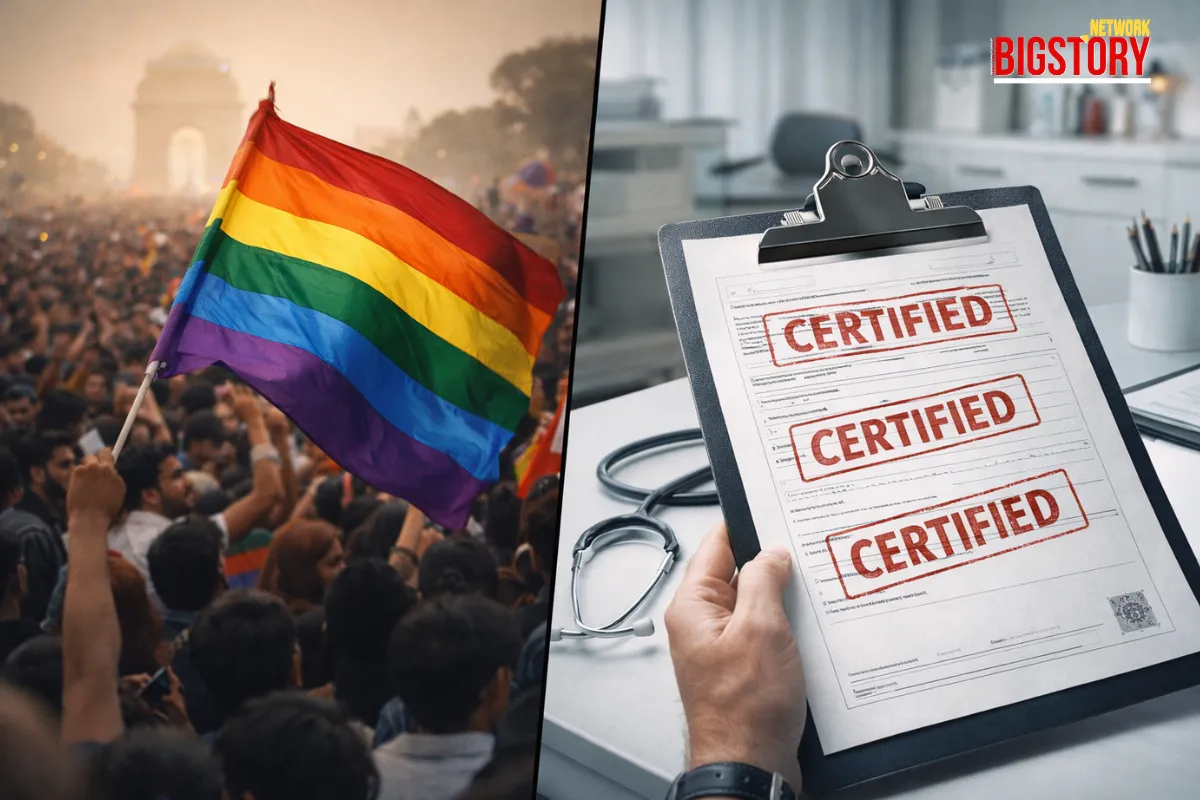
In a historic and deeply polarizing legislative shift, the Rajya Sabha has cleared a bill that replaces the right to self-perceived gender identity with a strict, biology-based medical certification process.
 Brajesh Mishra
What happened: Parliament has passed the Transgender Persons (Protection of Rights) Amendment Bill, 2026, which removes the right to self-identify one's gender.
Why it happened: The government argues the 2019 definition was too "vague" and wants to ensure benefits reach only those who face social exclusion due to "biological reasons" or belong to traditional socio-cultural groups like Hijras.
The strategic play: Transgender identity now requires a mandatory recommendation from a Medical Board before a District Magistrate can issue an ID card, a move that critics say unjustly medicalizes a person's identity.
India's stake: The Bill introduces much stricter punishments—up to life imprisonment—for forcing someone into a transgender identity or begging, but it risks disenfranchising thousands who identify as trans based on psychological self-perception.
The deciding question: Will the Supreme Court strike down this amendment for violating the constitutional "right to dignity" established in the landmark 2014 NALSA judgment?
The Indian Parliament has officially passed a historic and deeply controversial amendment to the nation's transgender laws, marking a fundamental shift in how the state defines and recognizes gender identity.
On Wednesday, March 25, 2026, the Rajya Sabha passed the Transgender Persons (Protection of Rights) Amendment Bill, 2026, finalizing the legislative process just a day after it cleared the Lok Sabha. The new law completely overhauls the 2019 Act by removing the legal right to a "self-perceived" gender identity, replacing it with a strict, biology-based medical certification process.
The passage of this Bill sets the stage for a massive constitutional showdown, as activists and opposition leaders argue it directly violates the landmark 2014 NALSA judgment, which originally recognized self-identification as a core component of human dignity and personal liberty in India.
Dr. Virendra Kumar, Union Minister for Social Justice and Empowerment Minister Kumar aggressively defended the Bill on the floor of the House as a "revolutionary" measure. Aligning the legislation with PM Modi's resolve of Sabka Saath Sabka Vikas, Kumar stated, "The amendment will ensure that transgender persons continue to get legal recognition and protection... the goal is to provide protection only to those who face discrimination due to biological issues," asserting that the law aims to protect those who are "genuinely oppressed" rather than those who adopt an identity by "choice."
The Medical Board Certification The most controversial element of the new law is the establishment of the Medical Board. Previously, securing an identity certificate was a largely administrative process. Under the 2026 law, a District Magistrate can only issue a transgender identity certificate after receiving a formal recommendation from a government-appointed Medical Board, which must be headed by a Chief Medical Officer (CMO).
The Opposition Leaders like Congress's Renuka Chowdhury and TMC's Saket Gokhale fiercely opposed the Bill. "This Bill dilutes the privacy of an individual... forcing transgender persons to provide their identity through official certificates and medical boards is against the spirit of equality," Chowdhury argued during the debate.
While headlines are focusing heavily on the creation of the "Medical Board" and the introduction of strict new criminal penalties, the true "Missed Angle" of this legislation is the state-sanctioned erasure of gender fluidity.
By explicitly defining transgender identity as a "biological error" or restricting it to traditional socio-cultural groups (like the Hijra community), the government is effectively de-recognizing thousands of trans men, trans women, and non-binary individuals who have transitioned through choice and psychological self-perception.
Much like the recent SC ruling that only Hindus, Sikhs, Buddhists are eligible for SC status, this Bill rigidly narrows the legal definition of a marginalized group. It leaves individuals who do not fit neat biological or traditional boxes in a terrifying legal limbo, stripping them of their ability to access welfare, secure accurate ID markers, or claim protection against discrimination.
If your identity is no longer defined by who you know you are, but by what a government medical board decides you are, has the state crossed the line into policing personal reality?
News & Wire Coverage:
 Exclusive Content





Sign up for the Daily newsletter to get your biggest stories, handpicked for you each day.



 Trending Now! in last 24hrs