BIGSTORY Network


Supreme Court of India March 9, 2026, 5:58 p.m.

The Punchline and the Pendency: What the Supreme Court's Onion-Garlic PIL Exposes About Judicial Abuse

Beneath the viral courtroom humor of 'tamasic' vegetables lies a severe institutional failure where serial petitioners exploit the judicial system without facing professional consequences.

by Author Brajesh Mishra
Hero Image

⏱️ 30-Second Brief

Expand to Read

What happened: The Supreme Court on March 9 dismissed a PIL by Advocate Sachin Gupta seeking a government committee to research whether onion and garlic contain "tamasic" or negative energy — CJI Surya Kant called it frivolous and asked: "Why do you want to hurt the sentiments of the Jain community?" Why it happened: The petition had no legal foundation under Article 32 — it did not allege any violation of fundamental rights, sought vague relief, and was filed by a lawyer who has now had at least four prior PILs dismissed across two Chief Justices, including one with Rs 25,000 costs imposed. The strategic play: The CJI declined to impose costs today because the petitioner is a lawyer — but warned that next time consequences would follow. The Bar Council of India, not the Supreme Court, is the body that can discipline advocates for serial abuse of court process. India's stake: The Supreme Court carries over 82,000 pending cases; every frivolous Article 32 petition displaces a genuine fundamental rights matter from the CJI's bench. The cost-deterrence framework the Court has built is failing when a penalised lawyer can return with five more PILs. The deciding question: Whether the Bar Council of India will open a disciplinary inquiry into a documented pattern of serial Article 32 misuse — or whether Bar membership will continue to shield a lawyer from the consequences the Court imposes on everyone else.

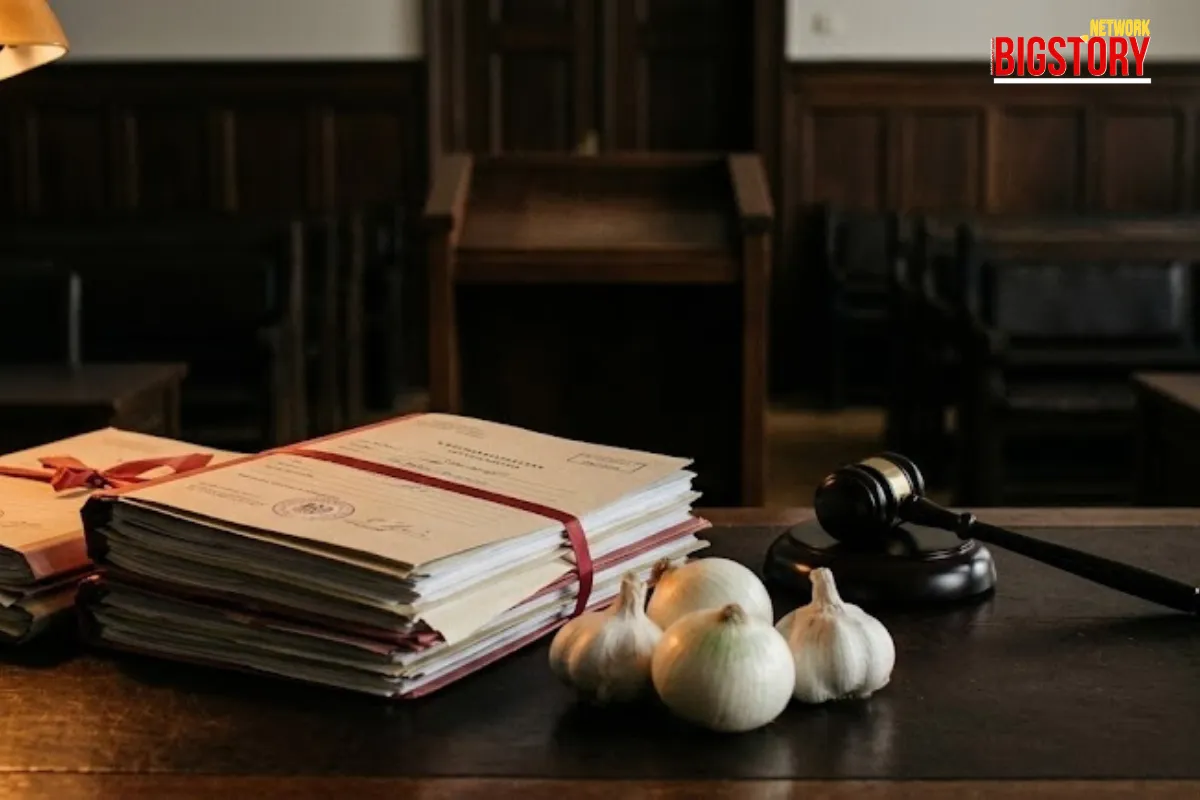
The fact that the supreme court dismisses PIL onion garlic tamasic jain sentiments 2026 petitions on a Monday morning generated widespread amusement, but the underlying reality exposes a critical vulnerability in India's highest judiciary. Chief Justice of India Surya Kant threw out an Article 32 petition seeking government research into the negative energy of root vegetables, sharply rebuking the filing advocate for wasting institutional time and unnecessarily dragging minority religious practices into baseless litigation.

The immediate significance extends far beyond dietary philosophy or courtroom wit. With the Supreme Court currently staggering under a pendency of over 82,000 cases, the fact that a single lawyer was able to list five separate frivolous petitions before the Chief Justice's bench on a single day highlights a catastrophic failure in the judicial cost-deterrence framework.

How We Got Here

  • The Trigger: Between 2022 and 2023, Advocate Sachin Gupta filed multiple petitions, including a PIL to phase out caste-based reservations, which former CJI DY Chandrachud dismissed as an abuse of process, imposing a Rs 25,000 penalty.
  • The Background: The Supreme Court has repeatedly attempted to crack down on Article 32 abuse; in April 2025, a separate bench imposed a massive Rs 5,00,000 cost on another advocate for a continuous pattern of frivolous filings.
  • The Escalation: On March 9, 2026, Advocate Gupta returned to the apex court with five new PILs, using a bizarre justification that onions in food recently caused a divorce in Gujarat to defend his demand for a government committee on "tamasic" energy.
  • The Stakes: Every minute the Chief Justice's bench spends rejecting petitions about the spiritual composition of garlic is a minute actively stolen from citizens awaiting hearings on genuine constitutional and fundamental rights violations.

The Key Players

CJI Surya Kant, Chief Justice of India Presiding over the bench, CJI Surya Kant delivered a sharp rebuke, questioning the petitioner's intent to hurt Jain community sentiments. He explicitly noted the court would have imposed "exemplary costs" had the petitioner not been a lawyer, issuing a final warning against future filings.

Sachin Gupta, Advocate and Petitioner Gupta represents the systemic problem of serial PIL filers. Despite a documented history of dismissals and financial penalties from previous Chief Justices, he continues to utilize Article 32 to force the nation's highest court to hear legally baseless grievances.

The Jain Community India's 4.5 million Jain population found its core religious and dietary doctrines instrumentalized in a frivolous legal stunt. The community did not authorize or participate in this petition, making the CJI's intervention a necessary defense of a minority group's right to be left out of judicial theater.

The BIGSTORY Reframe — The Immunity of the Bar

Mainstream coverage is treating this strictly as judicial comedy, focusing heavily on the petitioner's Gujarat divorce anecdote and the CJI's midnight drafting joke. This framing fundamentally misses the institutional breakdown occurring in plain sight. Advocate Sachin Gupta has now had at least four PILs dismissed across two separate Chief Justices, including one that carried a financial penalty. Yet, he filed five more today.

The Supreme Court deliberately chose not to impose costs this time simply because the petitioner is an enrolled lawyer. This decision—treating membership of the Bar as a protective shield against financial consequences for serial abuse—exposes the fatal flaw in India's PIL mechanism. When a regular citizen files a frivolous petition, the court leverages massive fines to deter future abuse. When a lawyer does it, the court often extends professional courtesy. This double standard creates a zero-consequence playground for "PIL shops." The mechanism designed by Justice PN Bhagwati to give voiceless Indians access to constitutional remedies is being actively hijacked by advocates who face no disciplinary action from their own governing bodies.

What This Means for India

  • The Pendency Crisis: With over 82,000 cases pending, the continuous listing of serial frivolous PILs physically chokes the Supreme Court docket, delaying justice for legitimate litigants.
  • Regulatory Failure: The Bar Council of India, the only body statutorily empowered to discipline advocates for habitual misuse of court processes, remains entirely absent from the enforcement equation.
  • The Next 30 Days: Legal observers must watch whether the Supreme Court's Rules Committee drafts formal amendments to close the loophole that grants lawyers functional immunity from heavy cost-deterrence.

The Implications

  • Short Term: Social media virality will temporarily obscure the serious judicial time wasted on reviewing, listing, and hearing five separate baseless petitions in a single morning.
  • Medium Term: Without intervention from the Bar Council of India, serial petitioners will recognize that the Supreme Court's verbal warnings rarely translate into career-ending disciplinary actions.
  • India-Specific Consequence: The original, noble intent of Public Interest Litigation in India continues to degrade into a vehicle for publicity-seeking lawyers, undermining public faith in the constitutional remedy of Article 32.

If an enrolled advocate can repeatedly abuse the Supreme Court's time without facing professional suspension, does the Bar Council of India exist to regulate lawyers, or to protect them from the consequences of their own misconduct?

How We Reported This

News & Wire Coverage:

Official Statements & Data:


Brajesh Mishra
Brajesh Mishra Associate Editor

Brajesh Mishra is an Associate Editor at BIGSTORY NETWORK, specializing in daily news from India with a keen focus on AI, technology, and the automobile sector. He brings sharp editorial judgment and a passion for delivering accurate, engaging, and timely stories to a diverse audience.

BIGSTORY Trending News! Trending Now! in last 24hrs

The Punchline and the Pendency: What the Supreme Court's Onion-Garlic PIL Exposes About Judicial Abuse
Supreme Court of India
The Punchline and the Pendency: What the Supreme Court's Onion-Garlic PIL Exposes About Judicial Abuse
The Lakhimpur Doctrine: Supreme Court Grants Unnao Survivor Direct Voice in Sengar's Bail Fight
Supreme Court of India
The Lakhimpur Doctrine: Supreme Court Grants Unnao Survivor Direct Voice in Sengar's Bail Fight
Economic Survey 2026: India Projects 7% Growth Despite "Tariff War"
Supreme Court of India
Economic Survey 2026: India Projects 7% Growth Despite "Tariff War"
Chhath, Corruption, and ‘Jungle Raj’: Modi Sets Bihar Election Frame
Supreme Court of India
Chhath, Corruption, and ‘Jungle Raj’: Modi Sets Bihar Election Frame