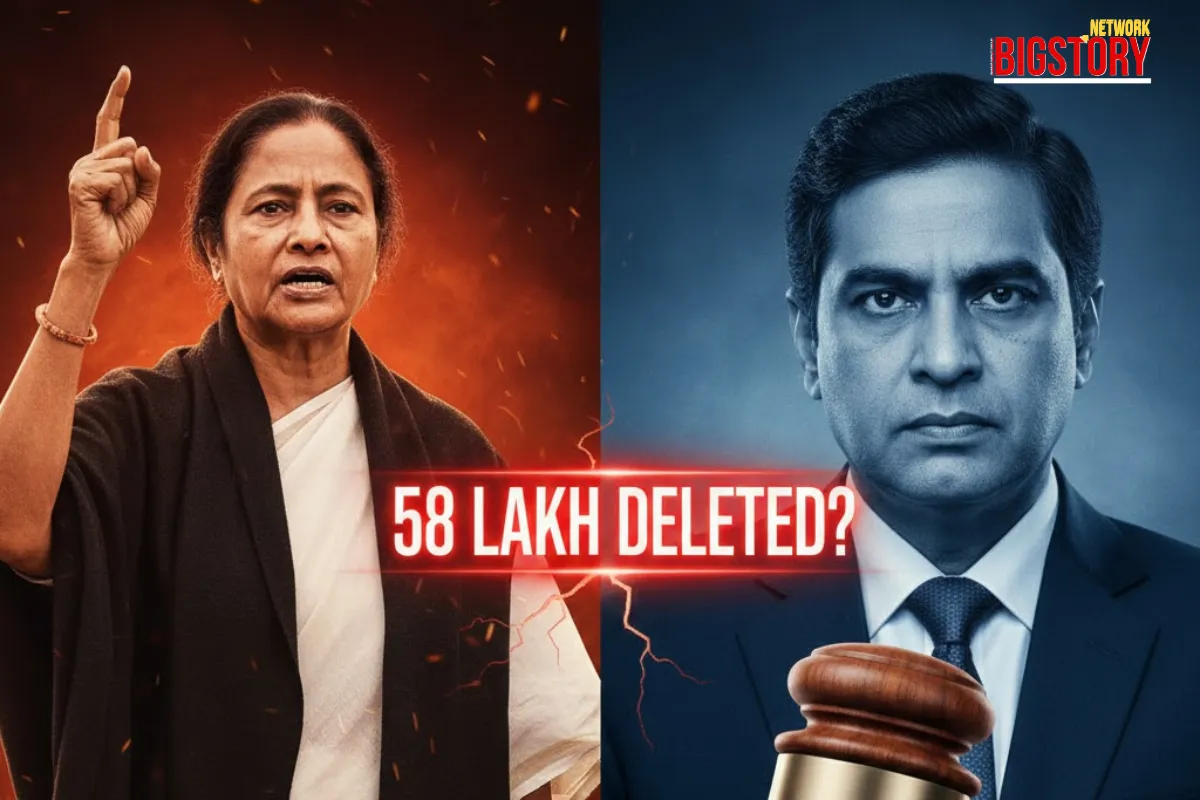
It is officially a constitutional stalemate. On February 20, the Supreme Court of India took the unprecedented step of removing an elected state government's bureaucracy from the election preparation process. Frustrated by endless allegations and counter-allegations, a three-judge bench led by Chief Justice Surya Kant ordered that judicial officers—not state SDMs or ECI micro-observers—will now adjudicate claims and objections for West Bengal's 2026 voter list.
This matters because it exposes a complete breakdown of faith between a state and the national poll panel just months before the May 2026 Assembly elections. When Chief Minister Mamata Banerjee publicly labels the ECI a "Tughlaqi Commission" acting as a "washing machine" for the BJP, and the ECI responds by ordering FIRs against state officers for "serious misconduct," the neutrality of the democratic process itself is on trial.
The "BigStory" Angle (The "Shadow EROs" and AI Bias)
Mainstream media is focusing on the political insults. They are missing the Algorithmic Battleground.
The core of this crisis is the ECI’s use of AI-driven "De-duplication" software to flag "Logical Discrepancies" (LD)—such as minor parental age gaps or spelling variations. The TMC argues that the ECI-appointed central observers ("Shadow EROs") possess limited familiarity with the Bengali language. As a result, standard spelling variants of Bengali surnames (like "Datta" vs. "Dutta") are allegedly being treated as discrepancies, triggering mass deletion notices that disproportionately target minority and rural demographics. The Supreme Court's appointment of local judicial officers is a direct intervention to ensure these linguistic and regional nuances are handled with legal fairness, not blind algorithmic execution.
The Context (Rapid Fire)
- The Trigger: On February 2, CM Mamata Banerjee met the Chief Election Commissioner in New Delhi wearing a black shawl in protest, warning of mass disenfranchisement.
- The Backstory: Between February 15 and 17, the ECI ordered the suspension and filing of FIRs against seven state officials for "serious misconduct" and alleged record-burning during the SIR process.
- The Escalation: Banerjee retaliated by promising to "100 percent protect and promote" the suspended officers, accusing the ECI of orchestrating an "extraordinary threat culture" that led to 160 stress-related deaths among voters and officials.
Key Players (The Chessboard)
- Justice Surya Kant (The Arbiter): The Chief Justice recognized that leaving the voter list in the hands of either the warring state officials or the ECI's central observers would vitiate the election. His use of Article 142 is a rare "judicial takeover" of an administrative duty.
- Mamata Banerjee (The Challenger): She has successfully framed the ECI’s "purification" drive as a direct attack on Bengali democratic rights, using historical comparisons to Muhammad bin Tughlaq to paint the commission as tyrannical.
- Gyanesh Kumar (The Enforcer): The Chief Election Commissioner maintains that the ECI is simply cleaning up a compromised voter list and catching "ghost voters," warning that state officials cannot take the law into their own hands.
The Implications (Your Wallet & World)
- Short Term (Next Week): If you are a West Bengal resident whose name was flagged on the "Logical Discrepancy" list, you must now present your documents to the newly appointed Judicial Officers. The Supreme Court ordered the final processed list to be published on February 28, with any pending adjudications to follow in a "Supplementary Roll."
- Long Term (The 2026 Precedent): This establishes a massive legal precedent. If state governments in the future feel targeted by the ECI, they now have a Supreme Court blueprint to demand judicial oversight of their electoral rolls, fundamentally changing how Indian elections are administered.
The Closing Question
When a state government doesn't trust the Election Commission, and the Election Commission doesn't trust the state police, the voter is caught in the crossfire. Is Supreme Court intervention the only way to guarantee a fair election in 2026? Tell us in the comments.
FAQs
- Q: Why did the Supreme Court appoint judicial officers for West Bengal's voter list revision?
- A: The Court cited an "extraordinary trust deficit" between the Mamata Banerjee government and the Election Commission. To ensure neutrality and fairness, judicial officers will now adjudicate voter claims instead of state bureaucrats or ECI micro-observers.
- Q: What is the "Logical Discrepancy" (LD) list in West Bengal's 2026 elections?
- A: It is a list of voters flagged by the ECI's software for potential errors, such as spelling mismatches or age gaps between family members. The TMC alleges this system is being weaponized to wrongfully delete legitimate voters.
- Q: Why does Mamata Banerjee call the ECI a "Tughlaqi Commission"?
- A: She compared the ECI to the 14th-century Delhi Sultan Muhammad bin Tughlaq, who was known for his whimsical and authoritarian decisions, accusing the poll panel of acting unconstitutionally to favor the BJP.
- Q: Can the 2026 West Bengal election be delayed due to voter list disputes?
- A: No. The Supreme Court explicitly refused to halt the process, ordering the processed voter list to be published on February 28, 2026, ensuring the Assembly elections remain on schedule for May.
Sources: Live Law, The Hindu, Hindustan Times, ANI, DD News.

 Brajesh Mishra
 Exclusive Content