As lawyers demand a CBI probe into the viral satirical movement, the Supreme Court demonstrates rare institutional self-awareness by refusing to legally escalate a youth-driven digital revolt.
 Brajesh Mishra
• What happened: The Supreme Court officially refused an urgent hearing for Public Interest Litigations (PILs) seeking a CBI probe into the viral "Cockroach Janta Party" (CJP).
• Why it matters: Complaining lawyers argued that the satirical movement is dangerously commodifying and distorting oral Supreme Court observations for viral engagement and commercial gain.
• The strategic play: Chief Justice Surya Kant brushed off the anxiety, advising lawyers not to take the memes "so sentimentally," recognizing that judicial intervention would only amplify the movement.
• India's stake: The CJP is facing severe government pushback, with its website taken down and its X handle withheld by authorities over alleged "national security concerns."
• The deciding question: Will the broader political establishment realize that attempting to legally silence a decentralized, meme-driven protest over unemployment will only trigger a massive Streisand Effect?
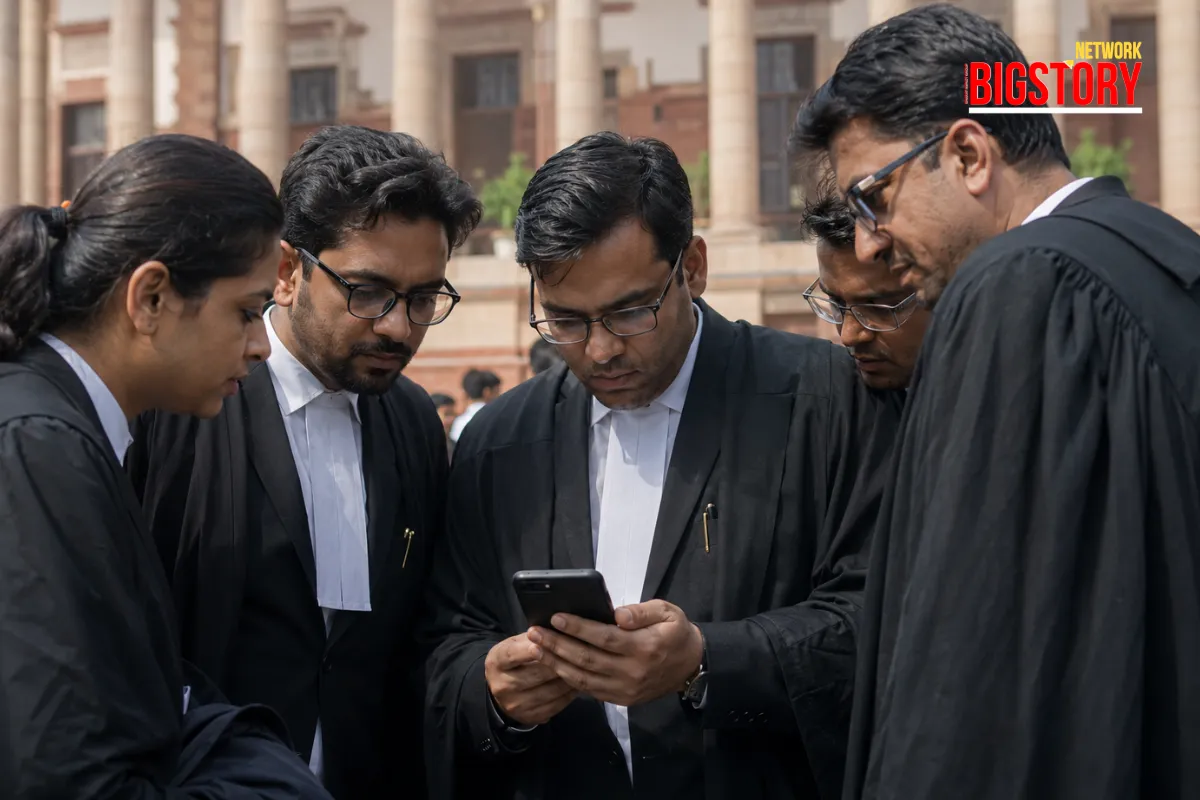
The Supreme Court has officially weighed in on the digital phenomenon it accidentally created. Today, Chief Justice of India (CJI) Surya Kant declined an urgent hearing on Public Interest Litigations (PILs) seeking a Central Bureau of Investigation (CBI) probe into the viral "Cockroach Janta Party" (CJP), advising the complaining lawyers not to react "so sentimentally" to the satirical movement.
During the morning session, a Supreme Court bench comprising CJI Surya Kant, alongside Justices Joymalya Bagchi and VM Pancholi, heard mentions of two urgent PILs regarding the digital controversy. The bench firmly stated there was "no grave urgency" to entertain the matters immediately, clarifying that the petitions would be examined in due course through regular judicial procedures.
The courtroom exchange highlighted a growing anxiety among traditional legal professionals regarding how judicial proceedings are being consumed and remixed online.
When advocate N.K. Goswami argued that the digital movement and its distorted narratives were damaging the image of the judiciary, CJI Kant immediately brushed off the concern, remarking: "Don't take it so sentimentally." The CJI had already issued a statement clarifying his original May 15 remarks that sparked the movement. He reiterated that his use of the terms "parasites" and "cockroaches" was aimed strictly at fraudsters using fake and bogus degrees to enter noble professions like law and media, and was absolutely not directed at the unemployed youth of the nation.
Despite this, the petitions paint the CJP as a legal threat. Filed by advocate Raja Choudhary, one of the PILs seeks a direct CBI investigation into the activities of the CJP, as well as a sweeping probe into fake advocates across the country. The core legal argument centers on the "organised commercial exploitation" of the Supreme Court. The plea warns that oral observations are being selectively clipped, taken out of context, and transformed into viral memes and trademark applications, resulting in a "dangerous commodification" that undermines institutional trust.
Mainstream coverage will focus on the court's dismissal, but the "Missed Angle" here is how this legal pushback is achieving the exact opposite of its intended goal.
By filing PILs in the Supreme Court to investigate a satirical meme page, traditional legal practitioners have officially legitimized the Cockroach Janta Party as a serious national issue. Founder Abhijeet Dipke’s platform is thriving on this exact kind of establishment panic. The movement has already faced massive state censorship—its website was recently taken down, and its official X (formerly Twitter) handle was withheld following Ministry of Electronics and Information Technology (MeitY) directives citing "national security concerns" flagged by the Intelligence Bureau.
The CJI’s advice to not take the movement "sentimentally" is a rare, highly calculated moment of institutional self-awareness. The Supreme Court bench clearly recognizes what the complaining lawyers do not: trying to use the heavy hand of the law to silence a decentralized, meme-driven youth revolt over unemployment and the NEET-UG exam leaks will only trigger a massive Streisand Effect, pouring absolute premium fuel onto the fire.
• Judicial Restraint: The Supreme Court is signaling that it will not police digital satire or internet meme culture, preserving its bandwidth for actual constitutional crises.
• The Censorship Paradox: The more the government attempts to block the CJP's primary digital assets (websites, X handles), the faster the movement decentralizes onto unregulated platforms like WhatsApp and encrypted Telegram channels.
• Generational Divide: The PILs expose a massive generational disconnect. Traditional institutions view remix culture and meme-ification as a "loss of prestige," while Gen Z views it as the only accessible mechanism for political accountability.
If the Supreme Court won't shut down the "Cockroaches," how far will the central government go to scrub this digital revolt from the Indian internet?
• Bar & Bench: Supreme Court Live Updates and Litigation News
• LiveLaw: Supreme Court Hearings and Constitutional Law Precedents
• The Hindu: National Legal and Judicial News
• The Indian Express: India News, Digital Culture, and Policy Tracker
 Exclusive Content






Sign up for the Daily newsletter to get your biggest stories, handpicked for you each day.


 Trending Now! in last 24hrs