As the United States publicly claims Iran's newly minted Supreme Leader is severely disfigured and in hiding, the terrifying prospect of a power vacuum threatens India's fragile energy lifeline in the Persian Gulf.
 Brajesh Mishra
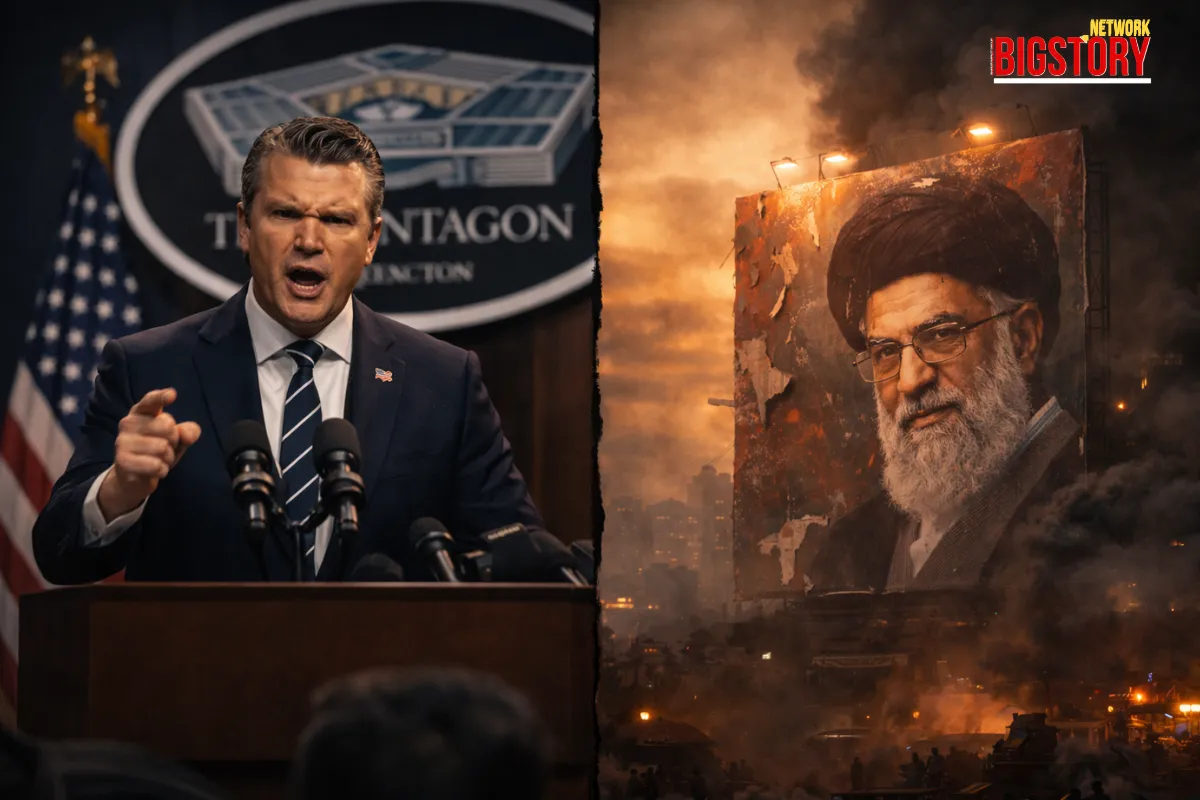
What happened: US Defense Secretary Pete Hegseth publicly claimed that Iran's new Supreme Leader, Mojtaba Khamenei, is "wounded and likely disfigured" and currently in hiding. Why it happened: Mojtaba was secretly injured in the same February 28 US-Israel airstrike that killed his father, Ayatollah Ali Khamenei. He has not released a single photo or audio recording of himself since taking power. The strategic play: Washington is using psychological warfare to highlight a potential power vacuum in Tehran, suggesting that a headless IRGC has propped up an incapacitated figurehead to maintain the illusion of control. India's stake: India's energy security relies on negotiating with a stable Iranian government. If the Supreme Leader is incapacitated and rogue IRGC factions take total control, the Persian Gulf will become entirely unnavigable, destroying India's oil lifelines. The deciding question: Will Mojtaba Khamenei release a video proving his physical competence, or will the IRGC continue to govern Iran from behind the curtain of a "ghost" leader?
The geopolitical standoff in the Middle East has plunged into unprecedented psychological warfare following explosive claims regarding the mojtaba khamenei wounded disfigured 2026 leadership crisis. On Friday, US Defense Secretary Pete Hegseth publicly asserted that Iran's newly appointed Supreme Leader is severely injured and incapacitated, fueling intense speculation that the radical Islamic Republic is currently operating without a functional head of state.
The explosive remarks from the Pentagon expose a potential power vacuum at the absolute highest echelon of the Iranian regime. For global markets and import-dependent nations like India, the terrifying prospect of a "ghost ship" regime—where rogue, decentralized military commanders operate without central political oversight—could trigger desperate, unpredictable escalations in the ongoing war.
Pete Hegseth, US Secretary of Defense Hegseth utilized a global press briefing to actively undermine the physical capability of Iran's new leader. "We know the new so-called not so supreme leader is wounded and likely disfigured," Hegseth stated. "Iran has plenty of cameras and plenty of voice recorders. Why a written statement? I think you know why."
Mojtaba Khamenei, Supreme Leader of Iran The newly minted commander-in-chief has vanished from the public eye during his nation's most existential crisis. His complete physical absence has sparked widespread intelligence theories that the IRGC is essentially running the country using him as a critically wounded figurehead.
Ministry of External Affairs (MEA), India New Delhi is monitoring the leadership crisis with extreme anxiety. Having just secured a highly fragile diplomatic exemption from Tehran to allow Indian oil tankers through the Strait of Hormuz, the MEA faces the reality that those back-channel deals could vanish overnight if the regime fractures.
Global media networks are intensely focused on the gruesome rumors of amputations, the history of Iran's theocratic succession, and the sheer audacity of the Pentagon's psychological warfare. However, this focus entirely misses the catastrophic logistical threat the situation poses to the Global South.
If the Pentagon's assessment is accurate and Mojtaba Khamenei is physically incapacitated, Iran is officially a "ghost ship" regime. Its vast military apparatus is operating on autopilot without a central, moderating political authority to weigh geopolitical consequences. For India, this is the ultimate worst-case scenario. New Delhi relies entirely on nuanced back-channel diplomacy to keep its energy supply flowing. You cannot negotiate delicate maritime carve-outs with a decentralized, headless IRGC that is fighting a multifront war for its own survival.
If the Supreme Leader of Iran is too injured to step in front of a camera, whose finger is actually resting on the trigger in the Persian Gulf?
News & Wire Coverage:
Official Statements & Data:
 Exclusive Content




Sign up for the Daily newsletter to get your biggest stories, handpicked for you each day.

 Trending Now! in last 24hrs