As the US Supreme Court dismantles Donald Trump's reciprocal tariffs, New Delhi adopts a strategic "wait and watch" approach to ensure its hard-fought export advantages don't evaporate under a new global baseline.
 Sseema Giill
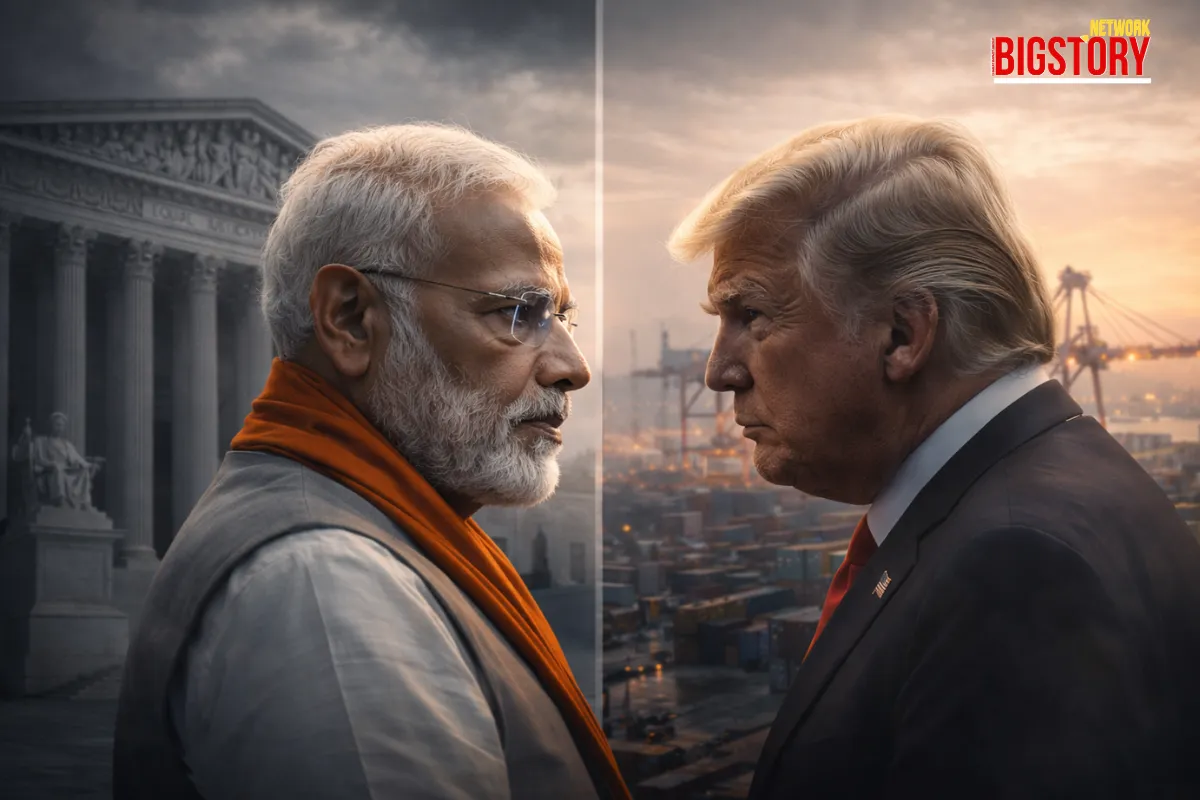
What happened: India announced it will not formally sign the finalized interim trade agreement with the US until Washington implements a new, permanent global tariff architecture.
Why it happened: The US Supreme Court recently struck down President Donald Trump's sweeping reciprocal tariffs, forcing his administration to rely on temporary 150-day import surcharges and throwing the country's baseline tariff rates into chaos.
The strategic play: New Delhi is adopting a "wait and watch" approach to ensure the 18% preferential tariff rate it negotiated actually provides a mathematical advantage over competing nations once the dust settles in Washington.
India's stake: Prematurely signing the deal could lock Indian exporters into uncompetitive rates or expose them to new penalties from the ongoing US Section 301 investigations into "excess industrial capacity."
The deciding question: Will the Trump administration successfully rebuild its permanent tariff walls before the temporary 150-day surcharge expires in July, or will the legal limbo permanently derail the bilateral pact?
The highly anticipated india us trade deal global tariff 2026 agreement has hit a massive geopolitical roadblock. On Monday, India's Commerce Secretary officially announced that New Delhi will withhold its signature on the finalized interim bilateral trade pact. The reason is not a breakdown in negotiations, but rather the total collapse of Washington's baseline import tax structure following a historic domestic legal defeat for the US President.
With the US Supreme Court striking down President Donald Trump's aggressive reciprocal tariffs, the mathematical foundation of global trade has been thrown into chaos. India is now flatly refusing to lock itself into a legally binding bilateral agreement until the White House establishes a permanent, predictable global tariff architecture, proving that New Delhi will not sign a contract when the final price tag remains blank.
Rajesh Agrawal, Commerce Secretary, India Agrawal firmly anchored India's strategic pause, clarifying that the actual signing depends entirely on the US establishing its new tariff architecture. His objective is to guarantee that the negotiated rates retain their comparative advantage for Indian exporters in the American market.
Donald Trump, President of the United States President Trump's sweeping protectionist policies were abruptly disrupted by the US Supreme Court, forcing his administration to rapidly deploy emergency powers and Section 301 probes. This legal and administrative scrambling has effectively stalled international trade momentum.
Piyush Goyal, Union Commerce and Industry Minister Goyal has staunchly defended the underlying merit of the agreement. He dismissed rumors of the deal's collapse, emphasizing that the finalized framework successfully shields Indian agriculture while providing domestic manufacturers a massive edge over regional competitors like China.
Mainstream business media is treating this development as a standard administrative postponement, focusing on the conflicting optics between Goyal's weekend reassurances and Agrawal's Monday delay announcement, alongside the release of India's narrowed February trade deficit data. However, treating this as a mere scheduling issue ignores the high-stakes mathematical poker game currently underway.
When India negotiated the preferential 18% tariff rate, the baseline penalty applied to competitors by the US was a crippling 50%. It was a massive win. Now that the US Supreme Court has wiped out that 50% baseline, the playing field has fundamentally shifted. If the new permanent global standard tariff settles at 10% or 15%, signing a binding agreement at 18% would actually leave India mathematically worse off than nations with no deal at all. New Delhi isn't just delaying the signature out of caution; it is aggressively protecting its labor-intensive sectors by refusing to accept a "discount" until it knows the actual retail price of US market entry.
If the US cannot establish a legal, permanent tariff baseline by the time its 150-day emergency surcharge expires in July, is a bilateral trade deal with Washington actually worth the paper it's printed on?
News & Wire Coverage:
Official Statements & Data:
 Exclusive Content



Sign up for the Daily newsletter to get your biggest stories, handpicked for you each day.



 Trending Now! in last 24hrs