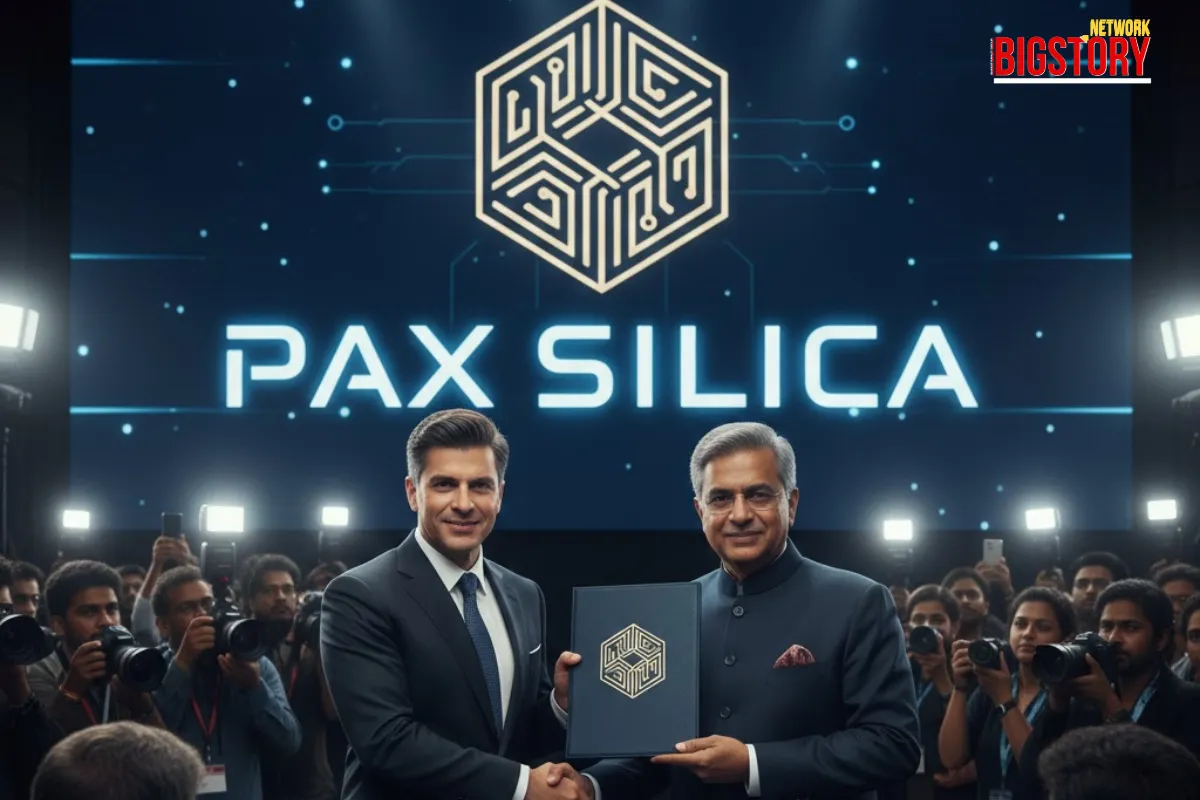
For decades, India’s foreign policy was defined by non-alignment. But when it comes to the future of Artificial Intelligence, staying neutral is no longer an option. On Friday, February 20, India took a definitive side in the 21st-century tech war by formally signing the Pax Silica Declaration with the United States.
This matters because this is not just a standard trade agreement; it is an economic security pact for the AI age. By joining Pax Silica, India has committed to deeply integrating its massive rare earth mineral reserves and booming engineering talent with a Western-led alliance. The goal is singular: to completely decouple the advanced technology supply chain from China, ensuring that the "commanding heights of the global economy" remain in the hands of democratic and allied nations.
The "BigStory" Angle (The "Silicon Non-Alignment" Era Ends)
Mainstream reporting frames this simply as a boost for Indian electronics. They are missing the Geopolitical Point of No Return.
While India continues to participate in broader, slower global forums like the G20 or the UN, Pax Silica is a fast-moving "Hard Tech Bloc." By securing the full lifecycle of technology—from lithium mines in Western Australia to lithography machines in the Netherlands, and now, engineering hubs in Bengaluru—Pax Silica acts as a fortress against "weaponized dependency." As US Under Secretary Jacob Helberg bluntly stated during the signing in New Delhi, this pact is a direct message to Beijing: "We say no to weaponized dependency, and we say no to blackmail."
Furthermore, watch the Deregulated AI Haven angle. The pact encourages "Pro-Innovation Regulations," serving as a strategic counter to the European Union's heavy-handed, fear-based AI Act. By aligning with the US, India is positioning itself as a deregulated launchpad for global AI startups.
The Context (Rapid Fire)
- The Trigger: The US State Department originally launched Pax Silica in December 2025 with initial allies. India’s entry was the highly anticipated missing puzzle piece.
- The Backstory: India felt the sting of supply chain weaponization recently when China restricted rare earth exports (vital for EV motors and defense tech) amidst regional tensions, crippling local production lines.
- The Escalation: The alliance is rapidly moving to secure energy routes, bringing in the UAE and Qatar last month to guarantee cheap power for the massive data centers required to train frontier AI models.
Key Players (The Chessboard)
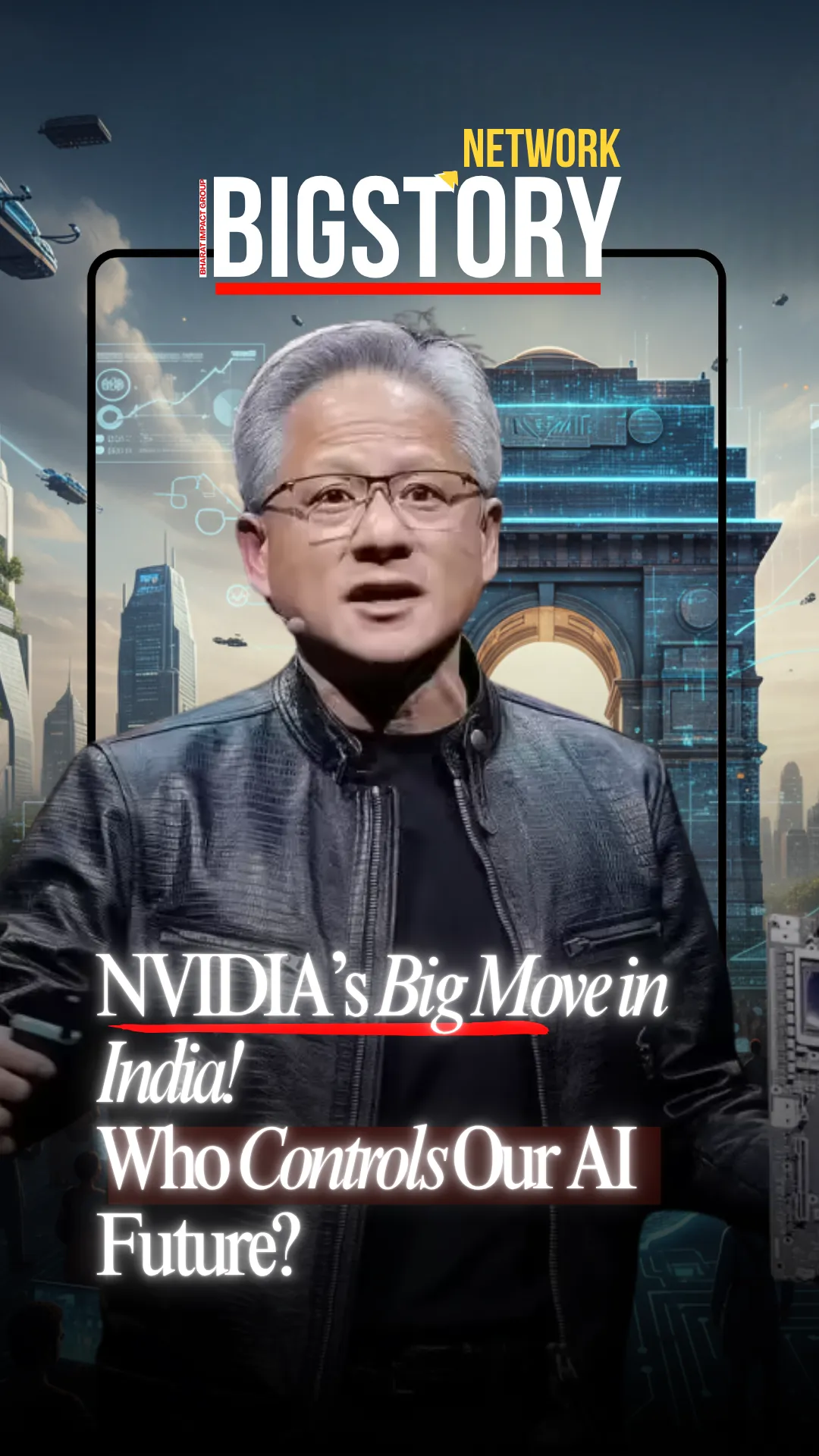
- Ashwini Vaishnaw (The Architect): India's IT Minister framed the signing not as a treaty, but as a compounding growth engine. He noted that 10 semiconductor plants are already operational or being built in India, requiring an influx of 1 million new skilled professionals.
- Jacob Helberg (The Strategist): The US Under Secretary of State for Economic Growth engineered this alliance. His vision is clear: if the 20th century ran on oil and steel, the 21st runs on compute and minerals.
- Sergio Gor (The Diplomat): The US Ambassador to India summarized the stakes: "We choose freedom. We choose partnership. We choose strength. And today, with India's entry into Pax Silica, we choose to win."
The Implications (Your Wallet & World)
- Short Term (Stock Market Impact): Investors should immediately monitor Indian mining, metal, and EMS (Electronics Manufacturing Services) stocks. Companies involved in rare earth processing (like GMDC or NALCO) and electronics assembly (like Dixon Technologies) are perfectly positioned to benefit from the new "Trusted Corridors" of capital flowing in from the US and Japan.
- Long Term (Strategic Autonomy): While India gains access to cutting-edge 2-nanometer chip designs, it permanently ties its tech hardware future to Washington's geopolitical agenda. If a future US administration decides to leverage this alliance for military compliance, India's traditional "strategic autonomy" will be severely tested.
The Closing Question
India just traded its technological neutrality for a guaranteed seat at the global AI superpower table. Is joining a US-led bloc the only realistic way to break China's monopoly, or are we trading one dependency for another? Tell us in the comments.
FAQs
- Q: What is the Pax Silica Declaration signed by India and the US?
- A: It is a strategic tech agreement aimed at building a secure, resilient supply chain for critical minerals, semiconductors, and artificial intelligence, free from Chinese dominance.
- Q: Which countries are members of the Pax Silica coalition?
- A: As of February 2026, the ten full signatories are the United States, India, Japan, South Korea, the United Kingdom, Australia, Singapore, Israel, the UAE, and Qatar.
- Q: How does Pax Silica affect India's semiconductor industry?
- A: It grants India access to advanced Western manufacturing equipment, investment, and shared R&D, acting as a massive accelerant for the India Semiconductor Mission and creating an estimated 1 million new tech jobs.
- Q: What is the difference between Pax Silica and the G7 or I2U2?
- A: Unlike broader economic or political forums, Pax Silica is a highly specialized "tech-and-minerals" coalition focused exclusively on securing the physical supply chains that power the AI economy.
Sources: US State Department, Press Information Bureau (PIB), The Hindu, The Economic Times.

 Brajesh Mishra
 Exclusive Content