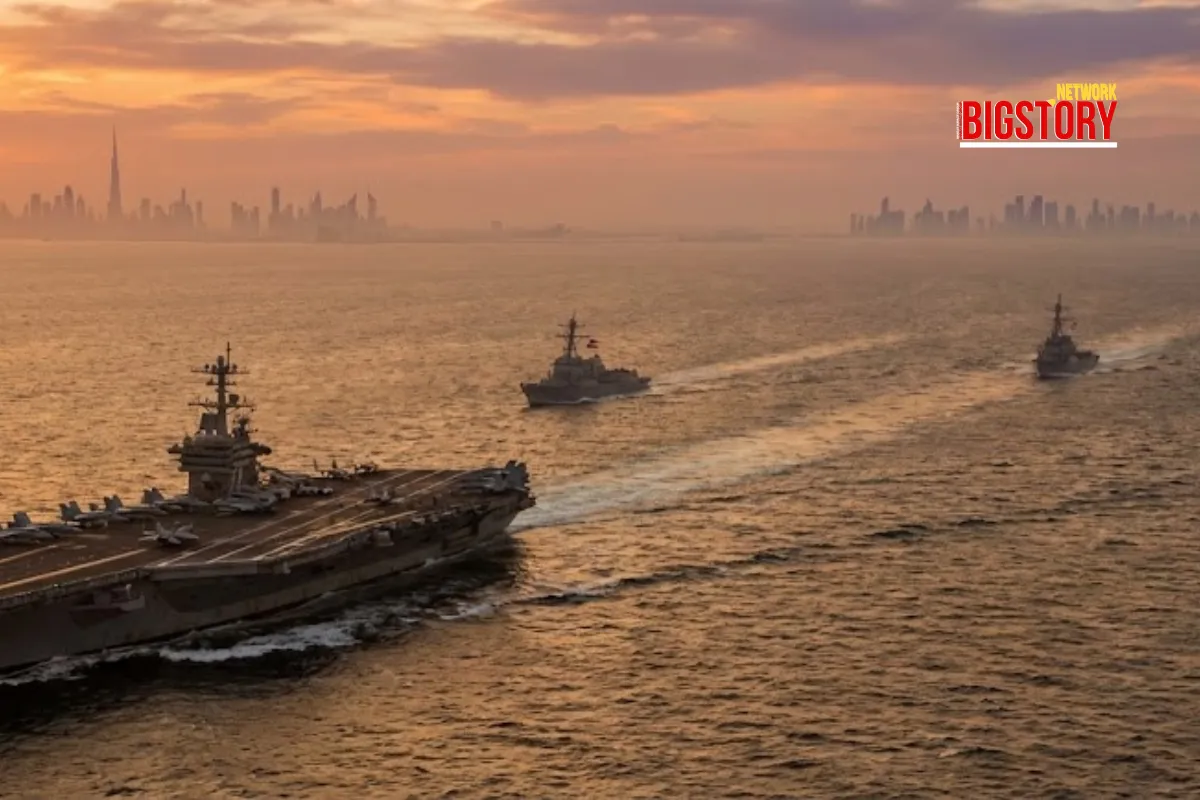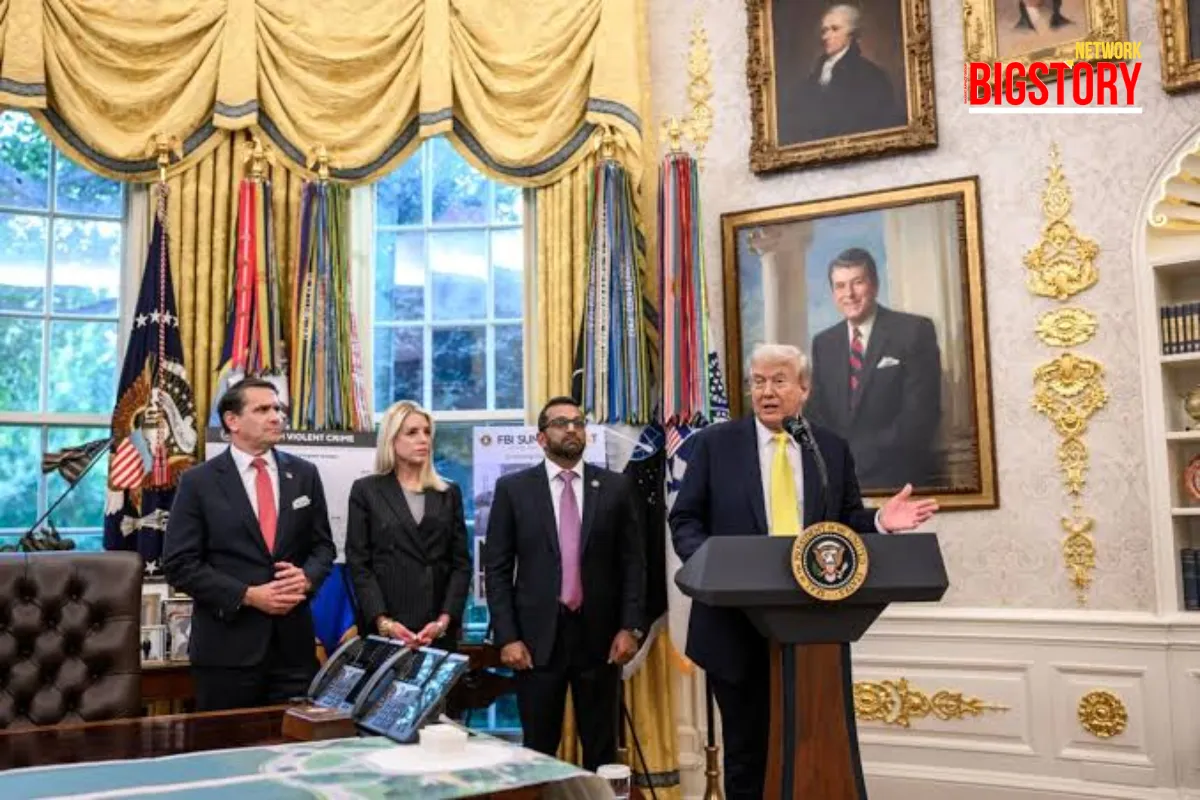
In a dramatic escalation of Middle East tensions, President Donald Trump issued a severe ultimatum to Iran today, January 28, 2026, via his Truth Social platform. Warning that "time is running out" for a non-nuclear deal, Trump announced that a "massive armada," led by the nuclear-powered aircraft carrier USS Abraham Lincoln, is steaming toward the Persian Gulf.
Explicitly linking this move to his administration's recent success in Venezuela (referencing the removal of Nicolás Maduro), Trump threatened that any failure by Tehran to negotiate would result in a military strike "far worse" than the devastating "Operation Midnight Hammer" of June 2025. The ultimatum comes as the Iranian regime faces its most fragile moment in decades, battling historic internal protests and a currency collapse.
The Context (How We Got Here)
- The "Midnight Hammer" Shadow: In June 2025, the US conducted targeted airstrikes on three key Iranian nuclear facilities. While the administration claimed the program was "buried," recent intelligence suggests Tehran has rebuilt deep underground capabilities, allegedly enriching uranium to 60% purity.
- The Internal Collapse: Since December 2025, Iran has been rocked by anti-regime protests sparked by the Rial hitting a record low of 1.4 million to the USD. Human rights groups report over 6,100 deaths in the ensuing crackdown, giving the US a "humanitarian" pretext for intervention alongside the nuclear threat.
- The Israel Factor: Just yesterday (Jan 27), Israeli PM Benjamin Netanyahu signaled a coordinated ramp-up, stating that IDF operations in Gaza were previously hampered by a "lack of ammunition" before the Trump administration took office, implying the gloves are now off.
The Key Players (Who & So What)
- Donald Trump (President of the USA): The Aggressor. Pivoting from his "Greenland Tariff" bluff, Trump is applying the "Maduro Model" of maximum pressure. His rhetoric suggests he views the Iranian regime as teetering and believes one final push—backed by a naval armada—will force a collapse or a capitulation.
- Abbas Araghchi (Iranian Foreign Minister): The Defender. Araghchi immediately rejected the ultimatum, stating via state media that "negotiations don't go along with threats." However, sources suggest the regime is split, with moderates fearing a war would be the final nail in the Islamic Republic's coffin.
- Ali Khamenei (Supreme Leader): The Target. Facing a dual existential threat: a "Persian Spring" revolution from within and a US Naval Armada from without. His silence so far is deafening, leading to speculation about his health or grip on the IRGC.
The BIGSTORY Reframe (The "Regime Decapitation" Signal)
Mainstream media is focusing on the "Nuclear Deal." The real story is the Venezuela Blueprint.
- Regime Change, Not Just Policy: By explicitly referencing the "Venezuela Success", Trump is signaling to the millions of Iranian protesters that the US goal has shifted. It is no longer just about stopping the bomb; it is about decapitating the leadership. The "Armada" serves as a floating fortress to enforce a blockade and potentially provide air cover for opposition forces, effectively "gray-zoning" a revolution.
- Cyber-Kinetic Warfare: The armada isn't just ships. Defense analysts note it likely carries advanced electronic warfare suites capable of jamming the drone control links the IRGC uses to suppress protesters. The message "help is on the way" implies a potential Starlink-style internet restoration operation to fuel the uprising.
The Implications (Why This Matters)
- Oil Market Shock: Brent Crude is already reacting to the "Armada" news. If the Strait of Hormuz is threatened, prices could spike past $95/barrel overnight, undoing recent global inflation gains.
- The 7-Day Window: Intelligence sources suggest the carrier strike group will reach its operational station in the Gulf within 7 days. This creates a frantic diplomatic window where intermediaries (likely Qatar or Oman) will try to broker a meeting to avert war.
- Domestic Fallout: For the Iranian regime, the external threat is a double-edged sword. It usually unites the populace, but with the economy in ruins (Rial at 1.4m), the public might welcome the intervention, turning the "Great Satan" into a liberator in the eyes of the youth.
The Closing Question (Now, Think About This)
If a regime is already drowning in its own economic blood, does an approaching armada offer them a lifeline to rally their people, or is it just the weight that finally sinks them?
FAQs: Decoding the Armada Ultimatum
1. What is "Operation Midnight Hammer"? Operation Midnight Hammer refers to a series of targeted US airstrikes conducted in June 2025 against Iranian nuclear facilities. President Trump has cited this operation as proof of his willingness to use force, warning that a second attack would be "far worse."
2. Is the US going to war with Iran in 2026? Not yet. While President Trump has deployed a massive armada led by the USS Abraham Lincoln, he has framed it as leverage to force a "deal." However, with Iran rejecting talks and the US referencing regime change (Venezuela style), the risk of kinetic conflict is higher than at any point since 2020.
3. What did Trump mean by the "Venezuela Model"? Trump's reference to Venezuela alludes to his administration's pressure campaign that purportedly led to the removal/collapse of Nicolás Maduro's government (in this timeline). By applying this to Iran, he signals that the US objective may have shifted from "denuclearization" to "regime change" by squeezing the economy and emboldening internal opposition.
4. Why are there protests in Iran right now? Protests erupted in December 2025 after the Iranian currency (Rial) collapsed to a record low of 1.4 million to the USD, making basic goods unaffordable. The unrest has evolved into anti-regime demonstrations, with over 6,100 reported deaths in the government crackdown.
5. Where is the USS Abraham Lincoln now? As of today, January 28, 2026, the USS Abraham Lincoln Carrier Strike Group is reported to be steaming from the Indian Ocean towards the Persian Gulf. It is expected to arrive within the week.
Sources
News Coverage
Context & Analysis