As the blockade of the Strait of Hormuz chokes global supply chains, Beijing praises Islamabad’s diplomatic heavy lifting while carefully avoiding direct friction with Washington.
 Sseema Giill
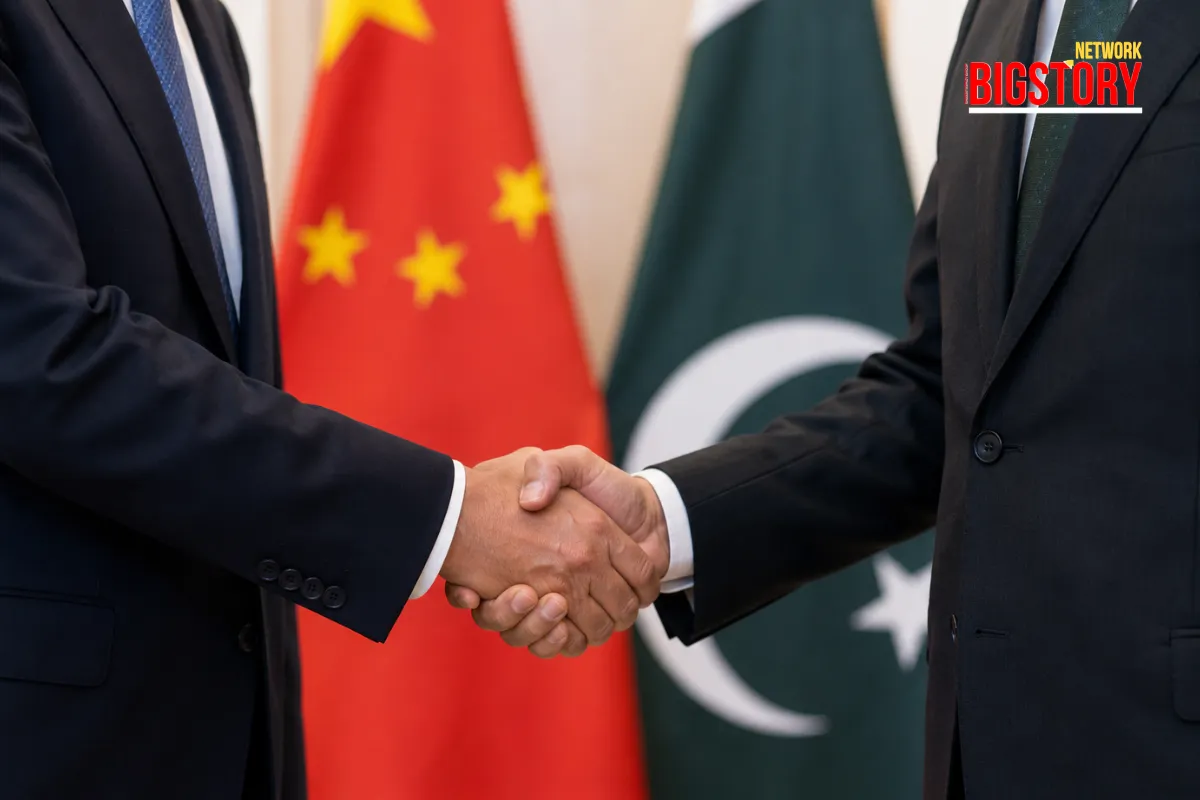
• What happened: Chinese President Xi Jinping hosted Pakistani PM Shehbaz Sharif in Beijing, formally commending Pakistan's efforts to mediate peace between the US and Iran.
• Why it matters: The high-level endorsement underscores China's immense strategic urgency to end a war that is driving up shipping costs and choking the world's largest oil importer.
• The strategic play: By publicly backing Pakistan and its Army Chief, Gen. Asim Munir, as the front-facing negotiators, China is effectively outsourcing the volatile diplomacy to secure its energy lines without directly clashing with the US administration.
• India's stake: New Delhi is closely watching the growing Beijing-Islamabad axis, particularly how Pakistan is leveraging its mediation role to extract deep economic and diplomatic support from China amidst the global crisis.
• The deciding question: Can Pakistan's military-led mediation secure a definitive agreement before the economic fallout of the Strait of Hormuz blockade triggers a global recession?
The diplomatic spotlight on the Middle East crisis has shifted to Beijing. During high-level talks on Monday, Chinese President Xi Jinping formally commended Pakistan for its critical role in mediating peace negotiations between the United States and Iran, underscoring Beijing's massive strategic interest in ending a war that threatens global energy supplies.
Welcoming Pakistani Prime Minister Shehbaz Sharif to the Great Hall of the People, President Xi called him an "old friend" and praised the "unbreakable traditional friendship" between the two nations.
Xi specifically thanked Pakistan for taking the initiative to restore peace in the Middle East. "We appreciate the constructive role played by Pakistan," the Chinese President stated, acknowledging Islamabad's ongoing and complex shuttle diplomacy between Washington and Tehran.
Highlighting the gravity of the talks, Pakistan's Army Chief, Gen. Asim Munir—who serves as Islamabad's key negotiator in the conflict—was present alongside Sharif. Munir flew into Beijing directly from high-stakes weekend meetings in Tehran.
Addressing the Chinese leadership, PM Sharif emphasized that "the world is passing through a critical moment" and thanked Beijing for supporting Islamabad's efforts. "Things are moving in the right direction," he noted regarding the fragile US-Iran talks.
For China, the stakes are deeply, undeniably economic. The ongoing closure of the Strait of Hormuz has triggered the biggest energy crisis in decades, pushing up shipping costs and hurting global consumer demand, which directly impacts China's export-heavy economy.
Coinciding with the Beijing meeting, Iran's Foreign Ministry provided an update on the Strait of Hormuz. Spokesperson Esmaeil Baghaei stated that Tehran is now collecting fees for "navigational services" rather than imposing arbitrary tolls. However, he confirmed that although progress has been made on a potential memorandum of understanding with the US, a final peace agreement is not imminent.
Mainstream coverage focuses on the strength of the China-Pakistan bilateral relationship, but the "Missed Angle" here is how effectively Beijing is outsourcing geopolitical heavy lifting.
China is the world's largest oil importer and desperately needs the Strait of Hormuz reopened to stabilize its domestic economy. However, directly inserting itself into a highly volatile negotiation involving Washington and Tehran carries massive diplomatic risks.
By heavily backing and publicly praising Pakistan to act as the primary, front-facing mediator, China achieves its ultimate goal: it leverages Islamabad's unique working relationships with both the US and Iran to secure a peace deal, while Beijing retains its posture of "quiet diplomacy." This allows China to avoid a direct, public diplomatic clash with the US administration while still pushing aggressively for the resumption of global trade.
• Regional Alignments: The visible presence of Gen. Asim Munir in Beijing solidifies the reality that Pakistan’s military is directly managing its foreign policy and leveraging this crisis to deepen its strategic reliance on China.
• Energy Security Parallels: Just like China, India is suffering from the inflationary shock of the Strait of Hormuz blockade. While New Delhi may be wary of Pakistan gaining diplomatic prestige, a successful mediation that lowers global crude prices is a net positive for the Indian exchequer.
• The Multipolar Shift: The fact that Pakistan, backed by China, is mediating a conflict involving the United States underscores a rapidly shifting multipolar world where traditional Western diplomatic channels are increasingly bypassed.
If Pakistan successfully brokers peace between the US and Iran, how will it leverage this massive diplomatic victory in its future dealings with India?
• Ministry of Foreign Affairs, PRC: Official Press Releases and Bilateral Meeting Transcripts
• The Hindu: International Relations and Global Diplomacy News
• The Indian Express: World News and Geopolitical Tracking
• Reuters: Global Diplomatic Backchannel and Energy Markets Tracker
 Exclusive Content


Sign up for the Daily newsletter to get your biggest stories, handpicked for you each day.



 Trending Now! in last 24hrs