What started as an internet joke has officially collided with an economic storm. Powered by the soaring cost of living and the collapse of the examination system, a satirical youth movement has just eclipsed India's largest traditional political machines.
 Brajesh Mishra
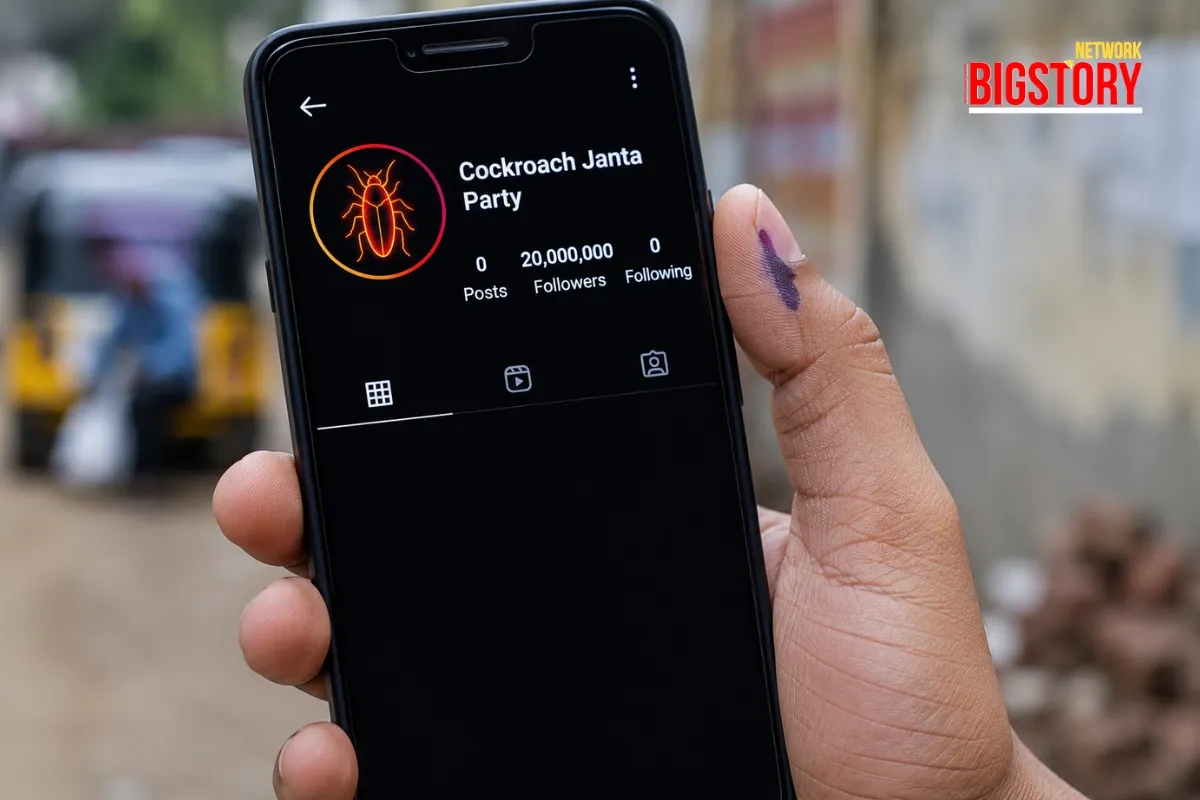
• What happened: The satirical "Cockroach Janta Party" (CJP) has exploded past a staggering 20 million Instagram followers, officially dwarfing the digital reach of both the BJP and the Congress.
• Why it matters: Founded just a week ago by 30-year-old Abhijeet Dipke in response to a Chief Justice's remark, the movement has rapidly evolved into a massive digital revolt fueled by India's severe affordability crisis and rampant unemployment.
• The strategic play: Gen Z has effectively created a decentralized, meme-powered political front that is proving impossible for the traditional political establishment to silence, control, or counter-attack.
• India's stake: The digital satire is now spilling into the real world, with youth organizing offline demonstrations and clean-up drives, weaponizing a derogatory insult into a unified symbol of anti-establishment fury.
• The deciding question: As the US-Iran war threatens to further destabilize the domestic economy, can traditional political parties adapt to a landscape where their primary opposition is an un-cancellable, decentralized swarm?
What started as an internet joke has officially collided with a macroeconomic crisis. As of today, the satirical "Cockroach Janta Party" (CJP) has not only crossed an unprecedented 20 million followers on Instagram—dwarfing the official accounts of India's major national parties—but its underlying message has rapidly mutated.
The movement is no longer just a reactionary meme fueled by anger over the Chief Justice's recent courtroom remarks. It is now being powered by the very real, terrifying economic storm brewing across the country.
Founded just a week ago by 30-year-old political strategist Abhijeet Dipke, the CJP was initially a direct, satirical response to CJI Surya Kant’s remark equating unemployed youth activists to "cockroaches" and "parasites." However, the movement's meteoric rise is driven by a stark reality: the satire hits entirely too close to home.
The central "joke" of the CJP relies on its core membership criteria: being "unemployed, lazy, and chronically online." In a country grappling with massive graduate unemployment, the youth are actively reclaiming the "cockroach" insult as a badge of resilience, spawning the viral, nationwide hashtag #MainBhiCockroach.
But the movement's manifesto is far from a joke. It directly targets systemic institutional failures, specifically demanding immediate accountability for the ongoing NEET-UG 2026 paper leak, protesting exorbitant CBSE rechecking fees, and calling for an end to heavily compromised media narratives.
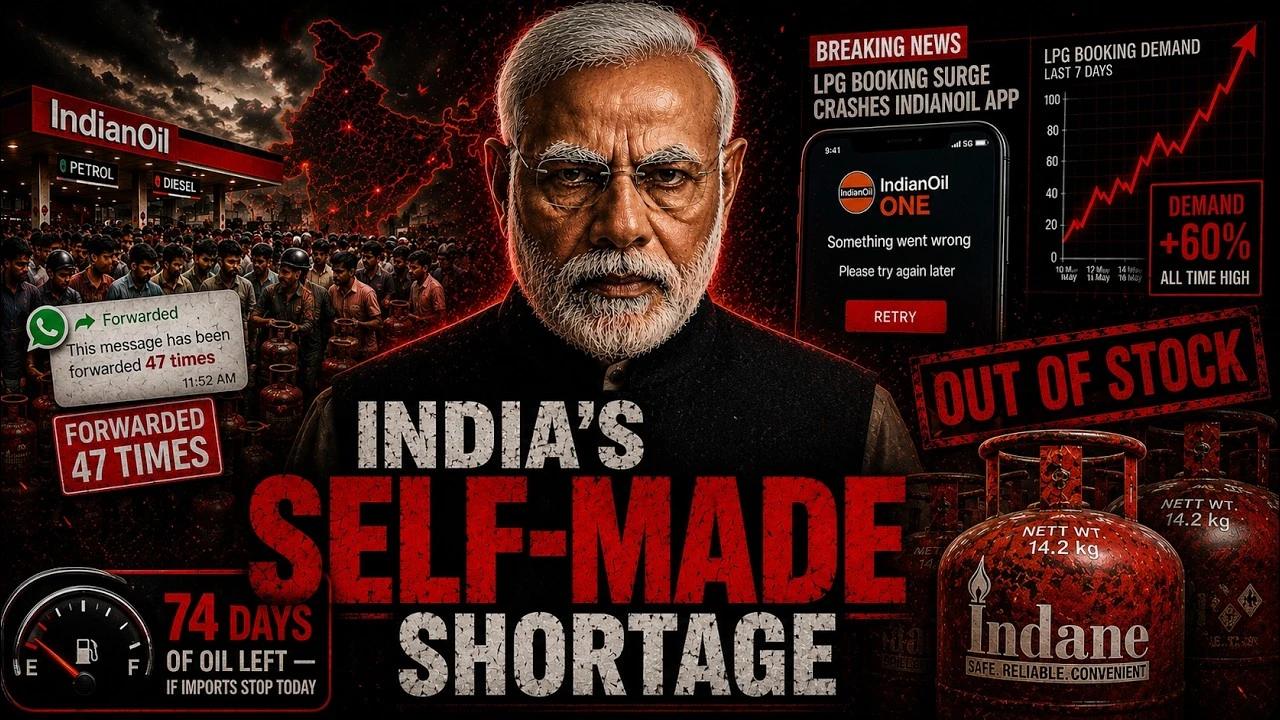
This digital satire is now dangerously intersecting with the literal fuel crisis stemming from the US-Iran war in the Middle East.
The CJP's digital protests are running parallel to tangible, escalating economic anxiety. With reports emerging of dry petrol pumps in smaller towns, hours of waiting at CNG stations, and rapidly climbing LPG prices, the cost-of-living crisis is injecting massive momentum into the youth revolt.
Rahul Gandhi's recent warning of an impending "economic storm" is exactly the reality the CJP's Gen Z base is currently memeticizing. The youth are weaponizing the CJP platform to ask the government the hardest macroeconomic questions: where did the structural investments go, and why are ordinary citizens being left to absorb the shock of global supply chain failures while corporate elites remain insulated?
Mainstream political analysts are struggling to categorize this phenomenon, but the "Missed Angle" here is the absolute nightmare this presents for traditional political machinery.
The CJP operates like a decentralized swarm. It has no physical headquarters for authorities to raid, no formal politicians to bribe, blackmail, or defect, and it communicates entirely through humor. This makes the movement practically immune to traditional IT cell counter-attacks. When government spokespersons or television anchors try to attack the CJP, they inevitably end up looking like out-of-touch elites yelling at a meme.
By proudly adopting the very insult meant to demean them, India's Gen Z has created an un-cancellable political force. As the literal fuel and affordability crisis worsens over the coming months due to geopolitical volatility, this "joke" party is perfectly positioned to become the primary vessel for nationwide, anti-establishment fury.
• Offline Mobilization: What began as a digital meme has officially spilled into the real world. Under the #MainBhiCockroach banner, volunteers dressed in cockroach costumes are organizing offline civic actions, including clean-up drives at the Yamuna River, turning public service into a powerful protest against state apathy.
• Narrative Loss: The traditional political establishment has completely lost control of the youth narrative. Institutional attempts to highlight economic growth metrics are being instantly drowned out by millions of decentralized, satirical rebuttals.
• A New Opposition Model: The CJP is establishing a brand new blueprint for political resistance in the Global South: utilizing high-virality, low-friction digital platforms to bypass traditional media and aggregate millions of disenfranchised voters under a single, highly adaptable banner.
If an internet joke can mobilize 20 million citizens faster than any traditional political campaign in Indian history, is the era of the centralized political party coming to an end?
• The Hindu: National Politics and Digital Trends Desk
• The Indian Express: India News, Viral Trends, and Political Tracker
• Newslaundry: Digital Culture, Media Critique, and Political Satire
• The Economic Times: Macroeconomics and Inflation Impact Indicators
 Exclusive Content




Sign up for the Daily newsletter to get your biggest stories, handpicked for you each day.


 Trending Now! in last 24hrs