A major breakthrough in the high-profile Noida-Bhopal dowry death investigation as the accused surrenders and the judiciary bypasses local medical authorities to ensure a fair forensic probe.
 Brajesh Mishra
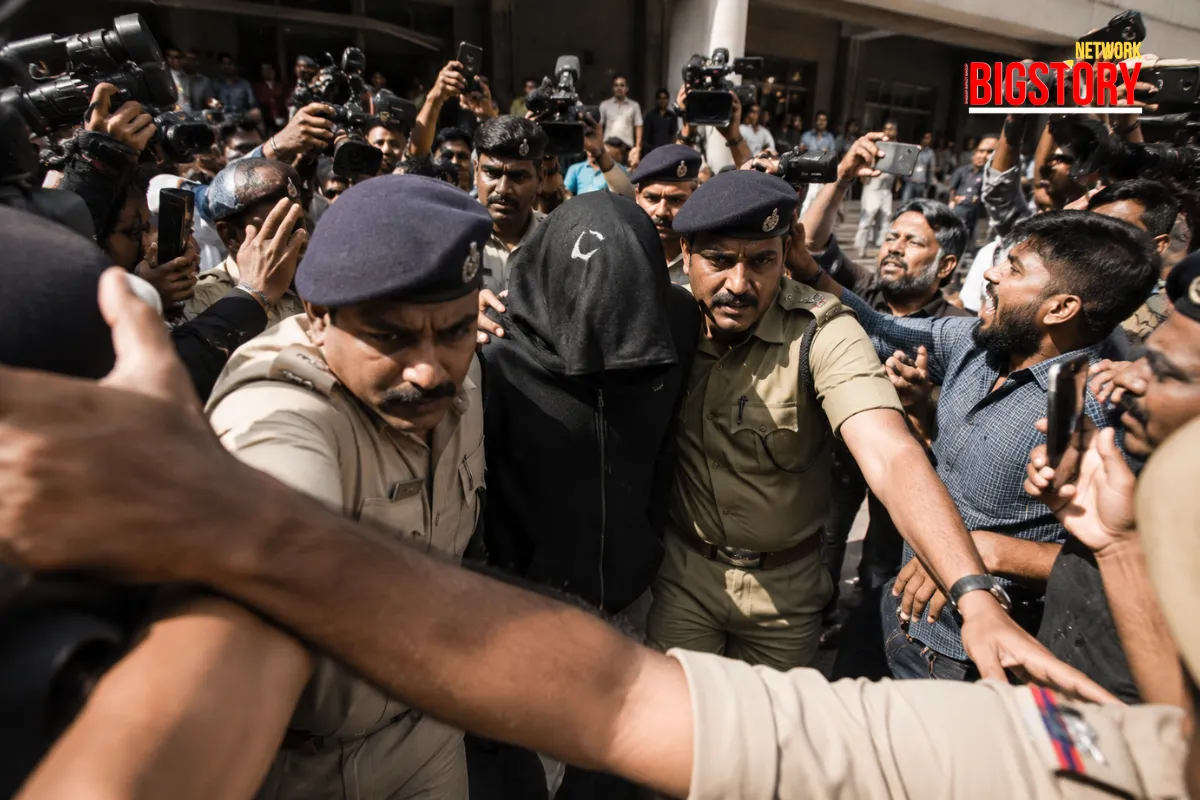
• What happened: Samarth Singh, the husband of the deceased Twisha Sharma, officially surrendered at the Jabalpur District Court today after evading police custody for 10 days.
• Why it matters: The surrender coincides with a massive judicial intervention; the Madhya Pradesh High Court rejected the initial AIIMS Bhopal autopsy report and ordered a fresh, second post-mortem.
• The strategic play: The High Court directed the state government to fly in a specialized team of doctors from AIIMS Delhi to conduct and videograph the new examination, supported by Solicitor General Tushar Mehta.
• India's stake: The case highlights the severe difficulty of prosecuting alleged domestic violence and dowry deaths when the accused wield significant institutional and legal influence at the local level.
• The deciding question: Will the fresh findings from the AIIMS Delhi medical board contradict the local autopsy, thereby validating the family's fears of a compromised initial investigation?
A major breakthrough has unfolded in a high-profile criminal investigation that has triggered nationwide outrage. After evading authorities for 10 days, Samarth Singh—the husband of deceased Noida woman Twisha Sharma—has officially been taken into police custody today in connection with her alleged dowry death.
Singh, a Bhopal-based lawyer, had been on the run since his wife's death on May 12. He formally surrendered today and was taken into custody from the premises of the Jabalpur District Court by a waiting Bhopal Police team.
The surrender was a calculated legal maneuver. It occurred shortly after his defense counsel informed the Madhya Pradesh High Court that Singh was withdrawing his anticipatory bail application and was willing to submit to the law. His earlier anticipatory bail plea had already been unequivocally rejected by a Bhopal Sessions Court on May 18.
Simultaneously, the police and judiciary are scrutinizing the role of the co-accused, Samarth's mother, Giribala Singh. A retired judge, she had previously been granted anticipatory bail by a lower court. However, the High Court today issued a formal notice on a plea filed by Twisha's father—and supported by the State—challenging that pre-arrest bail.
In a massive victory for Twisha's family, the Madhya Pradesh High Court has intervened directly in the forensic investigation.
Rejecting the findings of the initial autopsy conducted at AIIMS Bhopal—which controversially suggested death by hanging—the High Court has ordered a fresh, second post-mortem. To guarantee absolute neutrality, the court directed the state government to arrange for a specialized team of doctors from AIIMS Delhi to travel to Bhopal to conduct and videograph the new examination.
Solicitor General Tushar Mehta, representing the Madhya Pradesh government, actively supported the family's plea for a second autopsy to ensure complete transparency, though he clarified the move was not a reflection on the competence of the local Bhopal doctors.
Mainstream coverage is treating the surrender as routine police work, but the "Missed Angle" here is exactly why this specific case has required such aggressive judicial intervention from the High Court and the Solicitor General of India.
The power dynamics in this case are heavily skewed. Twisha Sharma’s mother-in-law is a retired judge, and her husband is a practicing lawyer. Since day one, Twisha's family has consistently alleged that the initial police response, the crime scene preservation, and the forensic procedures were deliberately compromised due to the immense local institutional influence wielded by the accused family.
The High Court's extraordinary decision to bypass local medical authorities and physically fly in an independent forensic team from AIIMS Delhi validates a grim reality. It acknowledges the family's legitimate fear that a fair, uncompromised investigation could not be guaranteed using only the local Bhopal state machinery, highlighting the severe vulnerabilities of the justice system when the accused are members of the legal establishment itself.
• Forensic Precedent: The AIIMS Delhi autopsy will serve as the absolute baseline for the prosecution. If the second report indicates foul play contradicting the first autopsy, it will likely trigger a massive internal probe into the initial medical examiners.
• Bail Scrutiny: The High Court's review of the retired judge's anticipatory bail will set a strong legal precedent regarding how lower courts handle bail pleas for influential individuals accused of systemic domestic cruelty.
• Trial Logistics: Given the influence of the accused in Bhopal, Twisha's family is highly likely to petition for the entire trial to be moved out of Madhya Pradesh to ensure an uncompromised judicial process.
If the very institutions designed to seek justice are compromised by local influence, is a fair trial even possible without direct intervention from the apex courts?
• Bar & Bench: High Court Litigation and Legal News Updates
• LiveLaw: Madhya Pradesh High Court Judgments and Orders
• The Hindu: National Crime, Law, and Justice Desk
• The Indian Express: Bhopal City News and Crime Tracker
 Exclusive Content






Sign up for the Daily newsletter to get your biggest stories, handpicked for you each day.



 Trending Now! in last 24hrs