Hitting New Delhi during a high-stakes trade week, Washington unveils a sweeping tiered tariff proposal that explicitly targets intermediate supply chains and tests India’s economic resilience.
 Sseema Giill
• What happened: The Office of the U.S. Trade Representative (USTR) has proposed a drastic 12.5% additional tariff on imports from India, China, and 52 other nations following a sweeping Section 301 investigation.
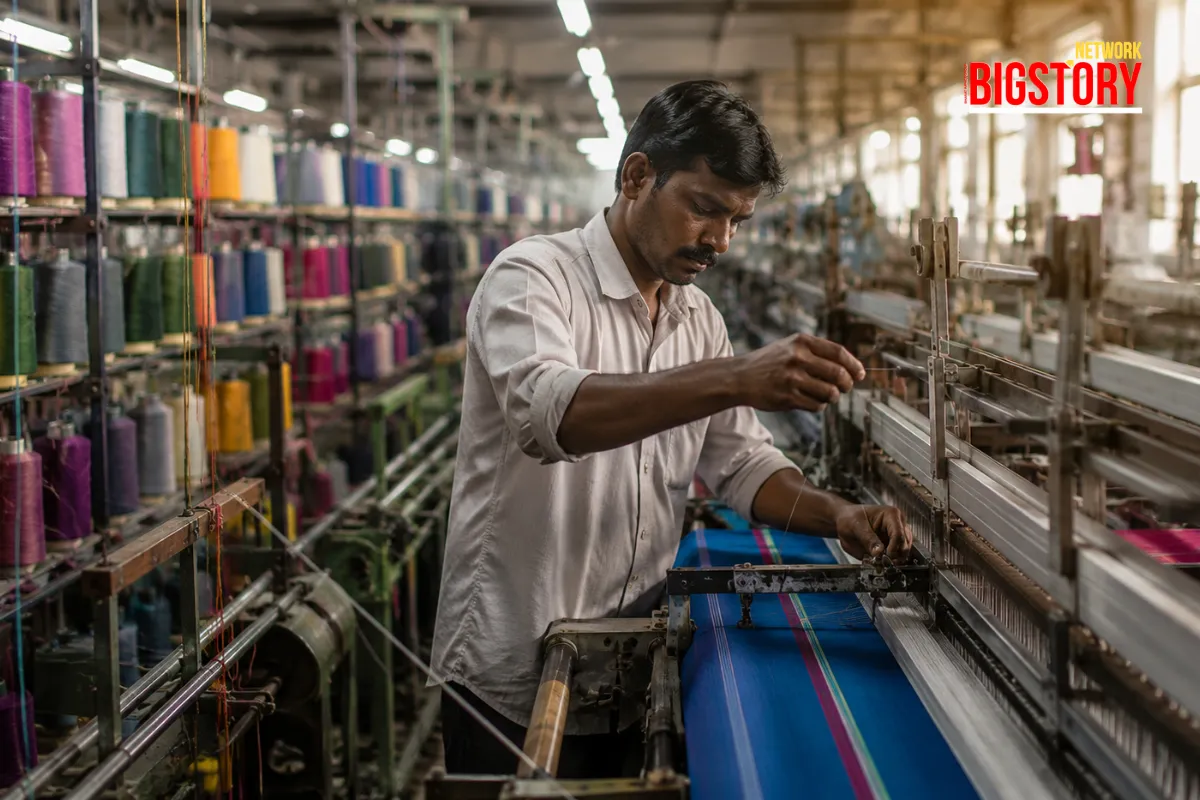
• Why it matters: Washington claims India is acting as a supply chain intermediary, particularly in the textile sector, where manufacturers reportedly import raw Chinese inputs that are structurally tied to forced labour.
• The strategic play: Trapped by a recent U.S. Supreme Court ruling that blocked emergency economic powers, the Trump administration has completely pivoted to Section 301 human rights probes to build absolute leverage.
• India's stake: New Delhi has flatly denied the allegations, pointing out that these duties remain purely a proposal, while aggressively pushing back ahead of the upcoming USTR public hearings on July 7, 2026.
• The deciding question: Will Washington's aggressive tariff hammer force India into immediate concessions during active bilateral trade talks, or will it permanently decouple Indo-U.S. commercial alignments?
The delicate trade negotiations between New Delhi and Washington have hit a major hurdle. Today, the Office of the U.S. Trade Representative (USTR) announced an aggressive proposal to slap 12.5% additional duties on imports from India and 53 other nations. This drastic economic measure follows a sweeping American investigation into global failures to curb goods produced with forced labour.
U.S. Trade Representative Ambassador Jamieson Greer confirmed the completion of 60 separate investigations under Section 301 of the U.S. Trade Act of 1974. The intense probe targeted economies accounting for 99.4% of all U.S. imports, concluding that most of America's key trading partners are failing to block forced labour from entering global supply chains.
Ambassador Greer was unsparing in his assessment, stating: "The failure of our most important trading partners to address the importation of goods made with forced labour is unacceptable. This creates a dynamic where American workers are forced to compete globally on an unlevel playing field... We will no longer tolerate this disparity."
The USTR has designed a highly strategic, two-tier tariff penalty structure based on compliance:
The investigation explicitly flags India's role as an intermediary in global supply chains. While India heavily outlaws forced labour domestically under the Bonded Labour System (Abolition) Act, 1976, the USTR's focus is on imported inputs.
The report specifically targets India's massive textile and garment sectors. Investigators claim manufacturers frequently import raw cotton, yarn, and fabrics originating from China—particularly the heavily restricted Xinjiang region. By incorporating these materials into finished goods exported to America, Indian shipments are being trapped in the U.S. net.
It is not a total embargo. The USTR proposal thoughtfully excludes critically sensitive products like energy commodities, rare earths, pharmaceuticals, organic chemicals, and aircraft parts. Furthermore, a "special textile mechanism" has been proposed, allowing a fixed quota of apparel to enter the U.S. at lower historical rates.
Mainstream analysis will focus entirely on the human rights allegations, but the "Missed Angle" here is the underlying legal machinery the Trump administration is using to bypass recent domestic judicial defeats.
In February 2026, the U.S. Supreme Court struck down a series of aggressive tariffs the White House attempted to impose using the International Emergency Economic Powers Act (IEEPA). Blocked by the courts on that front, the administration has completely pivoted to Section 301 investigations—the exact mechanism used in the 2018 U.S.-China trade war—but under a new, morally unassailable banner: human rights and forced labour.
It is brilliant, ruthless leverage. By catching India's global competitors (like China and Vietnam) in the same 12.5% net—while giving India's direct regional textile rivals, Pakistan and Indonesia, a lighter 10% tariff—Washington is creating massive commercial anxiety. The USTR is intentionally using this threat as a hammer to force New Delhi into quick concessions during the high-stakes bilateral trade agreement talks currently happening this very week.
The Indian Ministry of Commerce rushed to calm domestic export markets today, emphasizing that these duties remain purely a proposal and are not yet final. India has flatly denied the allegations, formally requesting that the U.S. drop the Section 301 mechanism and handle supply chain transparency within the framework of ongoing Bilateral Trade Agreement (BTA) negotiations.
However, the countdown clock is ticking rapidly for stakeholders and trade bodies to contest the findings:
If Washington continues to weaponize human rights metrics to enforce protectionist trade borders, can any developing economy truly maintain a clean bill of health in a multi-tiered supply chain?
• Office of the United States Trade Representative (USTR): Official Section 301 Investigations and Federal Registry Notices
• Ministry of Commerce and Industry: Official Press Releases and Bilateral Trade Briefings
• The Hindu: Global Trade, Tariffs, and International Relations News
• The Economic Times: Macroeconomics, Export Policy, and Global Market Indicators
 Exclusive Content





Sign up for the Daily newsletter to get your biggest stories, handpicked for you each day.


 Trending Now! in last 24hrs