Bringing a definitive end to months of intense speculation, the former IPS officer breaks away from New Delhi’s high command to build a brand-new model of regionalized nationalism.
 Brajesh Mishra
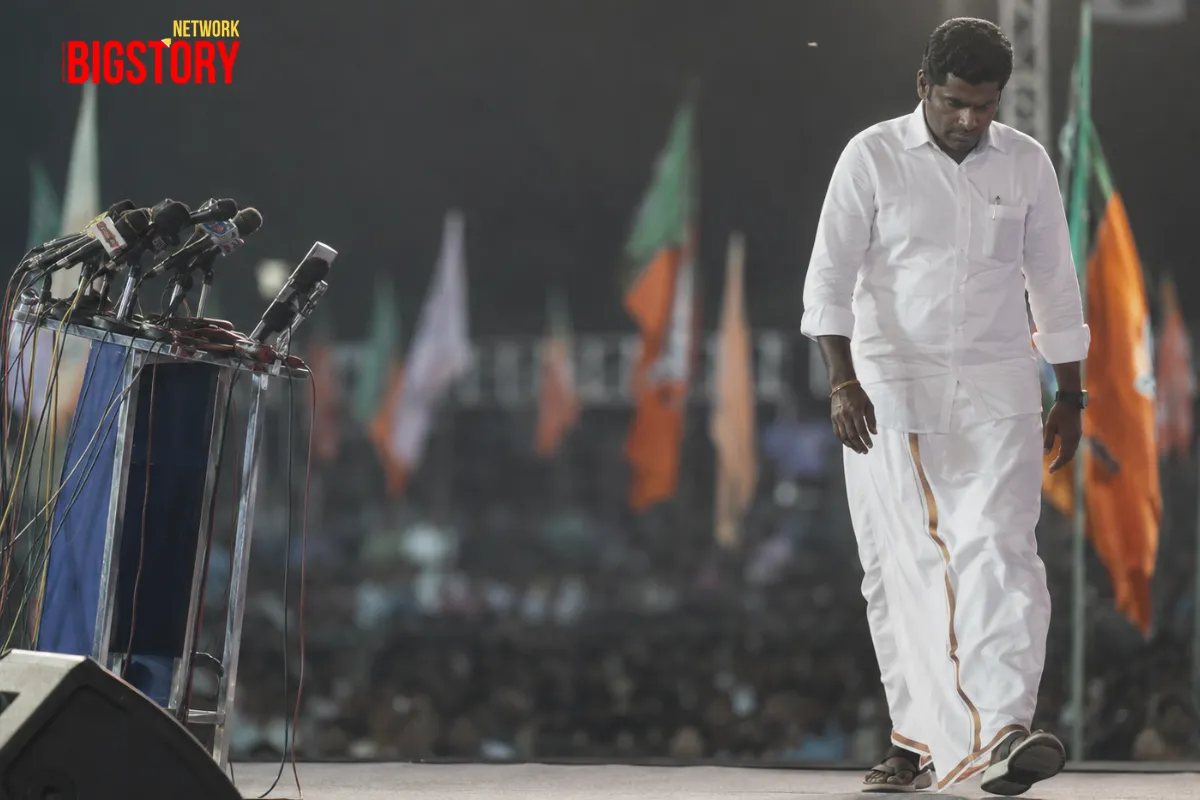
• What happened: Former Tamil Nadu BJP President K. Annamalai has officially resigned from the party’s primary membership, an exit formally accepted by National President Nitin Nabin on June 5, 2026.
• Why it matters: The high-profile departure follows an 18-month strategic rift over how to counter Dravidian politics, climaxing after the BJP's state vote share crashed from 11% to under 3% in the recent 2026 Assembly polls.
• The strategic play: Rather than walking away in defeat, Annamalai is launching an independent regional political movement designed to marry Tamil cultural pride with national development, bypassing Delhi's bureaucratic baggage.
• India's stake: The breakup underscores the structural limitations national parties face when trying to force centralized alignment onto states with deeply entrenched localized identities.
• The deciding question: Can Annamalai’s new vehicle successfully absorb the anti-DMK voter base, or will it simply fragment the opposition space further ahead of the next general election cycle?
The definitive break has officially happened. Bringing an end to weeks of heavy speculation, former Tamil Nadu BJP chief K. Annamalai resigned from the party’s primary membership today, Friday, June 5, 2026. BJP National President Nitin Nabin formally accepted the resignation, marking a massive structural shift in the saffron party's southern strategy. Annamalai has concurrently announced that he is charting a "new path" by launching a fresh, regional political movement in Tamil Nadu.
In an official statement, BJP National General Secretary Arun Singh confirmed the acceptance of the resignation, which comes immediately on the heels of Annamalai's high-stakes huddles in New Delhi with Union Home Minister Amit Shah and central leadership. In a candid resignation letter, the former IPS officer revealed that he had been expressing deep strategic disagreements to the high command for nearly 18 months, disclosing that he had checked out emotionally months ago: "I told the party on December 4, 2025, that I am going to resign. The party asked me to finish the elections and then go."
The implosion of Annamalai’s relationship with the central BJP infrastructure stems from a fundamental dispute over how to fight Dravidian politics. Under Annamalai's fierce, standalone leadership style, the BJP hit its strongest-ever independent performance in the state during the 2024 Lok Sabha elections, pushing its vote share to 11.2%. However, his continuous, unyielding attacks on traditional ally AIADMK severely fractured the regional coalition.
To salvage the alliance for the 2026 Assembly elections, the BJP high command sidelined Annamalai in April 2025, replacing him with Nainar Nagendran to appeal directly to AIADMK leader Edappadi K. Palaniswami.
The pivot completely backfired. Forced to contest the recent 2026 elections as a heavily restricted junior partner to the AIADMK, the BJP's hard-earned momentum completely evaporated. The party's vote share crashed dramatically from 11% down to below 3%. For Annamalai, this validated his baseline stance: the BJP cannot grow in Tamil Nadu by riding on the coattails of regional giants.
Mainstream commentary will paint this as a story of an ambitious leader walking away in defeat, but the "Missed Angle" here is that Annamalai is executing a highly calculated ideological pivot.
In his public remarks, he heavily emphasized that "National Parties never spoke the language that people in Tamil Nadu understood." Crucially, he isn't abandoning his core beliefs—explicitly stating he retains "great respect" for PM Modi. Instead, he is attempting to engineer an entirely new political category: Regionalized Nationalism.
By floating an independent political movement that fiercely values Tamil language, culture, and regional pride while remaining aligned with national development, Annamalai is setting up a structural vehicle to absorb the anti-DMK vote. He is building an outfit unhindered by the bureaucratic and cultural baggage of a Delhi-driven high command. If successful, his new decentralized model could split traditional southern vote banks wide open before the next general election cycles.
• The Hindu: National Bureau and Tamil Nadu State Politics Desk
• The Indian Express: Chennai Bureau and Southern Regional Election Tracker
• Deccan Herald: South India Political Realignments and Coalition News
• Press Information Bureau (PIB): Official Political Briefings and General Directorate Releases
 Exclusive Content






Sign up for the Daily newsletter to get your biggest stories, handpicked for you each day.

 Trending Now! in last 24hrs