PM Modi attacked opposition leaders in Muzaffarpur, framing Bihar’s election around corruption, cultural pride, and governance memory, while the opposition emphasized jobs and youth aspirations.
 Brajesh Mishra
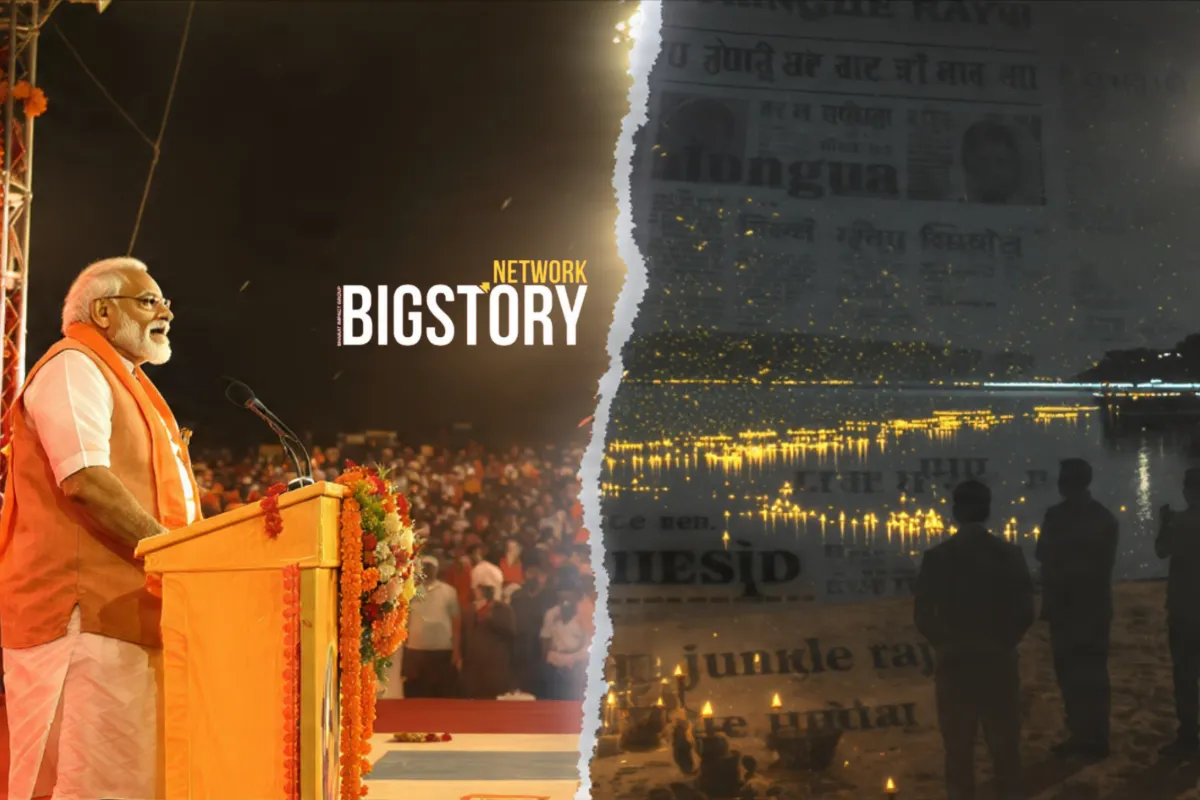
Prime Minister Narendra Modi, campaigning in Muzaffarpur, Bihar, launched a direct attack on opposition leaders Rahul Gandhi and Tejashwi Yadav, calling them “yuvrajs of corruption” and accusing their parties of misgovernance and dynastic entitlement.
The speech came amid joint opposition rallies in the state, with the Mahagathbandhan projecting jobs and governance reforms as its core themes. Modi’s remarks quickly dominated political discourse and online chatter.
“One is out on bail in scams worth thousands of crores, the other from Bihar’s most corrupt family,” Modi said. “They run a shop of lies.”
The crowd responded loudly, underscoring the polarization and charged atmosphere shaping this election cycle.
Modi also targeted opposition criticism of his participation in Chhath Puja celebrations, saying leaders were dismissing the festival and insulting devotees. Opposition figures had accused the BJP of politicizing religious practices for electoral advantage.
Modi reframed the criticism as disrespect toward a festival deeply rooted in Bihar’s culture.
“They call Chhath Puja a drama. Bihar and India will not accept this insult.”
He highlighted efforts to obtain UNESCO heritage recognition for Chhath, presenting it as evidence of the NDA’s cultural commitment.
Opposition leaders maintain they were questioning political theatrics, not the festival itself.
Another theme in Modi’s address was the contrast between dynastic leadership and self-made politics. He invoked his humble origins and positioned his rivals as representatives of privileged political families.
Opposition leaders, in their rallies, accused Modi of prioritizing spectacle over outcomes, alleging centralization of power and failures on jobs and inflation.
Tejashwi Yadav has centered his pitch on employment guarantees and youth aspirations. Rahul Gandhi argued the government is disconnected from everyday economic struggles and accused the BJP of running an “event-driven” administration.
Modi also invoked Bihar’s turbulent political past, referencing crime, kidnappings, and administrative breakdown associated with earlier RJD rule.
He described what he called the “five Ks” of past governance: guns, cruelty, bitterness, misrule, and corruption.
RJD leaders argue this narrative ignores more recent governance improvements and accuse the BJP of relying on fear rather than addressing unemployment, migration, and economic stagnation.
At the surface, this is another round of familiar arguments: dynasty versus outsider, secular criticism versus cultural pride, governance record versus corruption allegations.
Beneath it is a deeper contest over memory versus economic urgency:
The test is whether Bihar’s political behavior continues to be guided by fear of past disorder or shifts toward present demands for growth and employment.
Will economic aspirations and youth expectations redefine Bihar’s voting patterns, or will legacy fears and identity politics hold their grip as the decisive force?
Did Modi name Rahul Gandhi and Tejashwi Yadav?
He referred to them as “two princes” and “shopkeepers of lies,” without direct naming.
What triggered the Chhath debate?
Opposition criticism of Modi’s festival participation; BJP framed it as disrespect toward cultural practices.
Are the corruption cases mentioned resolved?
Investigations and cases are ongoing. Both leaders deny wrongdoing.
What is the opposition’s core message?
Jobs, migration, youth opportunity, and protection of democratic norms.
How reliable are current poll trends?
NDA leads, but Bihar often shifts late due to caste and regional dynamics.
 Exclusive Content





Sign up for the Daily newsletter to get your biggest stories, handpicked for you each day.

 Trending Now! in last 24hrs