What began as a digital parody has rapidly mutated into India's most unpredictable youth movement. Bypassing traditional student unions, the CJP takes its fight over the national exam crisis to cities across the country.
 Brajesh Mishra
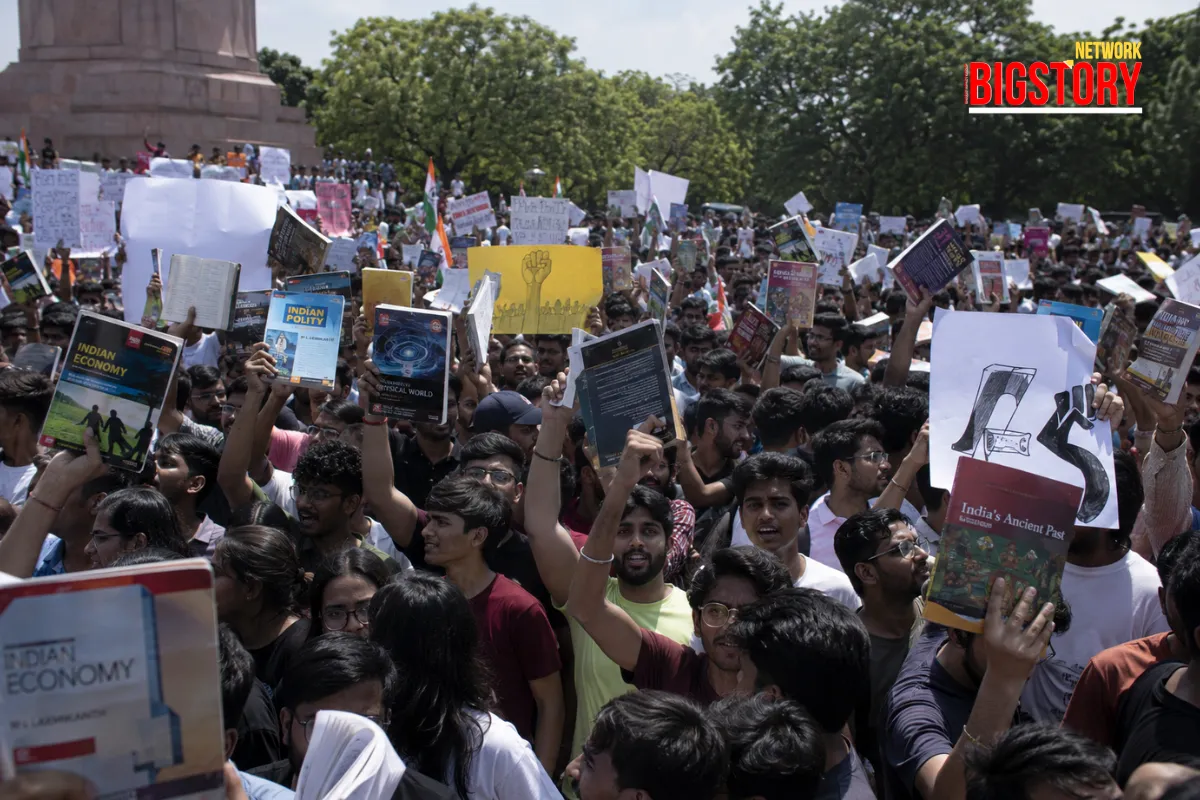
• What happened: The youth-led Cockroach Janta Party (CJP) has officially escalated its isolated protests into a highly coordinated nationwide campaign, with a major demonstration scheduled at Hyderabad's Dharna Chowk on June 14, 2026.
• The core demand: Spearheaded by founder Abhijeet Dipke, the movement is demanding the immediate resignation of Union Education Minister Dharmendra Pradhan over catastrophic systemic failures, specifically targeting the NEET paper leaks and CBSE grading glitches.
• The roadmap: The agitation spans multiple regional hubs—kicking off in Pune with a policy release, striking Bengaluru and Jaipur, and culminating in a threatened indefinite sit-in at New Delhi’s Jantar Mantar on June 20.
• The policy shift: Transitioning from meme culture to actionable demands, the CJP released an 'Education Manifesto' demanding absolute transparency in recruitment and severe legal accountability for testing agencies.
• The deciding question: Can a movement born entirely out of internet satire and digital frustration successfully sustain a boots-on-the-ground political threat without the logistical backing of legacy student unions?
The transition from internet parody to a fully mobilized political headache is now complete. Following a massive, headline-grabbing demonstration at New Delhi’s Jantar Mantar, the youth-led Cockroach Janta Party (CJP) has officially declared a nationwide escalation. On Thursday, June 11, 2026, the movement announced a highly coordinated multi-city protest campaign, explicitly demanding high-level accountability for India’s cascading national examination crises.
The next major flashpoint is locked in for Sunday, June 14, at Dharna Chowk near Indira Park in Hyderabad. Rallying its massive digital base, the CJP issued a clear mandate for constitutional, peaceful agitation. "CJP peaceful protests are happening nationwide. Join in when we come to your city," the group broadcasted across its social media channels, signaling a ground game that has rapidly outgrown its satirical origins.
Spearheaded by CJP founder Abhijeet Dipke, the movement has fixed its crosshairs firmly on the central government. The primary, non-negotiable demand driving the crowds is the immediate resignation of Union Education Minister Dharmendra Pradhan. The CJP holds the ministry directly responsible for a string of systemic collapses, most notably the devastating NEET question paper leaks and the widespread On-Screen Marking (OSM) glitches that plagued the recent CBSE evaluations.
The agitation has been strategically mapped to maintain sustained pressure across key regional hubs before returning to the capital:
Additional mobilizations are already being charted for Lucknow and Amritsar as the movement attempts to scale its geographic footprint.
At the Pune kickoff event, Dipke transitioned the CJP from a mere protest group into a policy-demanding entity by unveiling their official 'Education Manifesto.' The document cuts straight through the satire that originally birthed the party, targeting the raw, existential dread of millions of Indian students.
The manifesto outlines strict, operational demands: absolute, verifiable measures to prevent question paper leaks; real-time transparency in result declarations; an uncompromising overhaul of government recruitment processes; and, crucially, binding legal accountability for the opaque examination authorities and testing agencies managing the futures of India's youth.
Mainstream outlets are treating the CJP as a quirky, fleeting anger-spasm over a ruined exam cycle. The "Missed Angle" is how profoundly this movement is bypassing the established political architecture of the country.
Historically, student protests in India have been strictly brokered, funded, and controlled by legacy, party-affiliated unions like the ABVP, NSUI, or SFI. The CJP, born organically out of Gen Z digital frustration and meme culture, has entirely short-circuited these traditional gatekeepers. By weaponizing their "cockroach" moniker—originally an alleged judicial insult directed at the unemployed—they have forged an independent, decentralized, and highly viral political identity.
If Dipke’s organization can successfully execute this multi-city physical rollout without the financial or logistical backing of a traditional political party, the CJP will have proven that India's hyper-connected youth no longer need legacy politicians to threaten the status quo. They are actively building their own machinery.
• The Hindu: Regional Bureau, Hyderabad Civic Issues, and Student Protest Trackers
• The Indian Express: Education Desk, NEET Examination Controversies, and Youth Activism News
• Cockroach Janta Party (CJP): Official Digital Communications, Protest Mandates, and Manifesto Releases
 Exclusive Content





Sign up for the Daily newsletter to get your biggest stories, handpicked for you each day.



 Trending Now! in last 24hrs