With the simultaneous elimination of the regime's top strategic anchor and its internal security chief, Iran's vast military apparatus is now in the hands of a decentralized, deeply unpredictable IRGC.
 Sseema Giill
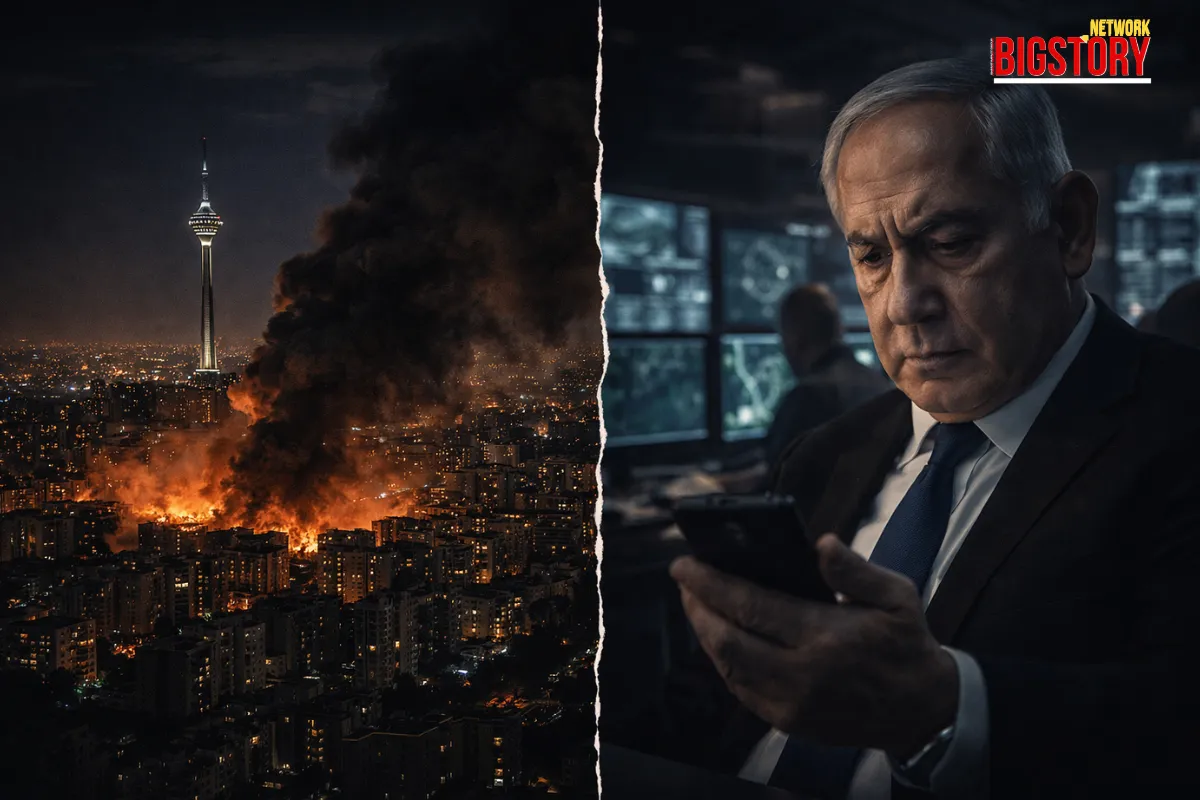
What happened: Israel announced the successful assassination of Iran's top national security chief, Ali Larijani, and Basij commander Gholamreza Soleimani in overnight airstrikes in Tehran.
Why it happened: Following the death of Ali Khamenei, Larijani became the de facto leader and the most visible face of the Iranian regime, making him the prime target for Israel's "decapitation" strategy. The strategic play: By eliminating the top political strategist and the head of internal security simultaneously, Israel and the US aim to trigger the complete collapse of the Iranian government and encourage domestic uprisings.
India's stake: India recently risked US sanctions to strike an oil transit deal with Larijani's government. With him gone and the regime headless, those diplomatic guarantees may evaporate, leaving Indian ships in the Strait of Hormuz at the mercy of rogue IRGC commanders.
The deciding question: Will the decentralized remnants of the IRGC lash out with uncontrolled ballistic missile attacks across the Middle East, or will the power vacuum lead to the internal collapse of the Islamic Republic?
The systematic decapitation of the Iranian regime has reached a terrifying new phase. On Tuesday morning, Israel officially claimed the successful assassination of Iran's top national security chief, Ali Larijani, alongside the head of the Basij paramilitary force, Gholamreza Soleimani. The overnight precision airstrikes on Tehran have effectively wiped out the final stabilizing political figures within the Islamic Republic, plunging the nation into an unprecedented power vacuum.
With the central command structure vaporized, the conflict takes on a deeply unpredictable dimension. The elimination of Larijani—who had emerged as the de facto ruler of the state following the recent death of the Supreme Leader—leaves Iran's formidable ballistic and drone stockpiles under the localized control of enraged, decentralized military factions who now have nothing left to lose.
Ali Larijani, Secretary of Iran's Supreme National Security Council The 67-year-old was widely considered the de facto ruler of Iran, filling the void left by the severely injured and absent new Supreme Leader, Mojtaba Khamenei. As the last remaining high-level pragmatist capable of coordinating the regime's political and military wings, his death fundamentally shatters Tehran's ability to govern.
Benjamin Netanyahu, Prime Minister of Israel Netanyahu personally ordered the strike, framing the assassination as a deliberate strategy to dismantle the regime's leadership matrix and encourage the Iranian public to overthrow the clerical establishment. "This morning we eliminated Ali Larijani, the boss of the Revolutionary Guards, which is the gang of gangsters that actually runs Iran," Netanyahu declared.
Gholamreza Soleimani, Commander of the Basij Paramilitary Force Killed in the same wave of overnight strikes, Soleimani was the head of the volunteer militia responsible for internal repression and civilian arrests. His death severely cripples the IRGC's ability to maintain domestic order, dramatically increasing the likelihood of widespread internal uprisings amidst the wartime chaos.
Global media outlets are intensely focused on the tactical precision of the IDF strikes, the history of the influential Larijani family, and Netanyahu's direct televised appeals to the Iranian public. However, this coverage minimizes the catastrophic global risk created by a "Total Command Collapse."
With Ali Khamenei dead, Mojtaba Khamenei physically incapacitated, and now Ali Larijani assassinated, Iran has officially lost both its spiritual and strategic anchors. While Western capitals celebrate the tactical success of the decapitation strategy, the immediate reality is that a headless state still possesses massive ballistic missile stockpiles. Larijani was a pragmatist who historically engaged in diplomacy and understood geopolitical limits. His elimination leaves the entire Iranian military apparatus in the hands of decentralized, radicalized Islamic Revolutionary Guard Corps (IRGC) field commanders operating completely off the leash.
If you successfully cut off the head of the regime, who is left to order the military to stand down?
News & Wire Coverage:
Official Statements & Data:
 Exclusive Content





Sign up for the Daily newsletter to get your biggest stories, handpicked for you each day.



 Trending Now! in last 24hrs