India's air pollution crisis has reached alarming levels, with 74 of the world's 100 most polluted cities located within its borders. Every year, over 1.7 million lives are lost to toxic air, as industries, vehicles, crop burning, and biomass fuel suffocate cities from north to south. Urgent, coordinated action — from policy reform to individual choices — is no longer optional; clean air is a right that cannot wait.
 Rashmeet Kaur Chawla
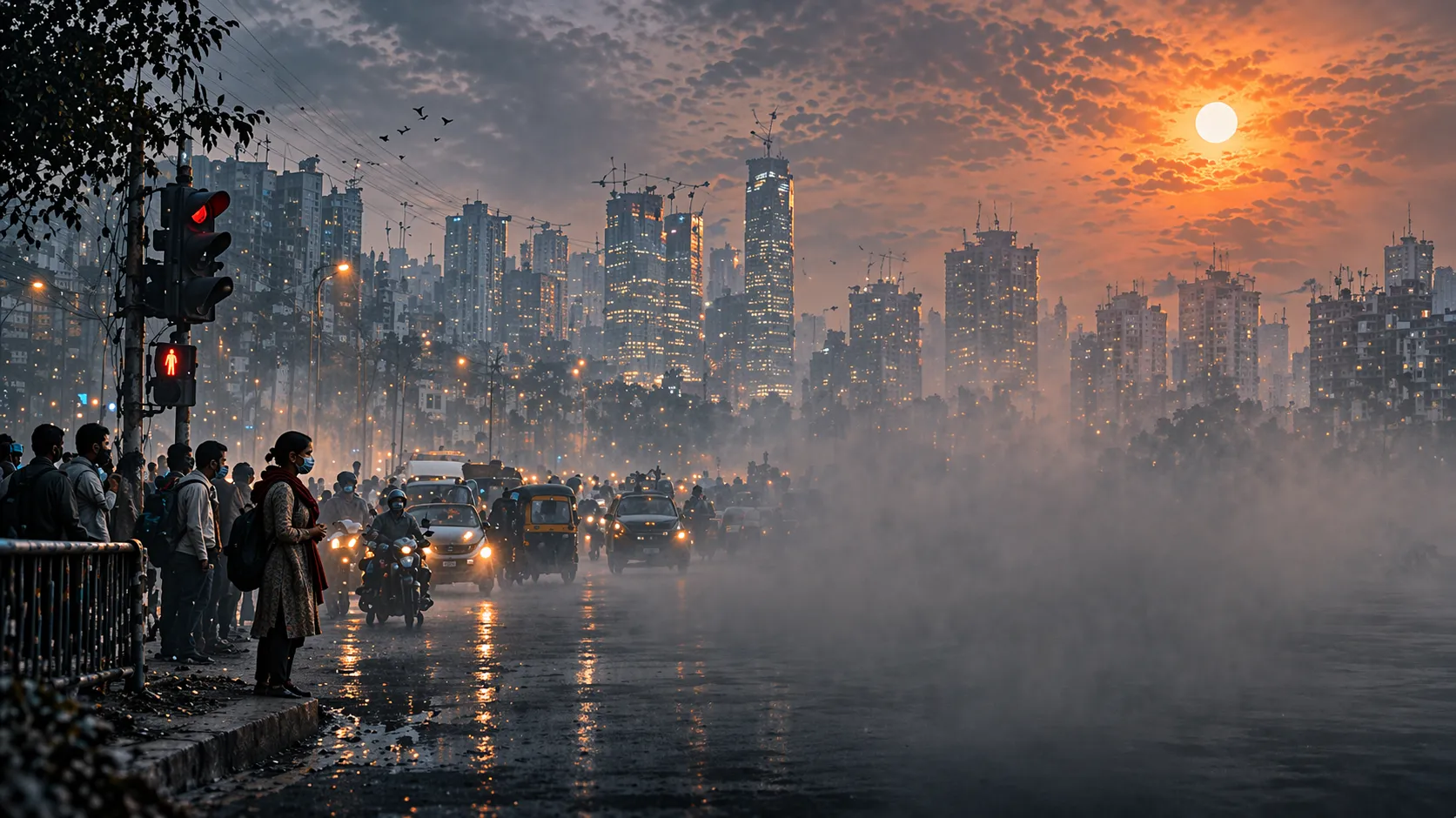
India's air pollution crisis has reached alarming levels, with 74 of the world's 100 most polluted cities located within its borders.
A public health and environmental investigation into one of India's most urgent crises
Across India's cities — from the smog-choked plains of the Indo-Gangetic basin to the industrial corridors of Maharashtra and the rapidly urbanising towns of the Northeast — millions of people wake up each morning to air they cannot safely breathe. Schoolchildren don masks before stepping outside. Hospitals brace for seasonal surges in respiratory admissions. Street vendors, construction workers, and traffic police spend their working lives inhaling toxic particulate matter with no recourse.
This is not a seasonal inconvenience. It is a year-round public health emergency unfolding across hundreds of Indian cities simultaneously.
The numbers are difficult to overstate. According to IQAir's 2024 World Air Quality Report, India ranked as the fifth most polluted country in the world, with an average annual PM2.5 concentration of 50.6 micrograms per cubic metre (µg/m³) — more than ten times the World Health Organization's (WHO) recommended safe limit of 5 µg/m³.
Of the 100 most polluted cities on the planet in 2024, 74 were Indian cities. Six of the world's ten most polluted cities were in India. The single most polluted city on earth was not Delhi — it was Byrnihat, a small industrial town on the Assam-Meghalaya border, recording a staggering annual average PM2.5 concentration of 128.2 µg/m³, more than 25 times the WHO limit.
This is a national crisis, not a capital-city problem.
Northern India bears the heaviest burden. Cities including Mullanpur (Punjab), Gurugram, Faridabad, Bhiwadi, and Noida consistently feature among the most polluted in the world. The entire Indo-Gangetic Plain — stretching across Punjab, Haryana, Uttar Pradesh, and Bihar — functions as a giant pollution trap due to its flat topography, dense population, and seasonal meteorology.
Eastern India faces severe industrial pollution. Begusarai in Bihar recorded a PM2.5 concentration of 265 µg/m³ in 2023 according to CREA's tracking data. Patna, Chhapra, and other Bihar cities appear repeatedly on worst-polluted lists. West Bengal's Asansol and Raniganj, home to major coal mining and steel industries, face persistent toxic air.
Rajasthan struggles with a combination of industrial emissions and dust. Sri Ganganagar and Hanumangarh appear in India's top ten most polluted cities. Bhiwadi, near the Delhi-Rajasthan border, is one of the worst-affected cities in the country.
Southern and Western India, while better off than the north, are not immune. Mumbai, Kolkata, and Chennai have each recorded PM2.5 levels well above national standards. A 2024 study published in The Lancet Planetary Health examined ten cities — Ahmedabad, Bengaluru, Chennai, Delhi, Hyderabad, Kolkata, Mumbai, Pune, Shimla, and Varanasi — and found that approximately 7.2% of all daily deaths in these cities were attributable to PM2.5 levels exceeding WHO guidelines alone.
Air pollution in India does not have a single cause. It is the outcome of compounding systemic failures in urban planning, energy policy, agricultural management, and regulatory enforcement. Understanding the specific drivers in different regions is essential to any meaningful response.
According to data compiled from multiple environmental studies, industrial pollution accounts for approximately 51% of India's particulate air pollution. Coal-fired thermal power plants, steel mills, cement factories, brick kilns, and chemical plants operate across the country, many in or near densely populated areas.
A 2025 study published in PNAS by Singh, Lobell, and Azevedo found that coal-fired electricity generation alone causes measurable damage to agricultural productivity in India — illustrating how industrial air pollution creates cascading environmental harm beyond respiratory health.
Industries located at the peripheries of cities often fall outside the jurisdiction of municipal pollution control plans, creating regulatory blind spots that persist across states.
Vehicles contribute an estimated 27% of India's particulate pollution, with the share significantly higher in major cities. India's rapid motorisation — driven by rising incomes and inadequate public transit — has placed enormous pressure on urban air quality.
Traffic congestion compounds the problem. Scientific studies show that vehicles travelling at low speeds in congested conditions emit significantly more pollutants per kilometre than vehicles on free-flowing roads. India's cities, many of which lack adequate road infrastructure, intra-city expressways, or strong traffic law enforcement, suffer from chronic congestion that effectively multiplies the pollution load of every vehicle on the road.
The transition to Bharat Stage VI (BS-VI) fuel and emission standards — implemented across India from April 2020 — was a significant step forward. However, a Delhi-based study found that even BS-VI-compliant vehicles were emitting pollutants many times above permissible limits in real-world conditions, pointing to a critical gap between certified standards and on-road performance.
Stubble burning by farmers in Punjab, Haryana, and western Uttar Pradesh following the kharif harvest contributes an estimated 17% of India's air pollution nationally, with its impact concentrated in October through January. Satellite fire counts in these states routinely reach tens of thousands during peak burning season, and the resulting smoke travels hundreds of kilometres, blanketing cities as far apart as Amritsar and Lucknow.
Farmers burn crop residue because they lack affordable, timely alternatives for clearing fields before the rabi sowing window. Mechanised solutions such as Happy Seeders and straw management machines exist, but subsidy disbursement has been slow and uneven. This remains one of the most politically and logistically complex drivers of India's air pollution crisis.
In rural areas and urban slums, the burning of wood, dried dung cakes, and agricultural waste for cooking and heating remains a major pollution source. An estimated 100 million or more Indian households use such solid-fuel stoves — known as chullahs — up to three times a day. These stoves produce pollutants at levels far exceeding even coal combustion.
The government's Pradhan Mantri Ujjwala Yojana (PMUY) scheme has worked to expand LPG access to low-income households, with over 100 million connections distributed. However, high refill costs mean many beneficiaries return to biomass burning, limiting the scheme's actual health impact.
India's construction boom — driven by rapid urbanisation, infrastructure expansion, and housing programmes — has made construction and demolition (C&D) dust a significant contributor to urban PM10 and PM2.5 levels. Open waste burning on vacant lots and roadside fires add to the load, particularly in Tier-2 and Tier-3 cities where waste management infrastructure remains underdeveloped.
India's worst pollution episodes are not simply a product of emissions — they are shaped by geography and weather. The Indo-Gangetic Plain is bounded to the north by the Himalayas and to the south by the Deccan plateau, limiting atmospheric dispersion. In winter, temperature inversions trap cold, pollutant-laden air near the ground under a warmer layer above.
When this natural trapping combines with the emissions from crop burning, Diwali fireworks, industrial activity, and vehicular traffic, the result is the severe smog episodes — with AQI readings sometimes exceeding 700 or even 1,000 — that affect hundreds of millions of people annually.
The health toll of India's air pollution is documented by multiple peer-reviewed studies and cannot be dismissed as conjecture:
According to the Lancet Countdown on Health and Climate Change (2025 edition), more than 17.18 lakh (1.718 million) deaths in India in 2022 were linked to air pollution. A parallel Lancet Planetary Health study estimated 1.5 million deaths annually from long-term fine particulate matter exposure between 2009 and 2019.
The Global Burden of Disease Study 2019, backed partly by the Indian Council of Medical Research (ICMR), found that more than 10.4% of total deaths in India — approximately 980,000 deaths — were attributable to air pollution that year.
Research published in The Lancet Planetary Health in 2024, covering ten Indian cities over eleven years, found that short-term PM2.5 exposure is causally associated with increased daily mortality, with the risk doubling in areas where pollution remains below even India's own (already lenient) national air quality standards.
PM2.5 particles are approximately 3% the diameter of a human hair. They penetrate deep into lung tissue, cross into the bloodstream, and reach organs throughout the body. Prolonged exposure is scientifically linked to:
Stroke, ischaemic heart disease, chronic obstructive pulmonary disease (COPD), lung cancer, type 2 diabetes, adverse birth outcomes, and impaired cognitive development in children.
Doctors working in severely polluted Indian cities have noted that patients with serious pulmonary disease are now younger than they were a generation ago, with some arriving in their 30s and 40s. COPD has become the second-largest cause of death in India after cardiovascular disease. Even in the lungs of teenage patients, physicians report finding black deposits — a pattern that would have been unrecognisable decades ago.
Prolonged PM2.5 exposure is estimated to cut average life expectancy in India by 5.2 years, according to analysis by the University of Chicago's Energy Policy Institute (EPIC)
.
Air pollution does not affect everyone equally. The groups most exposed and most vulnerable include:
Children and infants, whose developing lungs and immune systems are acutely sensitive to toxic air. In 2019, household and outdoor particulate pollution was the leading cause of death for more than 100,000 Indian infants in their first month of life.
Outdoor workers — including construction labourers, traffic police, street vendors, auto-rickshaw drivers, and agricultural workers — spend their entire working days in heavily polluted environments with minimal protection.
Women who rely on biomass stoves for cooking face elevated exposure to indoor air pollution, which the WHO classifies as a distinct and severe health risk.
Elderly individuals with pre-existing cardiovascular or respiratory conditions face disproportionately high mortality risk during peak pollution periods.
Low-income urban residents, who often live near industrial zones, busy roads, or waste burning sites, and lack access to air-conditioned indoor environments or N95 respirators.
India's air pollution imposes massive and measurable economic costs. A Lancet study estimated the loss of output attributable to India's air pollution in 2019 at USD 28.8 billion. Globally, the monetised value of air-pollution-related mortality in 2022 was estimated at USD 4.84 trillion, equivalent to 4.7% of world GDP.
In India specifically, the costs manifest through increased healthcare expenditure, reduced worker productivity, agricultural damage (coal-fired power plant emissions alone have measurable negative effects on crop yields), and the long-term costs of treating chronic diseases in an already stretched public health system.
Agricultural losses from ground-level ozone, nitrogen deposition, and particulate settling reduce crop yields for wheat, rice, and other staples — threatening food security in a country where millions remain food-insecure.
Urban biodiversity suffers as particulate matter coats leaves, reducing photosynthesis and weakening urban tree canopies. Studies from multiple Indian cities have documented declining health in roadside trees in heavily polluted zones.
Soil and water contamination from acid deposition and the settling of heavy metal particulates degrades agricultural land and contributes to water quality deterioration over time.
Visibility and tourism are affected in heritage cities like Agra, where the Taj Mahal has experienced significant yellowing and degradation attributed to air pollutants from nearby industries.
India's most significant national-level policy response to urban air pollution is the National Clean Air Programme (NCAP), launched by the Ministry of Environment, Forest and Climate Change in January 2019. The programme targets 131 "non-attainment cities" — cities that have consistently exceeded national ambient air quality standards — across 24 states and union territories.
NCAP's original goal was a 20–30% reduction in PM2.5 and PM10 concentrations by 2024, using 2017 as the baseline year. This target was revised in 2022 to a 40% reduction in PM10 by 2025–26.
Progress has been mixed. Some positive outcomes are visible: Mumbai, Kolkata, and Chennai have each seen PM2.5 levels fall by roughly 25% since 2019, while Lucknow recorded a nearly 40% reduction. Overall, India's national average PM2.5 declined by 7% between 2023 and 2024, and by 13% relative to 2019 levels.
However, a 2024 assessment by the Centre for Science and Environment (CSE) delivered a sobering verdict on the programme's overall performance. Of 131 non-attainment cities, only 8 had met even the original (lower) targets by the time of assessment. Over 22 cities had seen PM10 levels worsen over five years. The 82 NCAP-funded cities had utilised only 51% of funds released up to May 2024.
Several structural weaknesses have undermined NCAP's effectiveness, as identified by CSE, CREA, and independent researchers:
Focus on PM10 rather than PM2.5. Because NCAP performance is assessed primarily on PM10 reduction, cities have concentrated resources on dust suppression rather than addressing combustion-based PM2.5 from industry, transport, and biomass burning — which poses the greater health risk.
Administrative boundary limitations. Industries typically located at city peripheries fall outside municipal jurisdiction, creating pollution sources that city action plans cannot reach. Experts have consistently called for an "airshed approach" that addresses pollution across shared geographic zones rather than administrative boundaries.
Fragmented funding channels. The two main funding streams for NCAP cities — MoEFCC grants and 15th Finance Commission grants — operate under different performance metrics, making consistent assessment and accountability difficult.
Weak data systems. As of late 2023, only 44 of 131 non-attainment cities had completed source apportionment studies — the basic diagnostic exercise needed to understand where pollution is actually coming from.
Beyond NCAP, several parallel policy measures have contributed to improvement:
The Bharat Stage VI transition (implemented nationally from April 2020) represents a genuine leap in vehicle emission standards, though enforcement of real-world compliance requires strengthening.
Metro rail expansion has improved public transport options in Delhi, Mumbai, Bengaluru, Chennai, Hyderabad, Kolkata, Kochi, Ahmedabad, and several other cities, reducing private vehicle use in corridors that are served.
The FAME II scheme has supported the manufacturing and adoption of electric vehicles, though uptake remains limited relative to the overall vehicle fleet.
GRAP (Graded Response Action Plan) in the National Capital Region provides a tiered emergency framework for pollution control, though its implementation has been criticised for relying too heavily on reactive restrictions rather than systemic source reduction.
Addressing India's air pollution crisis requires action on multiple fronts simultaneously. Evidence from the research literature and policy assessments points toward the following priorities:
Shift NCAP's performance metric to PM2.5 from PM10. This would reorient investment toward the combustion sources — industry, transport, and biomass burning — that pose the greatest health risk, rather than dust.
Adopt an airshed-based governance model, as recommended by experts including the Centre for Science and Environment. Pollution does not respect municipal boundaries, and neither can effective regulation.
Accelerate the real-world electrification of transport, including two-wheelers, three-wheelers, and public buses, which together make up the bulk of vehicle trips in Indian cities.
Provide farmers with viable, affordable alternatives to crop residue burning, including timely subsidised access to straw management machinery and market linkages for paddy straw as a resource rather than waste.
Strengthen industrial emission monitoring and enforcement, particularly for industries at city peripheries, and apply the polluters-pay principle more rigorously through environmental compensation charges.
Expand urban green cover and protect existing urban forests, which provide a measurable buffer against particulate pollution.
Improve real-time air quality monitoring coverage in Tier-2 and Tier-3 cities, where millions of people have no access to reliable AQI data.
Policy reform is essential — but individual and community action also matters, particularly for protecting vulnerable groups while systemic change is pursued.
Checking the daily Air Quality Index (AQI) before outdoor activity is now straightforward through apps including Sameer (developed by CPCB), IQAir, and others. On days when AQI exceeds 150–200, outdoor exposure — especially for children and the elderly — should be reduced.
N95 or KN95 masks provide meaningful protection when worn correctly outdoors during high-pollution episodes.
Indoor air purifiers with HEPA filtration can significantly reduce PM2.5 concentrations inside homes and offices in polluted cities.
Avoiding biomass burning — including burning of dry leaves, garden waste, or garbage — reduces neighbourhood-level pollution and is an individually actionable contribution.
Using public transport, cycling, or walking over private motor vehicles reduces per-person emissions, particularly in congested urban conditions.
Civic participation — reporting industrial or vehicular violations to pollution control boards, demanding stronger enforcement from local representatives, and supporting community air quality monitoring — contributes to the systemic accountability that long-term improvement requires.
India's air pollution crisis is severe, well-documented, and worsening in many regions. But it is not irreversible. Countries and cities that have confronted comparable crises — London's historic smogs, Beijing's decade-long intervention — have achieved measurable improvement through sustained, coordinated policy action.
The evidence base is clear. Over 74 Indian cities featured in the world's 100 most polluted. More than 1.7 million deaths each year are linked to polluted air. The average Indian loses more than five years of life expectancy to particulate matter. The costs — human, environmental, and economic — are enormous and growing.
What is required is not a novel solution. It is political will aligned with scientific evidence: legally binding emission targets, genuine airshed governance, accelerated clean energy transition, and enforcement that treats clean air not as an aspiration but as a constitutional right under Article 21.
The haze that hangs over India's cities is not an act of nature. It is the accumulated consequence of policy choices — and it can be undone by better ones.
Sources
https://www.cleanairfund.org/geography/india/
https://www.sanskritiias.com/current-affairs/urban-air-pollution-in-india
https://www.iqair.com/in-en/india
https://cprindia.org/air-pollution-in-indian-cities-understanding-the/
https://www.teriin.org/library/files/Pollution-level-in-India.pdf
https://www.frontiersin.org/journals/sustainablecities/articles/10.3389/frsc.2021.705131/full
https://www.indiascienceandtechnology.gov.in/listingpage/air-pollution-india-status-and-challenges
https://www.who.int/india/health-topics/air-pollution
https://pmc.ncbi.nlm.nih.gov/articles/PMC7805008/
https://itdp.in/10-impactful-solutions-to-improve-indias-air-quality/
https://www.sciencedirect.com/science/article/pii/S0048969724059655
https://www.newindianexpress.com/explainers/2025/Dec/20/understanding-indias-urban-air-pollution
Enter your article content here...
 Exclusive Content





Sign up for the Daily newsletter to get your biggest stories, handpicked for you each day.

 Trending Now! in last 24hrs