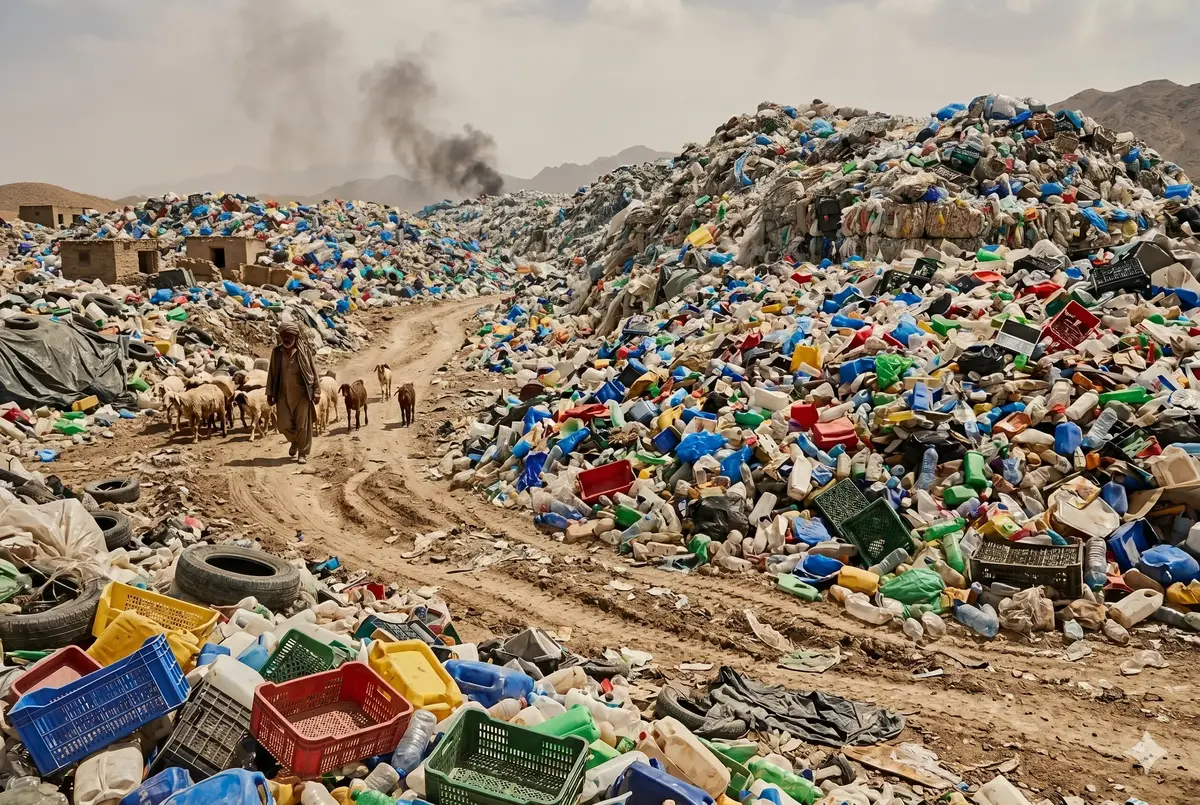
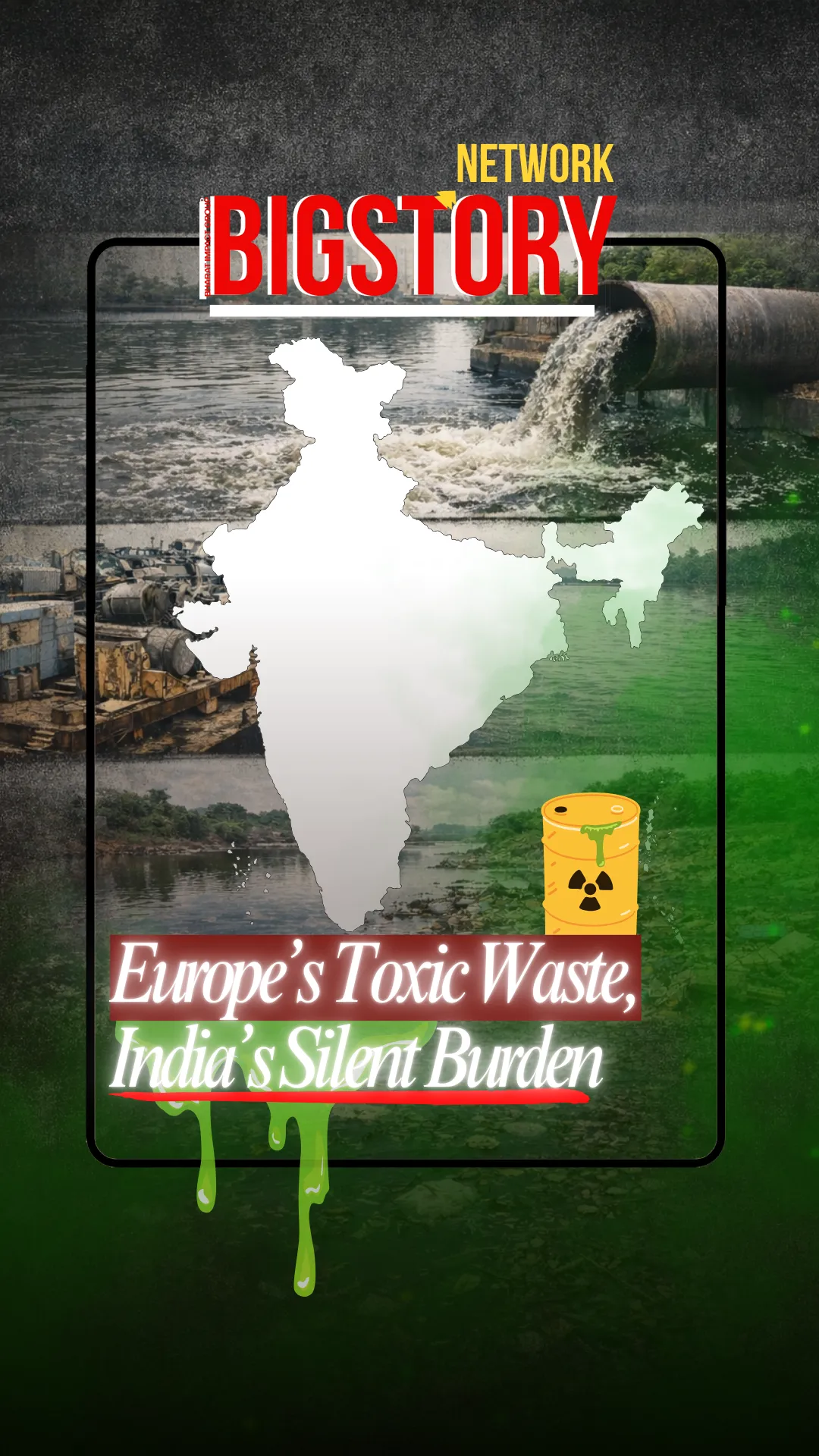
From overflowing drains to poisoned rivers India's plastic waste crisis is no longer a distant warning, it is the reality choking every city street and village field.
 Rashmeet Kaur Chawla
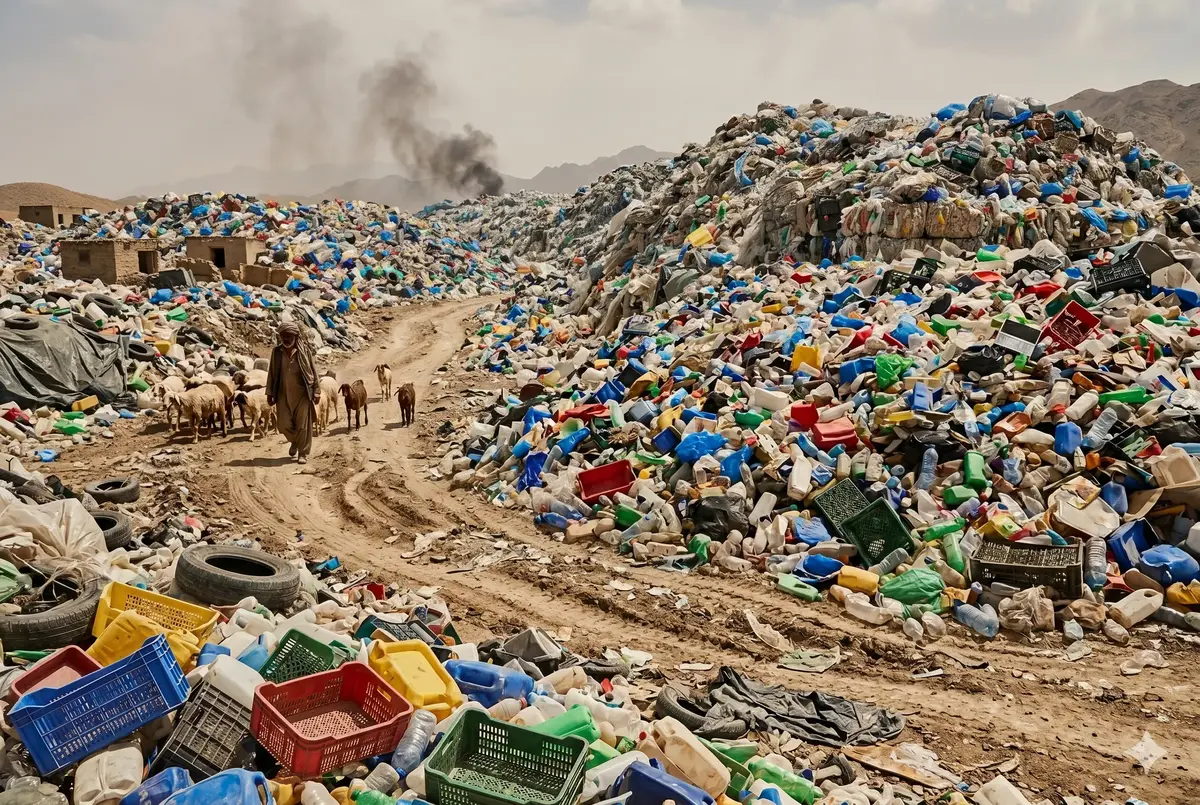
From overflowing drains to poisoned rivers India's plastic waste crisis is no longer a distant warning, it is the reality choking every city street and village field.
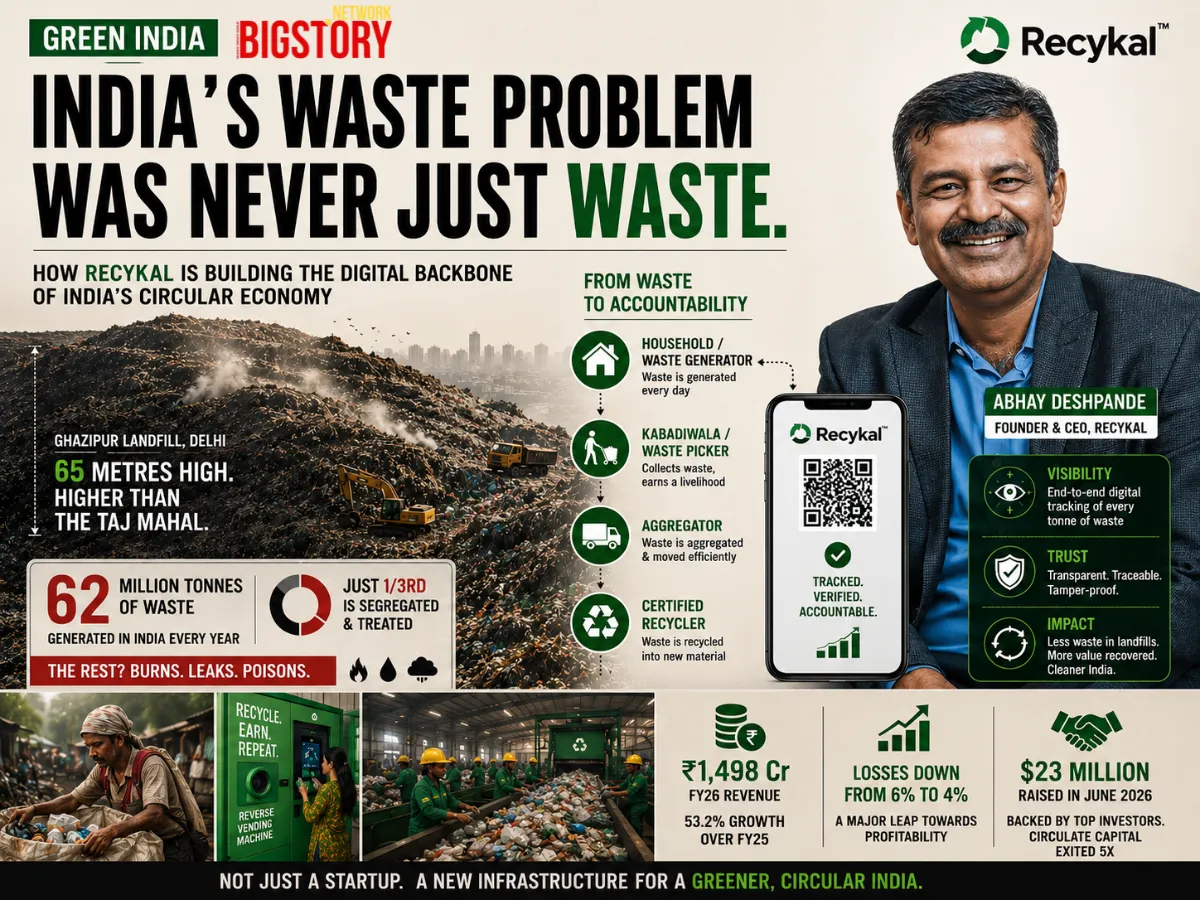
Take a stroll down any Indian city street after the hustle and bustle of the day and you will see the evidence everywhere overflowing garbage bins, plastic sacks hanging in drains and scattered garbage in open areas. It is not only ugly but also a serious environmental hazard that is increasing every day. India produces millions of tons of solid waste annually and plastic constitutes a large part of it. With urbanization, change in lifestyles and consumption going up, the country's waste management systems are not able to cope with the situation.
To quote the environmentalist Sunderlal Bahuguna, "Ecology is the permanent economy." Presently, India is losing its ecological balance and the effects are apparent everywhere from cities to rural areas.
This problem stems from various reasons that are linked together.
First, the popularity of single-use plastics has caused a huge increase in waste production. Plastics have entered our life so much that it has become almost impossible to carry on stay without it.
Secondly, the exacerbation of the problem by inefficient waste segregation and disposal systems. According to various studies, a large share of waste in India remains unsegregated at source, making recycling difficult. Municipal infrastructure often lacks the capacity to process the sheer volume of waste being generated daily.
Third, rapid urbanization has led to a situation where planning can no longer keep pace. Cities are growing in size and people numbers are increasing, but at the same time waste management systems continue to be old or poorly funded. Informal waste workers play a crucial role, yet they often operate without adequate support or recognition.
Lastly, there is not much public awareness and behavioral change. Even with a number of policies and mass awareness programs, still many do not follow correct ways of waste disposal leading to the escalation of the problem.
Plastic waste consequences are deeply worrying and reaching far beyond what we see.
Urban areas suffer drastically when drains pack up with plastic waste and lead to flooding during monsoons. Besides property damage that the water causes, people get exposed to waterborne diseases.
Exposure of people is just one aspect. Nature is also getting vandalized physically and visually. Rivers act as highways for plastic trash which end up in the ocean and this means the destruction of marine life. Microplastics have been found everywhere, from the remotest ocean depths to the food on our tables which poses human health risk.
The impacts of this problem in villages are equally serious. Burning plastic outdoors and usually without any control is a frequent practice, which besides contributing to air pollution also leads to respiratory problems.
The price we pay because the environment is affected, "Natural beauty is not a luxury; it is a necessity of life… we need to be Bernardin de Saint Pierre Benjamin aware how fragile our environment is." Indeed, wildlife is in jeopardy as the plastic debris causes the animals to swallow it accidentally or get caught in it. Crop yield has lessened because farm soil is losing its good qualities due to the accumulation of non-biodegradable waste.
What Mahatma Gandhi said so well, "The Earth provides enough to satisfy every man's needs, but not every man's greed, "-the plastic pollution problem is a perfect stand-up of this fact.
India's plastic waste problem needs addressing on several fronts. Some government steps like tougher rules for the use of single-use plastic and better waste management policies are necessary. Think tanks have emphasized that India needs decentralized waste processing methods, improved infrastructure, and stronger rule enforcement.
Another major aspect is formalizing informal waste workers. Besides recycling rates increasing substantially by acknowledging their role adequately and granting them good working conditions.
There also exists a bright side of leveraging technology. Landfills can be limited by waste-to-energy plants, recycling technologies, and packaging alternatives made sustainably. The problems also come with these technologies if not done with proper care.
Dynamic partnerships between the public sector and private individuals as well as community-based projects have been demonstrated to yield positive results in various cities, thereby confirming that group effort can indeed be effective.
Changing policies is only half the battle solved, while everyone's contribution acts a great multiplier of effect in solving the world's plastic waste problem. Below are some doable steps that each and every one of us can take to protect our environment from plastic pollution:
Say no to single-use plastics: Bring along your own reusable bag, bottle, and container instead.
Separate garbage at home: Categorize biodegradable and non-biodegradable trash. This method can significantly boost recycling efficiency.
Participate in recycling: Buy products made from recycled stuff, also back environmentally responsible companies.
Join neighborhood cleanup programs: A show of force can bring about tangible results and motivate others.
Convey information: Inform your family and friends about responsible ways of discarding waste.
Small alterations, if repeated millions of times, will lead to a great outcome.
If you really want to discard plastic pollution you have to be mindful of some points below which are very imperative and would not be taken lightly:
Correct garbage sorting: It is the very base of any efficient waste management system.
No to littering: Even the smallest of actions, if practiced consistently can avert major environmental damages.
Being restrained: Purchasing what is only needed and avoiding products that have a lot of packaging.
Give your voice to 'green' politics: Promote and may also abide the government directives concerning waste management.
Don't pollute water: Never throw garbage in rivers, lakes, or drains.
The problem of plastic pollution in India will not be solved by the government alone. It must be seen as a responsibility of everyone and the community as a whole. This issue shows our consumption trends, behaviors, and prioritization of the environment.
Moving forward will be difficult if we do not have the support of all levels from ordinary citizens to policymakers. With sincere efforts, it will still be possible to undo the damage and ensure a cleaner and healthier future for the generations to come.
One thing that is clear is that the problem of plastic pollution is not unsolvable. What remains doubtful is whether we would be able to change our ways in time or not.
https://earth5r.org/waste-management-india-solutions/
https://www.sciencedirect.com/science/article/pii/S240584402501151X
https://www.niti.gov.in/sites/default/files/2022-09/Waste-Water-A4_20092022.pdf
https://link.springer.com/rwe/10.1007/978-981-15-7525-9_10-1
https://icrier.org/pdf/Working_Paper_356.pdf
https://research.library.fordham.edu/cgi/viewcontent.cgi?article=1123&context=environ_2015
https://moef.gov.in/uploads/2019/10/Beat-Plastic-Pollution.pdf
https://www.niti.gov.in/sites/default/files/2021-12/Waste-Wise-Cities.pdf
Enter your article content here...
 Exclusive Content



Sign up for the Daily newsletter to get your biggest stories, handpicked for you each day.

 Trending Now! in last 24hrs